We have all seen them. Whether it is a "designer" handbag for a fraction of the retail price at a local market or a pair of trainers on a social media ad that look remarkably like the real thing, the lure of a bargain is hard to resist. In a world where luxury fashion is increasingly out of reach for the average person, the "dupe" culture has exploded. However, behind every stitched logo and every discounted price tag lies a narrative that rarely makes the front pages. This is about more than just lost revenue for big brands; it is about the untold stories of individuals caught in a cycle of modern slavery.
At NowPWR, we believe in bringing you independent news UK readers can trust, focusing on the realities that the mainstream media often overlooks. When we talk about ethical shopping, we usually think about plastic-free packaging or organic cotton. We rarely talk about the human beings working in the shadows to produce the counterfeit goods that end up in our wardrobes. The reality is that the counterfeit trade is one of the primary drivers of exploitation and human trafficking today.
The hidden chains of modern slavery
When you buy a counterfeit item, you aren't just buying a fake product; you are often subsidising a system built on modern slavery. Unlike legitimate brands, which are increasingly held to account by transparency laws and supply chain audits, the counterfeit industry operates entirely off the grid. There are no health and safety inspectors in a secret basement workshop. There are no minimum wage requirements or maximum working hours. This lack of regulation creates the perfect environment for the most extreme forms of labour exploitation.
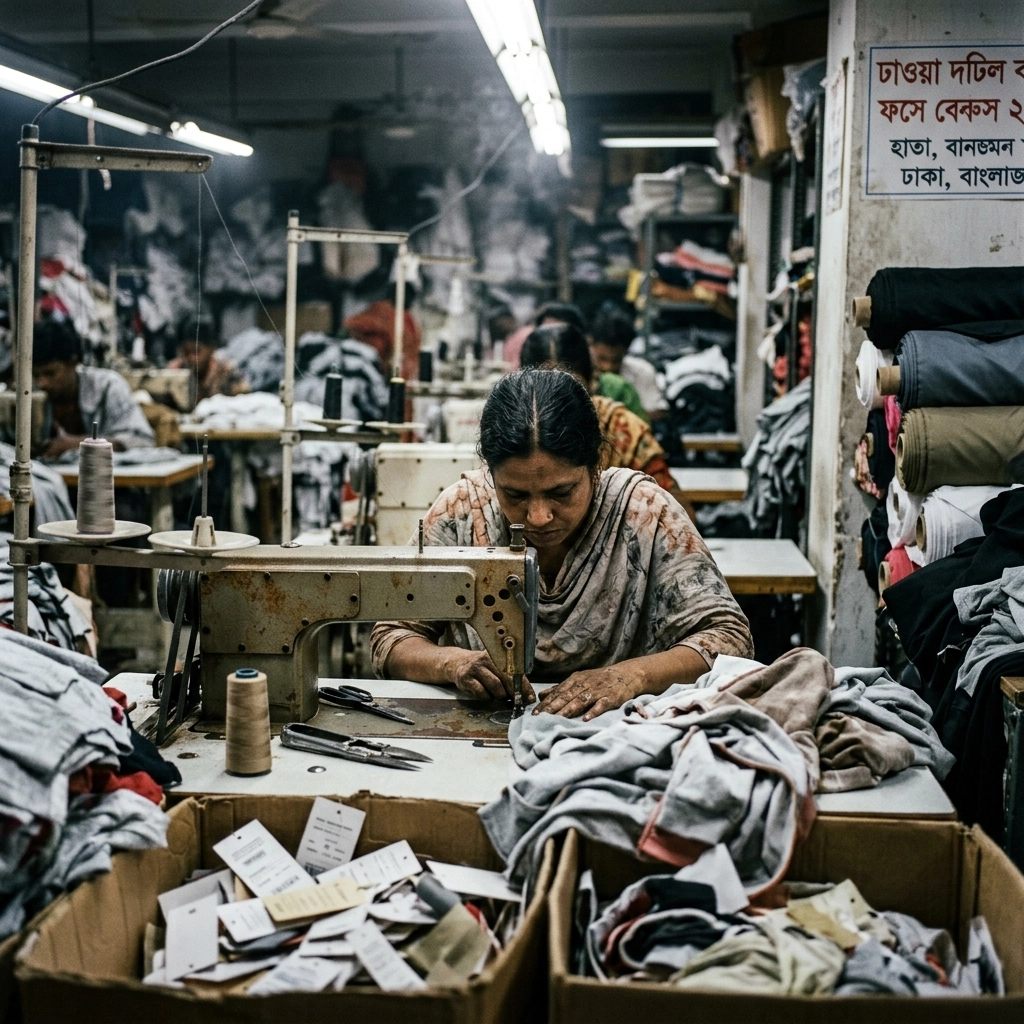
Most counterfeit clothes are produced in unregulated sweatshops, often in countries where labour laws are weak or non-existent. However, this isn't just an issue "over there." Investigations have shown that these operations exist right here in the UK and across Europe. Workers in these facilities are frequently undocumented migrants or victims of human trafficking who have been coerced into labour to pay off "debts" to their smugglers. They live in cramped, unsanitary conditions, working sixteen-hour days for pennies, if they are paid at all.
The link between counterfeit goods and modern slavery is direct and documented. Criminal organisations find the fake fashion trade more lucrative and less risky than drug trafficking. It is a high-reward, low-penalty industry. By purchasing these items, consumers unknowingly provide the capital needed for these gangs to continue their operations. The exploitation is built into the price. You get a cheap hoodie because the person who made it was never paid for their time, their skill, or their dignity.
Toxic manufacturing and consumer risk
The cost of counterfeit clothes isn't only measured in human rights; it is also measured in health and environmental damage. Because these products are made outside of any legal framework, the manufacturers do not adhere to safety standards regarding chemical use. When you buy a legitimate garment, it has undergone rigorous testing to ensure it doesn't contain harmful substances. In the world of counterfeits, those rules do not exist.
Research has shown that fake clothing and accessories often contain dangerous levels of toxic chemicals. This includes lead in the dyes of "designer" bags, phthalates in plastic-coated fabrics, and even formaldehyde in garments to keep them looking "crisp" during transit. These chemicals can cause severe skin irritation, respiratory issues, and, with long-term exposure, more serious health complications. For the workers handling these raw materials every day without protective gear, the health risks are catastrophic. They are breathing in fumes and touching toxins that would be banned in any legal factory.
Furthermore, the environmental impact of this industry is a disaster that stays hidden. These clandestine factories often dump toxic waste directly into local water systems to avoid detection. There is no waste management strategy for a factory that officially doesn't exist. This creates a cycle of poverty and illness for the communities surrounding these hubs of exploitation. When we talk about ethical shopping, we have to consider the entire lifecycle of the product: from the toxic runoff in a remote village to the lead-infused leather sitting in a wardrobe in London.
Funding the underground criminal economy
Choosing to buy a fake is often seen as a victimless crime against a billionaire fashion house. But the money spent on counterfeit goods rarely stays with the person selling them on the street corner. It flows upwards into a complex web of organised crime. The profits from counterfeit fashion are frequently used to fund more violent illegal activities, including drug smuggling, arms dealing, and even more sophisticated human trafficking networks.
The scale of this issue is immense. In some regions, the counterfeit market is now worth significantly more than the illegal drug trade. It is a stable, growing revenue stream for criminal syndicates because the public perception of the "crime" is so low. People who would never dream of buying illegal drugs feel comfortable buying a fake watch or a branded sweatshirt. This disconnect is what allows modern slavery to flourish. Every purchase acts as a small investment in a criminal enterprise that values profit over human life.
Breaking this cycle requires a shift in how we view our purchases. Ethical shopping isn't just a trend; it is a necessity for a fair society. It involves asking where a product came from and why it is so cheap. If the price seems too good to be true, it is usually because someone else is paying the difference with their freedom. Supporting independent news UK outlets and staying informed about these untold stories is the first step toward making better choices. By choosing to buy from transparent, ethical brands: or even by choosing to buy second-hand instead of fake: we can begin to starve these criminal networks of the funding they need to operate.
The fight against modern slavery is complex, but the choices we make as consumers have real power. The "bargain" we find in a counterfeit item is an illusion; the true cost is paid in the lives and health of those who are forced to make them. As we move forward, the focus must remain on transparency and the human element behind the products we use every day. Fashion should never come at the cost of someone's humanity.
The reality of the counterfeit industry serves as a stark reminder that our global economy is interconnected. What we choose to wear affects lives thousands of miles away, or even just a few streets over. By prioritising ethics over aesthetics, we can contribute to a world where labour is respected and the hidden chains of the fashion industry are finally broken. This is a journey of awareness, and every informed consumer is a part of the solution.