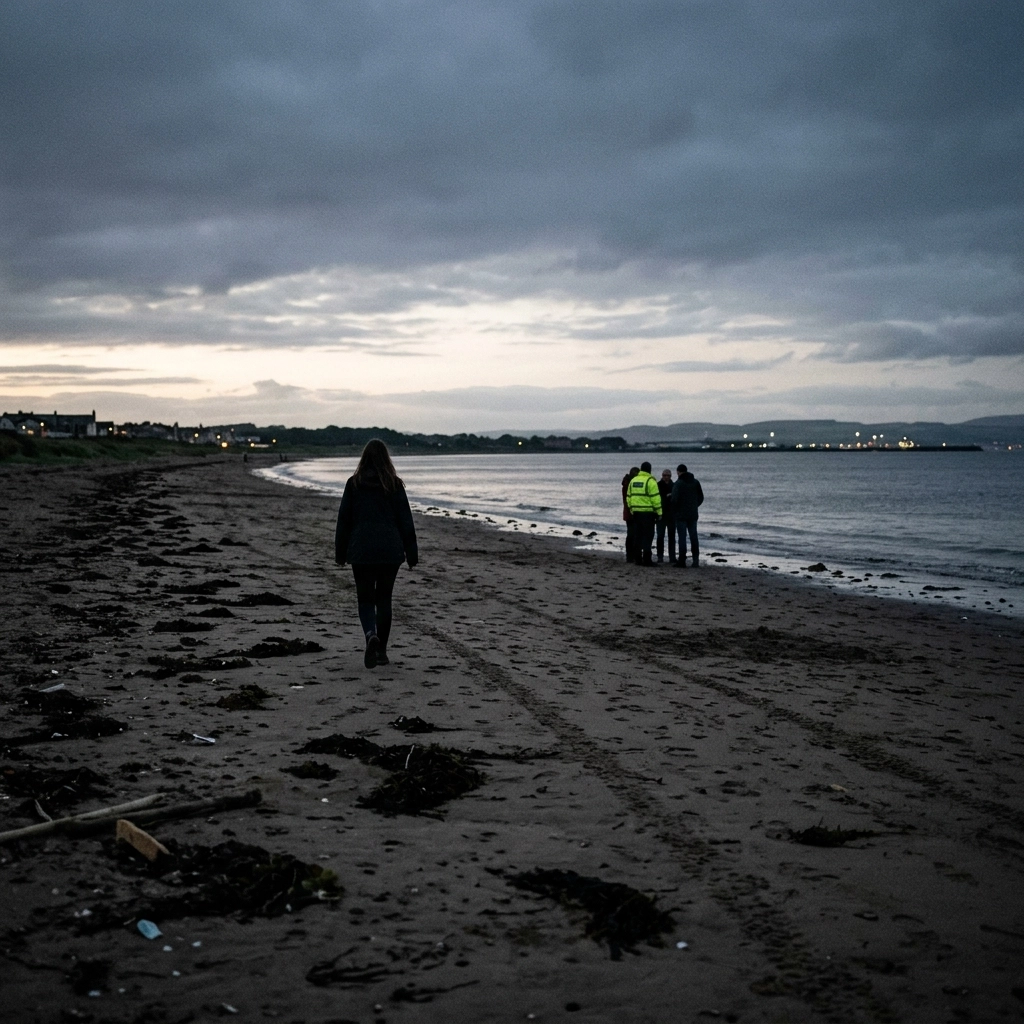
On a cold morning in December 2005, a dog walker strolling along the sands of Prestwick Beach in Ayrshire made a discovery that would spark nearly two decades of questions, theories, and a relentless pursuit of justice. Lying face down in the surf was the body of 30-year-old Annie Börjesson. She was fully clothed, her passport and wallet nearby. To the local authorities, it looked like a tragic case of self-harm. To her family in Sweden, it was the start of a nightmare that pointed toward something much more sinister.
Annie Börjesson was a vibrant, talented woman who had moved to Edinburgh a year earlier to immerse herself in the English language and Scottish culture. She was a linguist, a musician, and a person deeply loved by those who knew her. Her death is one of the most chilling examples of untold stories in the world of independent news UK, representing a collision between personal tragedy and international secrecy. While the official narrative remains a mystery death Scotland has struggled to fully explain, the details unearthed by those close to her suggest a reality far removed from the initial police report.
A Sudden End on Prestwick Beach
The timeline of Annie’s final hours is as baffling as the discovery of her body. On December 3, 2005, Annie was seen on CCTV at Prestwick Airport. She had travelled from Edinburgh, apparently intending to fly home to Sweden. However, for reasons that remain unclear, she left the airport suddenly. She was seen walking away, seemingly in good spirits, but she never boarded her flight. Less than twenty-four hours later, her body was found on the beach, just a short distance from the airport perimeter.
The speed with which the Scottish authorities reached a conclusion has long been a point of contention for investigators and the Börjesson family. Within hours of the discovery, and before a full post-mortem had been conducted, the police suggested that Annie had taken her own life by walking into the sea. For the family, this was impossible to believe. Annie was a strong swimmer with no history of depression, and she had been making plans for the future.
The immediate ruling of suicide meant that the initial scene was perhaps not treated with the forensic rigour required for a potential crime. In many untold stories of this nature, the first few hours are the most critical. When the family finally received Annie's body back in Sweden, they were horrified by what they saw. It wasn't just the grief of losing a daughter; it was the physical state of her remains that suggested a violent struggle. This discrepancy between the Scottish police's findings and the physical evidence became the foundation of a long-term campaign for a fresh investigation.
Evidence That Doesn’t Quite Add Up
When we look closer at the physical evidence, the official suicide narrative begins to fray at the edges. One of the most disturbing details involved Annie’s hair. When her body was returned to her family, it was discovered that large clumps of her long, blonde hair had been hacked off. The cuts were jagged and irregular, suggesting they had been removed with a knife or a sharp implement rather than falling out naturally through decomposition or sea action. Why would someone intending to end their life stop to cut their hair in such a brutal manner?
Furthermore, the autopsy reports contained technical details that raised massive red flags. Most notably, the presence of diatoms: microscopic algae: was scrutinized. In many cases of sea drowning, diatoms from the saltwater are found in the victim's lungs and bone marrow. However, the analysis in Annie’s case was inconsistent. Even more troubling was the suggestion that the water found in her lungs may have been freshwater rather than the saltwater of the Firth of Clyde. If Annie had drowned in freshwater, she could not have died where she was found. This would imply that her body was moved to the beach after her death, a hallmark of foul play.
The markings on her body also told a story of conflict. A funeral director in London, who handled Annie's remains before they were flown to Sweden, was so concerned by the extensive bruising on her arms and torso that they contacted the police. These bruises were described as looking like defensive wounds, the kind someone might receive if they were being held down or were trying to ward off an attacker. Despite these warnings, the official stance in Scotland remained unchanged. The mystery death Scotland officials were dealing with was, in their eyes, a closed case, but for those looking at the independent news UK reports, the gaps in the story were becoming impossible to ignore.
A Classified Case and the Search for Truth
The mystery deepened when the investigation crossed international borders. As Annie’s mother, Guje Börjesson, and her best friend, Maria, began digging into the Swedish side of the story, they encountered a wall of silence. It was eventually revealed that the Swedish government had classified documents related to Annie’s death under a "secret" status. The justification for this was that the information concerned Sweden's relations with a foreign power and that its disclosure could damage national interests.
Why would the death of a young woman on a Scottish beach be a matter of national security or international diplomacy? This revelation led to a surge of interest from investigative journalists and the creation of the Sky News StoryCast titled "What Happened to Annie?". The podcast explored various theories, including the possibility that Annie had been mistaken for someone else or had inadvertently become entangled in a situation involving intelligence services. While these theories may sound like the plot of a thriller, the fact that the Swedish Foreign Ministry redacted files and cited international relations as a reason for secrecy provides a very real basis for suspicion.
The quest for answers continues to this day. The Börjesson family has spent years petitioning both the Scottish and Swedish governments to reopen the case. They have sought the help of forensic experts and former detectives to re-examine the evidence. The case of Annie Börjesson serves as a poignant reminder of the importance of independent news UK outlets that keep these stories alive when official channels fall silent. It highlights the struggles families face when they are forced to become investigators in their own right, fighting against bureaucratic inertia and the desire of authorities to maintain a convenient status quo.
The death of Annie Börjesson is more than just a cold case; it is a narrative of a life cut short and a family’s refusal to accept an easy answer. As long as the documents remain classified and the inconsistencies in the forensic evidence remain unaddressed, the sands of Prestwick Beach will continue to hold a secret that refuses to be buried. The pursuit of truth for Annie is not just about finding out how she died, but about honouring the woman she was and ensuring that no story, no matter how inconvenient, remains untold.
The circumstances surrounding the events at Prestwick in 2005 remain a focal point for those interested in justice and transparency. Despite the passage of time, the commitment of the Börjesson family and the journalists who support them ensures that Annie's name is not forgotten. In the face of government secrecy and official dismissal, the search for clarity remains a vital mission for all those who believe that every life deserves a thorough and honest accounting of its end.