



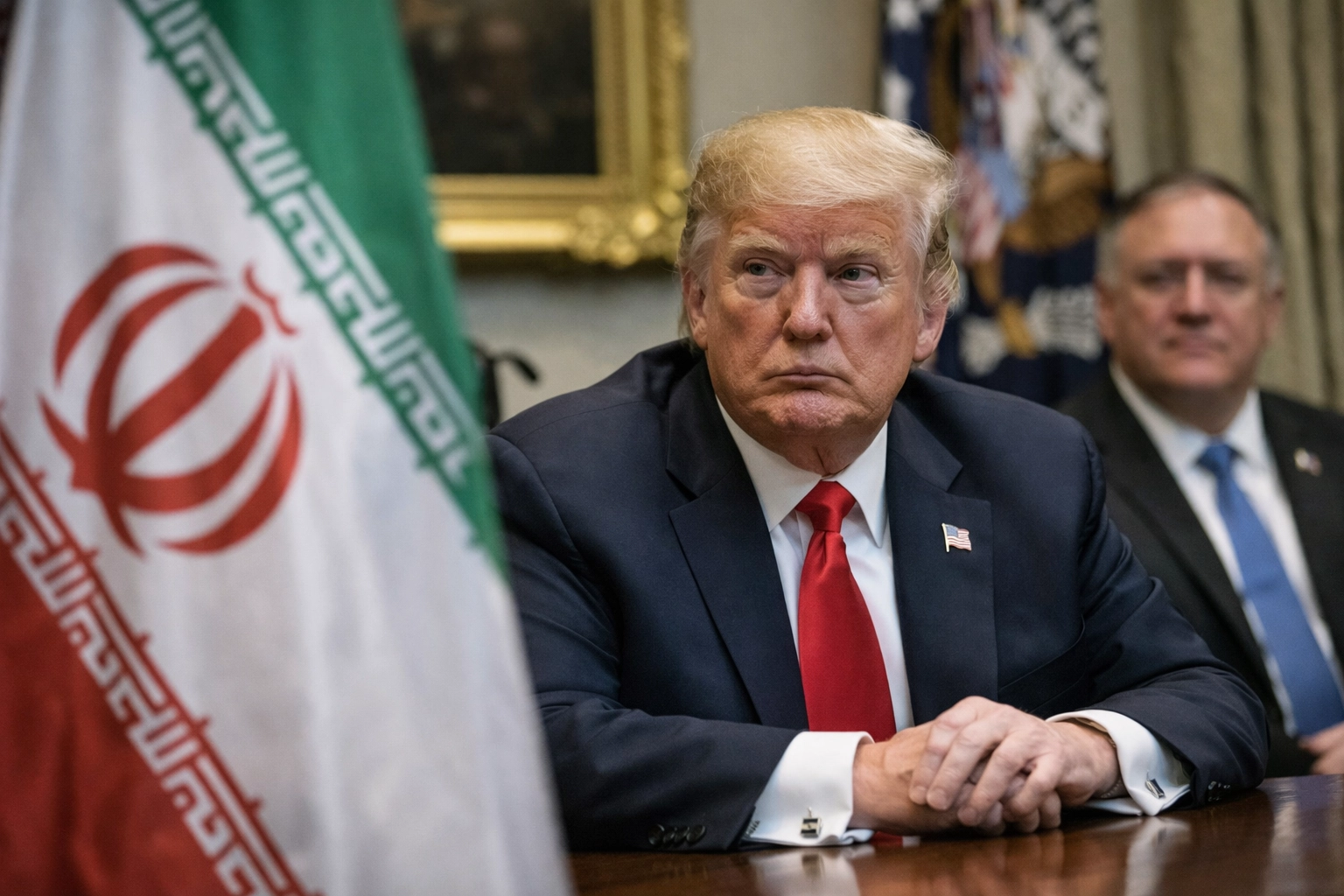
The diplomatic landscape between Washington and Tehran has shifted from the battlefield to the negotiating table, but the view from both sides remains obscured by a thick fog of contradictory claims and mutual suspicion. After three weeks of intensive military exchanges that pushed the Middle East to the precipice of a wider conflagration, the Trump administration has signalled the start of preliminary peace discussions. However, the reality of these talks is being called into question as both nations trade barbs, reject proposals, and issue ultimatums that seem designed more for domestic consumption than international resolution. While the White House insists that progress is being made, the rhetoric coming out of Iran suggests a regime that is far from defeated and even further from capitulation.
Donald Trump’s approach to these negotiations carries his signature blend of maximum pressure and high-stakes showmanship. On one hand, he has declared the military conflict essentially "won", claiming that a fundamental shift in the Iranian power structure has already occurred. On the other hand, his administration has laid out a 15-point proposal that demands nothing short of a total overhaul of Iran’s foreign and military policy. The disconnect between the President’s assertion that "regime change" has effectively taken place and the continued, defiant functioning of the Islamic Republic’s leadership has created a confusing narrative. To the outside observer, it remains unclear whether these talks represent a genuine path to peace or a temporary pause before a much larger escalation.
The 15-point ultimatum and the diplomatic disconnect
The core of the current U.S. position is a comprehensive 15-point proposal delivered to Tehran through intermediary channels. This document is not so much a traditional diplomatic starting point as it is a list of stringent demands. Chief among these is the insistence that Iran formally recognise U.S. military superiority in the region: a demand that strikes at the heart of the Islamic Republic’s revolutionary identity. Furthermore, the U.S. is seeking a strict arms control agreement that would cap Iran’s ballistic missile arsenal at 1,000 units and mandate a complete cessation of funding for regional proxies, including Hezbollah in Lebanon and Hamas in Gaza. These proxies have long been the primary tools of Iran’s "forward defence" strategy, and giving them up would leave Tehran with significantly reduced regional influence.
The reaction from the Iranian leadership has been one of public derision. State-controlled media outlets in Tehran mocked the proposal, suggesting that the Trump administration was essentially "negotiating with itself." Iranian officials have characterised the 15 points as "excessive and disconnected from the reality of America’s failure on the battlefield." This rhetorical gap is widened by a lack of clarity within the U.S. State Department regarding who actually holds the keys to a deal in Iran. Sources within the administration have expressed frustration, suggesting they are uncertain if Foreign Minister Abbas Araghchi has the authority to negotiate a binding agreement. One senior U.S. official reportedly described Araghchi as little more than a "fax machine," capable of transmitting messages but unable to make the final calls that belong to the Supreme Leader.
This internal confusion in the U.S. approach is mirrored by the shifting messaging coming from the White House. While Press Secretary Karoline Leavitt maintained that talks are "productive" and that "elements of truth" exist in reports about the 15-point plan, the President’s own statements often paint a different picture. By claiming that the war is already over and that the Iranian regime is in its death throes, Trump may be boxing himself into a corner where any compromise looks like a retreat. The gritty reality of the situation is that while Iran’s leadership has been shaken by military strikes, the state apparatus remains functional and its military capabilities, though bruised, are far from dismantled.
The Hormuz counter-offer and the four-day deadline
In response to the American ultimatum, Iran has produced its own five-point counter-proposal, which has been summarily dismissed by U.S. officials as "ridiculous and unrealistic." The centrepiece of this Iranian offer is the demand for formal recognition by both the United States and Israel of Iranian authority over the Strait of Hormuz. As one of the world’s most vital maritime chokepoints, through which a significant portion of the global oil supply passes, any formal concession of control to Tehran is a non-starter for Western powers. Iran is essentially attempting to trade a reduction in regional hostilities for a permanent, legalised grip on the world’s energy jugular: a move that underscores their refusal to negotiate from a position of perceived weakness.
Adding to the tension is a strict four-day deadline imposed by the Trump administration. The President has made it clear that if a substantial agreement is not reached within this window, the United States will shift its military focus toward Iran’s energy infrastructure. This threat to target oil refineries and export terminals is a direct escalation of the "maximum pressure" campaign, aimed at bankrupting the regime completely. By setting such a short fuse on the diplomatic process, the White House is betting that the threat of total economic collapse will force the Supreme Leader’s hand. However, history suggests that the Iranian regime often responds to such pressure with further defiance, viewing concessions under duress as an existential threat to their legitimacy.
Iranian officials have responded to this deadline with predictable coldness, stating that the regime "will not allow U.S. President Donald Trump to dictate the timing of the war’s end." This suggests a protracted struggle rather than a quick diplomatic win. The stakes for global markets are immense; if the four-day window passes without a breakthrough and the U.S. begins targeting Iranian oil assets, the resulting spike in energy prices could have a destabilising effect on the global economy. This "all or nothing" approach to diplomacy leaves very little room for the kind of incremental de-escalation that usually characterises Middle Eastern peace processes.
Claims of regime change versus the reality in Tehran
Perhaps the most confusing element of the current situation is the assertion from the Oval Office that "regime change" has already occurred. During a recent briefing, Trump claimed that the Islamic Republic as we knew it is gone, following the sustained military pressure of the last three weeks. While it is true that several high-ranking members of the Islamic Revolutionary Guard Corps (IRGC) have been neutralised and command structures have been disrupted, the central pillars of the Iranian state: the clerical establishment and the internal security forces: remain largely intact. To claim regime change in the absence of a new governing body or a total collapse of the existing one is, at best, a premature assessment.
This narrative of victory may be intended to reassure the American public that the conflict will not turn into another "forever war," but it complicates the actual negotiations. If the U.S. believes the regime has already fallen, there is little incentive to offer the kind of sanctions relief or security guarantees that would be necessary to secure a lasting peace treaty. Conversely, if the Iranian leadership perceives that the U.S. goal is their total eradication regardless of what they do, they have no reason to stop fighting. The "gritty" truth of international relations is that peace often requires dealing with the enemy you have, not the one you wish you had defeated.
As the clock ticks down on the four-day deadline, the international community is watching with bated breath. The potential for a miscalculation on either side is high. If Trump follows through on his threat to strike energy targets, the "peace talks" will be remembered as a mere footnote in a much larger conflict. If Iran fails to offer a more substantive concession, they risk an economic catastrophe from which they may never recover. For now, the "confusion" remains the only certain thing in the U.S.-Iran relationship. Whether this is a sophisticated psychological operation by the Trump team or a genuine case of diplomatic cross-wires, the coming days will determine the trajectory of the Middle East for years to come. The world waits to see if the "fax machine" in Tehran finally receives a message that it is willing to sign.