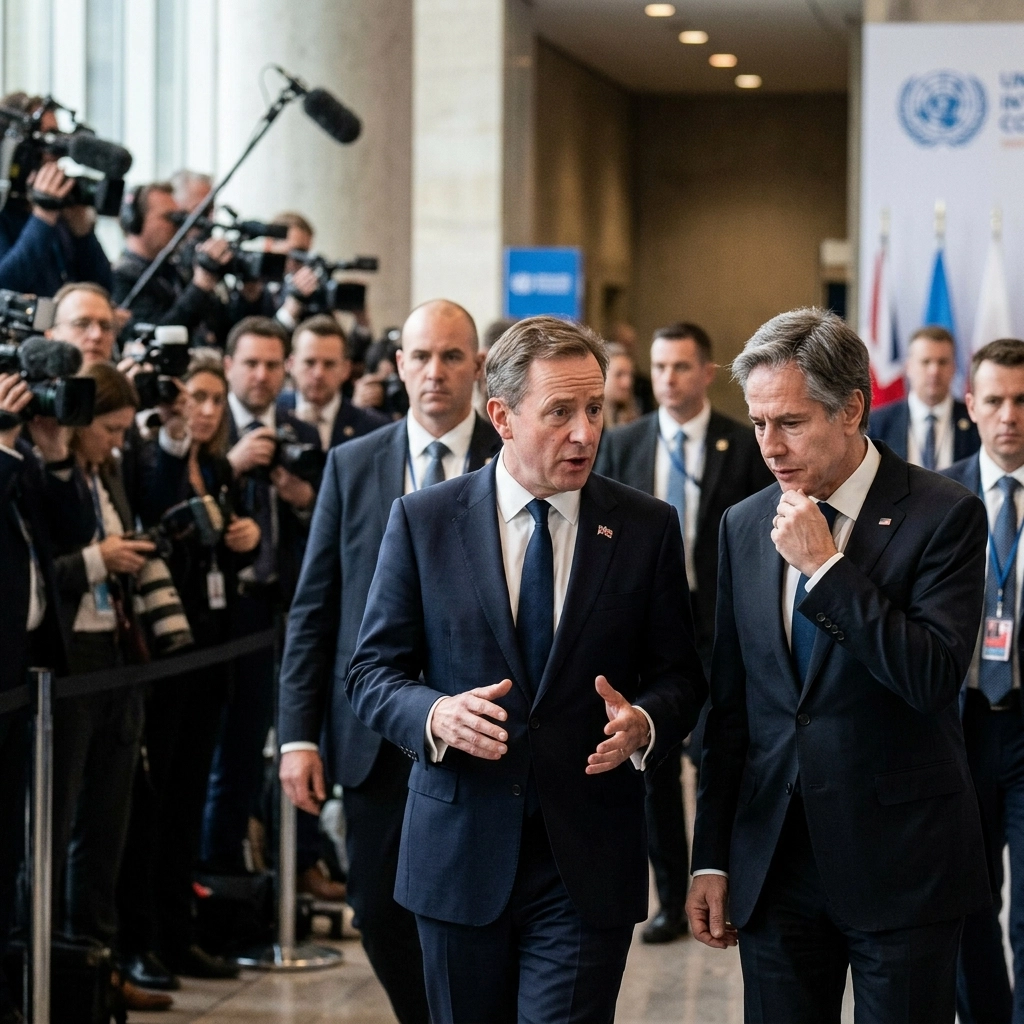
Not so long ago, the "Special Relationship" between the United Kingdom and the United States was seen as a cornerstone of Western security. From the beaches of Normandy to today’s digital battlefield, the two countries have often stood side by side. But in April 2026, the strain is getting harder to ignore. What we are seeing now is a real shift on the global chessboard, with London and Washington no longer reading from the same script.
This tension is about more than one disagreement or a clash of personalities. It reflects years of diverging interests, economic pressure and a changing world order that has pushed both countries to rethink what they want from each other. For readers looking for independent news uk, the bigger picture can easily get lost behind dramatic headlines, but the untold stories behind these tensions point to a much deeper geopolitical reset.
The Base Dispute and the Iran Crisis
The immediate spark for the current frostiness sits in the Middle East. For decades, the UK has been the most dependable military partner for the US, often backing Washington even when those conflicts were unpopular at home. But the latest crisis involving Iran has broken that pattern. When the US asked to use British military bases for opening strikes on Iranian targets, the UK government did something that would once have seemed unthinkable: it refused.
That refusal was not just tactical; it was also symbolic. Prime Minister Keir Starmer’s government argued that the proposed action lacked a clear legal basis and risked wider regional escalation that Britain was not willing to support. The response from Washington was fast and blunt. Donald Trump, back in the Oval Office, publicly criticised Starmer and suggested the UK was stepping back from its responsibilities.
The pressure has only grown because the Iran crisis has drawn in 25 countries militarily and rattled economies around the world. For the UK, the calculation looks different now. The legacy of the Iraq War still hangs heavily over public opinion, and there is a growing feeling that acting as the "junior partner" in US-led military interventions no longer serves British interests. The standoff over the bases is a strong sign that automatic British backing for American foreign policy is no longer guaranteed. It is one of those untold stories that helps explain how the UK is trying to shape a more independent path, even if that frustrates its oldest ally.
The Brexit Realignment and Economic Friction
To understand why this is happening now, we have to look back at the structural changes caused by Brexit. When the UK left the European Union, the plan was to pivot towards "Global Britain," a strategy heavily dependent on securing a massive, comprehensive trade deal with the US. The idea was that what we lost in Europe, we would gain in the Americas. However, that deal never fully materialised, and instead, the UK has found itself in an increasingly vulnerable position.
The economic relationship took a serious hit in April 2025 when the US imposed a string of aggressive tariffs that caught London off guard. Those tariffs were not just about money; they were a wake-up call. They showed that the US puts its domestic agenda, "America First", ahead of any sentimental idea of a special relationship. That pressure has shifted the mood across British politics. It is not only the Labour government that feels sceptical; Conservative and Liberal Democrat figures are also questioning whether the UK's dependence on Washington has become a liability.
Recent disputes over the Chagos Islands and even American interest in Greenland have further soured the mood. UK policymakers are beginning to realise that in the current American administration’s eyes, Britain is just another country to be negotiated with, rather than a privileged partner. This has led to a fascinating realignment. Instead of looking solely across the Atlantic, the UK is starting to look elsewhere. There is a renewed effort to coordinate more closely with European neighbours and Commonwealth partners like Canada, who have also found themselves at odds with recent American unilateralism. This shift is a key focus for independent news uk outlets that are watching how Britain navigates this lonely middle ground.
A New Global Order: The Pivot to Asia
Perhaps the most significant factor in this shift is something that has very little to do with the UK at all: the rise of China. For Washington, the primary strategic challenge of the 21st century is the competition with Beijing. This "pivot to Asia" means that Europe, and by extension the UK, is simply less relevant to American strategic planning than it used to be. The US is focused on the Indo-Pacific, and while it values allies, it is less willing to compromise its own goals to keep London happy.
This leaves the UK in a difficult position. If the US no longer sees the Atlantic as its main strategic focus, Britain also loses some of its long-held role as the "bridge" between America and Europe. We can already see the effects. The US is increasingly prepared to make decisions affecting European security and economics without the level of consultation that once felt standard. For the UK, that means the old strategy of influence through closeness is becoming less effective.
The global chessboard is shifting, and the UK is having to adapt quickly. That could mean building a stronger security framework with Europe that is less exposed to American political swings, or leaning further into its role as a medium-sized power working through international institutions instead of one key bilateral alliance. Whatever comes next, these tensions do not look like a passing blip. They reflect the awkward adjustments of a new world order in which the special relationship is giving way to something more pragmatic and more distant. By paying attention to the untold stories behind these diplomatic changes, we get a clearer sense of a Britain trying to stand more firmly on its own.
In this rapidly changing environment, a clear-eyed view matters more than ever. The US-UK relationship will still matter, but the days of it being the only relationship that counts for London are over. As both countries deal with their own internal pressures and external threats, the global chessboard will keep moving, and the UK will need to respond with greater independence and sharper strategic choices.