





Coordinated attacks by Israeli settlers across the occupied West Bank have left Palestinian communities in a state of shock following a series of violent incursions. Over the course of several days, dozens of homes and vehicles were set ablaze as groups of settlers moved through multiple villages, injuring residents and destroying essential infrastructure. The scale of the destruction marks a significant escalation in regional tensions, with international observers warning of a deepening humanitarian crisis.
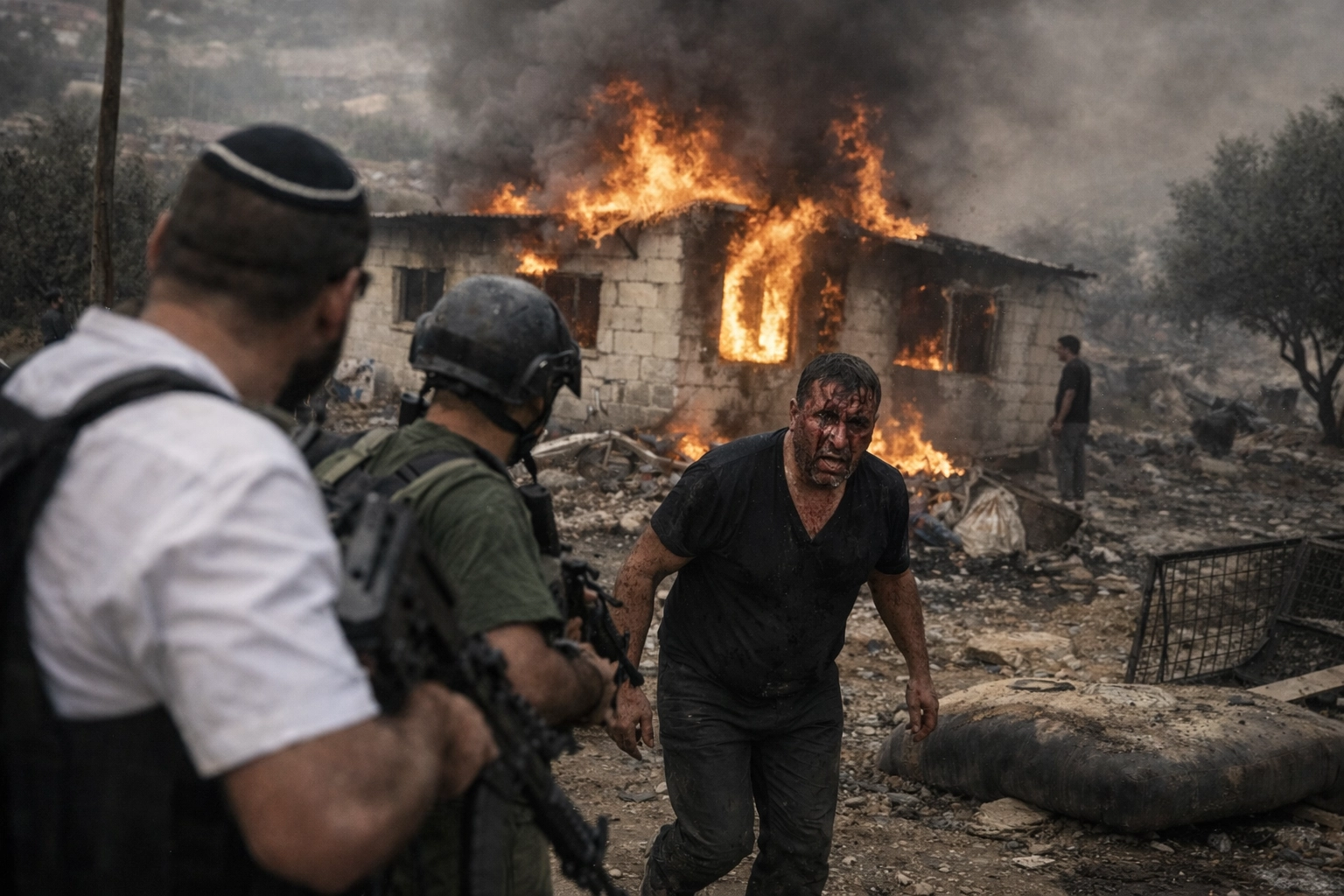
In the village of al-Fandaqumiya, witnesses described a scene of systematic devastation. More than 200 settlers reportedly descended on the area in an organised assault that lasted approximately 20 minutes. During this period, Molotov cocktails were thrown through the windows and onto the roofs of residential properties. The fire consumed furniture, personal belongings, and the structural integrity of several family homes. Residents were forced to flee into the surrounding hills to escape the advancing flames and the threat of physical assault.
The violence was not isolated to a single location. Similar strikes were reported simultaneously in Silat al-Dhahr, where a mob of 150 individuals targeted Palestinian properties. Vehicles parked along the narrow streets were doused in accelerants and ignited, creating barricades of fire that prevented emergency services from reaching the scene. Racist slogans were spray-painted onto the walls of local schools and clinics, threatening further violence and displacement for the local population.
Coordinated Assaults Target Multiple Palestinian Villages
The logistical precision of the attacks suggests a high level of coordination among the settler groups involved. In late February, the village of Susiya, located near Hebron, became a focal point for near-daily harassment and violence. Settlers targeted the tents and temporary structures used by Palestinian herding communities, setting fire to the very shelters meant to protect families from the winter elements. The destruction of these assets has left many without basic housing or the means to maintain their livestock.
Reports from Jalud and Qaryut indicate that the rampages often follow a similar pattern. Settlers arrive in large numbers, often under the cover of darkness or during periods when local men are away working in the fields. They target key infrastructure, including medical clinics and agricultural equipment, to inflict maximum economic and social damage. In some instances, solar panels and water tanks: vital for survival in these arid regions: were deliberately smashed or punctured.
The psychological impact on the affected communities is profound. Children in the village of al-Fandaqumiya have reported being unable to sleep, fearing the return of the mobs. The presence of racist graffiti on educational buildings serves as a constant reminder of the hostility surrounding their homes. Local leaders have called for international intervention, stating that the current security measures are insufficient to protect Palestinian civilians from recurring extremist violence.
Rising Displacement Figures and the Humanitarian Crisis
Data released by the United Nations highlights a worrying trend in the displacement of Palestinians due to settler-related violence. Since the beginning of 2026, over 800 Palestinians have been forced to leave their homes permanently. Between 3 and 16 February alone, the UN documented at least 86 separate instances of settler violence. These incidents led directly to the displacement of 146 individuals and caused injuries to at least 64 others, many of whom required hospitalisation for burns or blunt-force trauma.
The humanitarian toll extends beyond physical injuries and property damage. The destruction of agricultural land and the burning of olive groves have stripped many families of their primary source of income. Olive trees, some centuries old, have been uprooted or torched, representing a loss that will take generations to recover. This economic warfare is seen by many analysts as a deliberate tactic to pressure Palestinian residents into abandoning their land.
Emergency relief efforts are currently underway, but aid workers face significant hurdles. Roadblocks and the threat of further attacks make it difficult to deliver building materials, food, and medical supplies to the affected villages. Temporary shelters have been erected in some areas, but these are often insufficient to house the large number of displaced families. The cold weather in the West Bank highlands further exacerbates the suffering of those whose homes have been reduced to ash.
Systemic Impunity and the Erosion of Local Security
Despite the frequency and scale of these attacks, the legal consequences for the perpetrators remain minimal. Monitoring groups such as Yesh Din have pointed to a persistent pattern of impunity that encourages further violence. According to their data, only 2% of documented cases of settler violence investigated by Israeli authorities have resulted in indictments. This lack of accountability has drawn sharp criticism from the international community, including human rights organisations and foreign governments.
The role of the Israeli security forces during these rampages has also come under scrutiny. Residents in several villages have alleged that soldiers often stand by or provide a perimeter for the settlers while the attacks are carried out. In some cases, when Palestinians attempt to defend their property or push back the mobs, the security forces intervene against the residents rather than the attackers. This perceived bias has led to a total breakdown of trust between the local population and the authorities tasked with maintaining order.
The ongoing cycle of violence and the absence of justice contribute to a volatile environment. As settler outposts continue to expand, the friction points between the two communities multiply. Without a significant change in the enforcement of the law and a commitment to protecting all civilians, the risk of a larger, more sustained conflict remains high. The international community continues to monitor the situation, with many calling for a renewed focus on the rule of law to prevent the West Bank from sliding further into chaos.
The situation in the West Bank remains fluid, with tensions simmering in the aftermath of the recent fires. Families in villages like al-Fandaqumiya are left to sift through the charred remains of their lives, while the threat of the next midnight incursion looms over the horizon. The global spotlight remains fixed on the region as observers wait to see if any steps will be taken to halt the rampages and provide security to the vulnerable communities living on the front lines of the occupation.