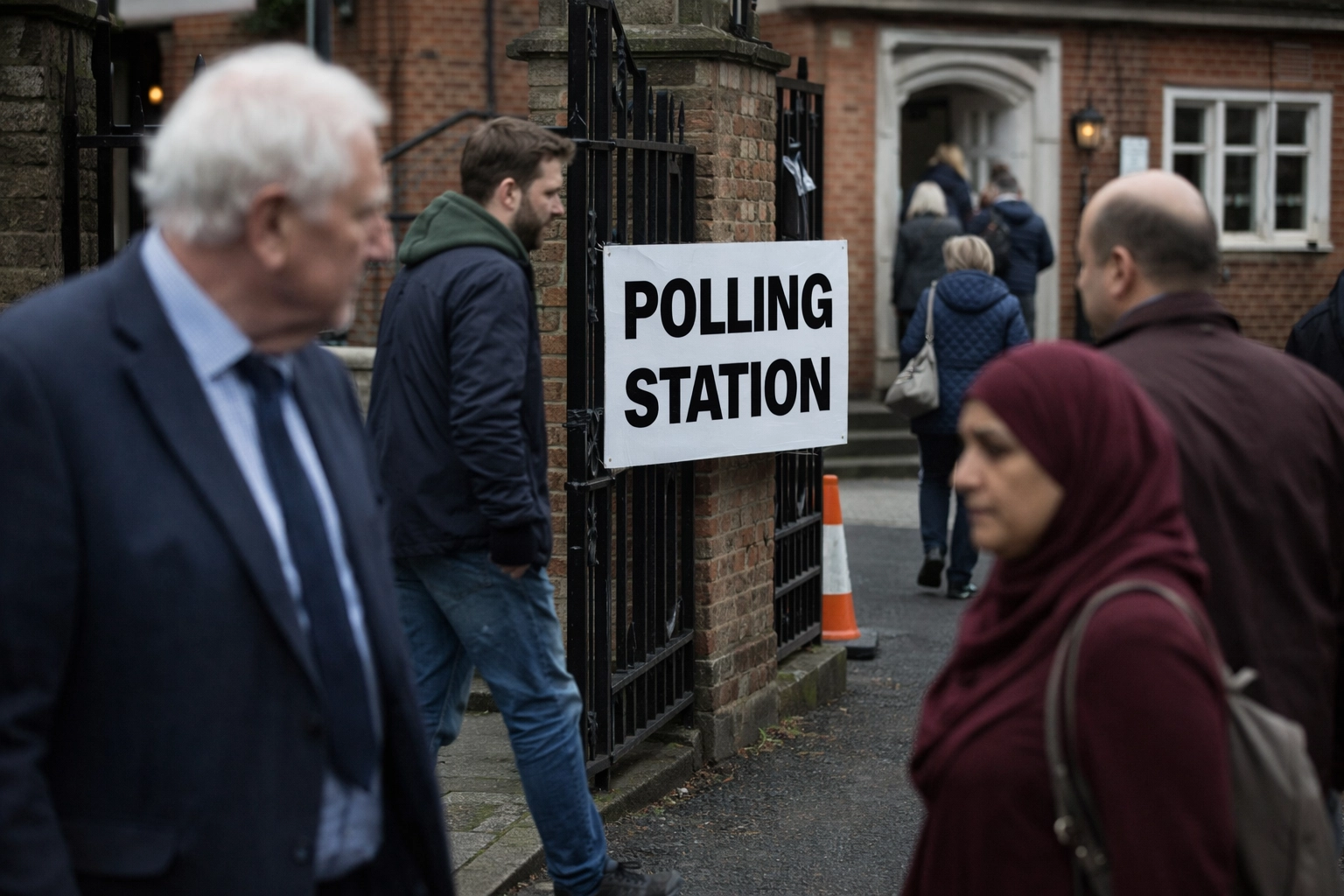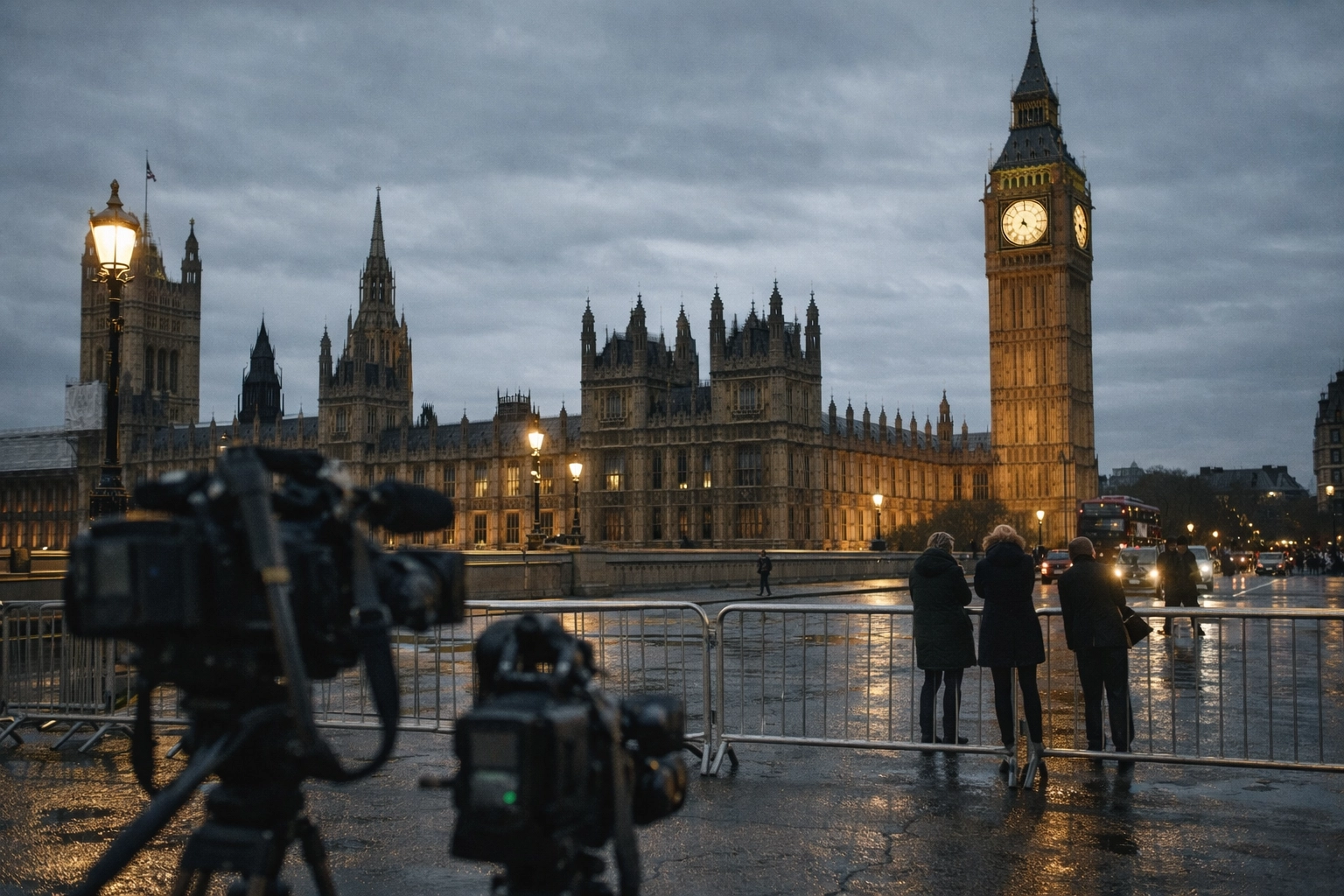
Polling in early 2026 suggests Britain’s two-party dominance is loosening, with support spreading across smaller parties and independents in ways that could reshape Westminster maths. The shift is being driven less by a single “third force” moment and more by a mix of long-term dealignment, local service pressures, and a values-heavy argument over borders, culture and trust in institutions.
For decades, the UK’s first-past-the-post system rewarded the two biggest parties even when their combined vote share was soft. The story in 2026 is that those historic efficiencies look less reliable, because fragmentation is appearing across different types of seats at the same time.
The two-party squeeze and the rise of challengers
The immediate headline is simple: voters are shopping around more than they used to. Labour and the Conservatives still dominate the front benches and the airwaves, but their grip on the “default vote” has weakened, especially among people who feel politics is not producing tangible improvements.
This is not totally new. The Liberal Democrat surge in 2010, the SNP’s post-2014 breakthrough, and UKIP’s 2014–2015 arc all showed that big chunks of the electorate can detach quickly. What looks different now is the breadth: challenger parties are competitive for different reasons in different places, rather than one insurgent wave sweeping the whole map.
Reform UK’s rise has been most visible in parts of coastal England and in some post-industrial seats where cultural issues, migration, and a general frustration with “the system” cut through. In those areas, the debate often pivots on enforcement and control: small boat crossings, asylum processing backlogs, policing, and whether national government is willing to make disruptive trade-offs.
The Greens and Liberal Democrats are playing a different game. The Greens have tended to grow where local activism is strong and where housing, transport and environmental concerns are treated as day-to-day quality of life issues rather than abstract climate targets. The Liberal Democrats, meanwhile, remain built for seat-by-seat campaigning, focusing on local services, planning, and a “competence and community” pitch that can bite when major parties look distracted or divided.
The bigger structural point is that the UK’s electoral system can amplify fragmentation in unpredictable ways. A party can climb in national vote share yet struggle to translate that into seats if support is shallow and evenly spread. At the same time, relatively small swings can flip tight constituencies if a challenger becomes the main vehicle for tactical voting. In 2026, both dynamics look live.
In England, some of the most sensitive terrain is the old “Red Wall”, where Labour’s coalition has been under strain since 2019 and where Conservative support has also become more brittle. In many of these seats, the contest is no longer just “Labour versus Tory”, but “which party best captures a blend of economic anxiety and cultural pessimism”. That can produce volatile outcomes, especially when voters feel neither of the main parties is speaking to their lived experience.
Services, councils and the credibility gap
Beneath the party labels, public service capacity has become a direct political force. Ministers can point to stabilising inflation compared with the peak, and to the argument that difficult fiscal choices were needed. But many households are still living with the second-order effects: higher mortgage and rent costs, high food bills, and a sense that everyday essentials have outpaced pay packets.
That creates a credibility gap. When national leaders talk about “turning a corner”, voters often test that claim against the state of their local high street, their GP appointment wait, their child’s school support, and the reliability of public transport. If the lived reality feels stuck, the messaging struggles to land.
Local government has become a sharp pressure point in this story. Section 114 notices, which effectively signal a council cannot balance its books, have moved from rare event to recurring headline. Even when councils avoid formal notices, the practical effect can be similar: pared-back non-statutory services, delayed maintenance, reduced youth provision, libraries under strain, and social care budgets squeezing everything else.
This matters politically because councils are where many voters feel government most directly. When bin collections change, potholes multiply, or social care eligibility tightens, it does not feel like a Westminster abstraction. It feels like the state retreating. That mood can push voters towards challengers who promise “clean breaks” or tougher, simpler solutions, even when the policy detail is thin.
It also changes how elections are fought. Traditional arguments about tax-and-spend have started to merge with arguments about competence, delivery and trust. Voters are increasingly judging parties on whether they look capable of making systems work: procurement, planning, border operations, prisons, the courts backlog, and the basic management of the public realm.
The Conservatives face a particular challenge here because they have held power for much of the period in which services have deteriorated, but Labour also has to persuade voters that it can improve outcomes without triggering a renewed fear of fiscal instability. That tension helps explain why the centre ground can look crowded while still feeling unsatisfied: the public wants better services and lower costs, and is sceptical that either main party can deliver both quickly.
Nations, devolution and a widening values divide
The loosening of two-party dominance is not uniform across the UK, because the UK is not politically uniform. Scotland and Wales have their own party systems layered on top of Westminster politics, and devolution has shifted what voters expect from different levels of government.
In Scotland, politics has been shaped for years by the constitutional question, but day-to-day issues are increasingly prominent: health, education, policing, ferries, and public spending choices. Even where voters keep strong views on independence, they are also weighing performance. That creates openings for opponents if the incumbent looks tired, and it can also create space for new or reinvigorated competition if voters decide the old dividing line no longer explains everything.
In Wales, Plaid Cymru continues to target growth by positioning itself as a national voice on services and identity, while Labour’s historic strength is tested by pressures familiar across England: cost of living, NHS performance, and trust. The Conservatives, meanwhile, have had to defend a brand that can look pulled between competing instincts: market discipline, populist messaging on borders, and a promise of stability that is harder to maintain when voters feel unsettled.
Northern Ireland remains a different political arena again, driven by its own constitutional structures, community politics and post-Brexit trade realities. Even so, the wider UK mood still seeps in: trust in institutions, cost-of-living pressure, and whether politics feels like problem-solving or permanent argument.
Across all nations, one trend stands out in 2026: values are cutting across class more sharply than before. Arguments about borders and national identity, the role of protest, policing and public order, and the pace of cultural change are increasingly shaping how voters interpret economic messages. Climate policy also sits inside this values frame, because it is debated not just as science but as fairness: who pays, who benefits, and which communities feel targeted or protected.
This is why the “two-party loosening” story is not just a horse race. It is about whether the UK is moving into an era where governments are harder to form, mandates feel thinner, and politics becomes more localised and more transactional. Under first-past-the-post, the system can still produce single-party majorities, but the path to them may involve narrower coalitions, more tactical voting, and more MPs elected on divided local contests.
The next general election will be a test of durability. If fragmentation is rooted in lived experience of services and trust, it may persist even if headline economic indicators improve. If it is driven mainly by short-term anger, the two big parties may yet re-absorb voters late in the campaign. Either way, the centre of gravity in UK politics is moving, and the direction of travel looks far from settled.