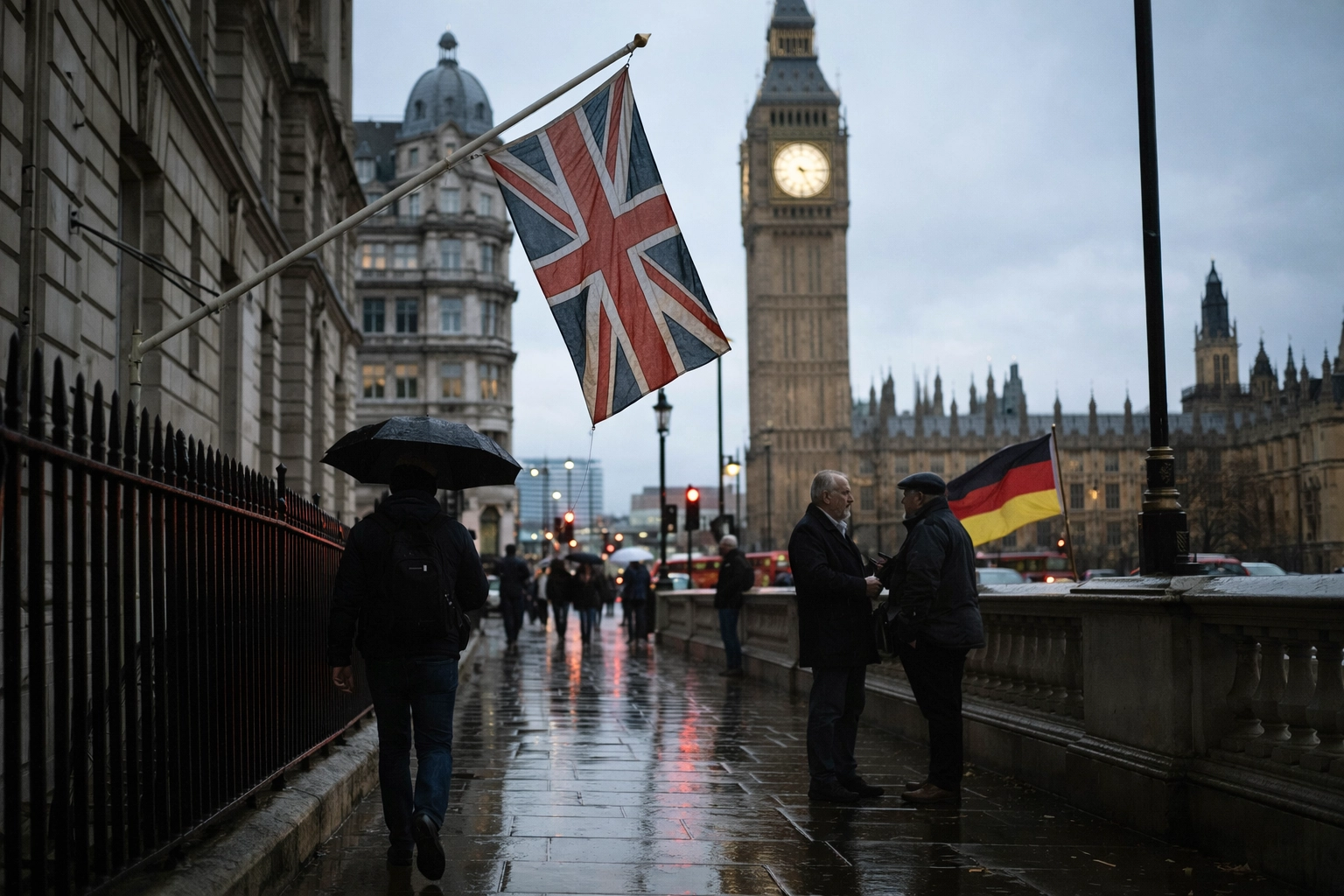
It has often been said that when France sneezes, Europe catches a cold. However, in the current geopolitical climate of 2026, it is increasingly clear that when Germany shifts its weight, the ripples are felt most profoundly across the English Channel. For readers following independent news uk, the connection between Berlin’s Chancellery and London’s Westminster has rarely felt more relevant or more layered. The relationship between the UK and Germany is not just one of historical curiosity; it is a living partnership that shapes everything from consumer prices to border security.
As we look at the landscape this April, a series of political and economic shifts in Germany are beginning to reshape the British experience. Whether it is the surge in German defence spending, the rise of populist movements that echo some of our own domestic tensions, or the intricate dance of trade and travel, the German ripple is becoming a wave. Understanding these untold stories matters for anyone trying to make sense of Europe without the usual filter. By having real conversations about these developments, we can better prepare for a future where the UK’s path remains closely tied to its continental neighbours.
A Shift in the European Defence Balance
For decades, the United Kingdom held a distinct position within NATO as the primary European military power. That status was largely underpinned by the fact that the UK maintained the largest defence budget on the continent. However, the political tide in Germany has turned decisively. Driven by a renewed sense of urgency around Eastern European security and the changing reliability of transatlantic alliances, Germany has significantly increased its military investment. Recent figures show that Berlin has not only met the 2% NATO target but has surpassed the UK in total annual defence spending.
With an economy roughly 40% larger than that of the UK, Germany’s capacity to sustain this level of investment means the gap could widen further. This is not just a matter of pride or spreadsheets; it marks a genuine shift in influence. As Germany takes on a more central role in European security, the UK finds itself needing to redefine its place within the alliance. The Kensington Treaty, a landmark agreement focused on security and defence cooperation, is a direct response to this new reality. It points to a more integrated approach, but it also puts the UK in a position where closer collaboration with Berlin is no longer optional.
This shift affects the UK’s strategic standing in practical ways. When Germany decides on military deployments or the procurement of new technology, those decisions now carry more weight in Brussels and Washington than they might have done a decade ago. For the British public, that means our own security policies are increasingly shaped by political debates taking place in Berlin. If a new German government under a leader like Friedrich Merz takes a more cautious or more assertive view on international conflicts, the UK will need to adjust accordingly to stay aligned with its most influential European partner.
The Common Thread of Domestic Populism
The political ripples are not confined to military budgets; they are also felt in the social fabric of both nations. Germany is currently grappling with a significant rise in support for the Alternative for Germany (AfD), which has solidified its position as a major force in the Bundestag. This surge is mirrored in the UK by the rising influence of groups like Reform UK, which have seen a steady climb in support since the 2024 election. Both movements are fuelled by similar concerns: immigration, the cost of living, and a feeling that traditional political elites have lost touch with everyday voters.
This shared populist surge creates a tricky set of challenges for both governments. In Germany, pressure to adopt tougher stances on immigration in order to contain the AfD has a direct impact on European travel and border policies. As Germany reconsidered its approach to the Schengen Agreement, the knock-on effects for UK-bound travel became more obvious. Increased checks and a more restrictive atmosphere at major European transit hubs can lead to delays and complications for British travellers and businesses alike.
It also means international cooperation can slip down the agenda. When a government is fighting for political survival at home, it is less likely to make the concessions needed for smoother trade or environmental agreements. For the UK, this means that negotiations over post-Brexit arrangements or climate targets can be slowed by domestic political pressures inside Germany. Understanding this dynamic is a key part of the real conversations we need to have about Britain’s place in the world. It is not enough to look at UK policy in isolation; we also need to see how it is being shaped by the same populist pressures now defining German politics.
Trade, Travel, and the Economic Anchor
Germany remains the UK’s second-largest trading partner, accounting for roughly 8.5% of all UK trade. This economic interdependence is the anchor that keeps the relationship steady, even when political winds are blowing in different directions. However, that anchor is being tested by Germany’s own economic struggles. As the engine of Europe faces pressure in its manufacturing sector and a transition towards greener energy, the ripple effects are felt in British supply chains. A slowdown in German car production, for instance, quickly affects British firms that provide components or logistics services.
The movement of people is another key area where German politics impacts the UK. Travel between the two nations is not just about tourism; it affects thousands of business professionals, students, and families crossing borders every day. Changes in German transport policy, such as the management of Deutsche Bahn or investment in major airport hubs, directly affect how easily British citizens can work and travel across Europe. When German political debates lead to strikes or changes in infrastructure funding, the travel ripple is felt at Heathrow and St Pancras.
Moreover, the success of bilateral treaties depends heavily on the broader UK-EU relationship. Germany, as the most influential member of the EU, often acts as a gatekeeper for British interests in Brussels. If German politics becomes more inward-looking, or if a future government prioritises internal EU cohesion over bilateral ties with the UK, the British economy could face further friction. This is why following the untold stories of German regional elections or internal party disputes matters so much for British observers. A shift in a state parliament in Saxony or Bavaria can eventually lead to a policy change that affects a small business owner in Manchester or a haulage firm in Kent.
The political landscape of 2026 is one of deep interconnectedness. The UK and Germany may be separated by the sea, but they are joined by shared economic interests, similar domestic pressures, and a mutual need for security in an uncertain world. As Germany navigates its newer role as a military leader and deals with the rise of populism, the ripples will continue to reach British shores. By staying informed through independent news uk and paying attention to the deeper context behind these developments, readers can better understand the forces shaping Europe’s next phase. The relationship between London and Berlin is no longer just a diplomatic formality; it remains a significant force in modern European politics.