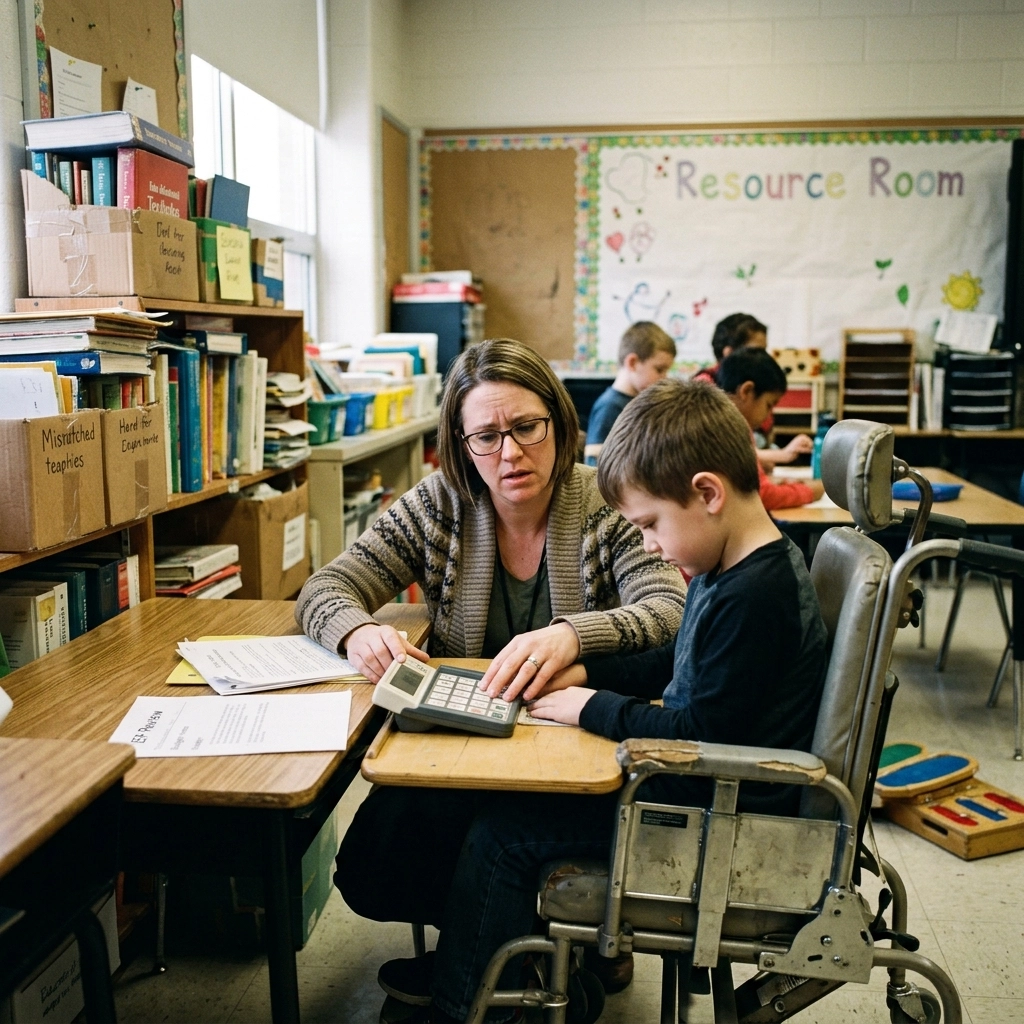
Walking into a typical British primary school in 2026 feels a lot different than it did even five years ago. There is a hum of activity, a vibrant display of artwork on the walls, and the familiar smell of floor wax and pencil shavings. But look closer at the back of a Year 4 classroom, and you might see the quiet reality of a system under immense pressure. There is a child wearing noise-cancelling headphones, another working one-on-one with a teaching assistant in a corridor because there is no quiet space left, and a teacher whose eyes tell a story of profound exhaustion. This is the frontline of a quiet emergency, a narrative often lost in broader political debates, but one we are dedicated to exploring as part of our commitment to independent news uk and the untold stories of our communities.
For years, the conversation around education has focused on grades and league tables. However, the most pressing issue facing schools today isn’t just about exam results; it is about the massive surge in neurodivergent needs and the cavernous funding gap that has left schools struggling to keep up. Teachers are no longer just educators; they are functioning as mental health first-aiders, speech therapists, and social workers, often without the specific training or the financial resources required to support these roles effectively. The reality is that the number of children identified with Special Educational Needs and Disabilities (SEND) has skyrocketed, but the pots of money meant to support them have remained stubbornly shallow.
The Reality of the Neurodiversity Surge
The statistics are startling, but they don't capture the full human experience of a child waiting eighteen months for an autism assessment. Across the UK, the demand for Education, Health and Care Plans (EHCPs) has reached an all-time high. This isn’t necessarily because there are "more" neurodivergent children than in previous generations, but rather because our understanding of conditions like ADHD, autism, and dyslexia has evolved. We are better at spotting the signs, and parents are more aware of their children’s rights. This awareness is a positive step toward a more inclusive society, but it has created a logistical nightmare for local authorities and schools.
When a child is diagnosed with a specific need, they are legally entitled to support. However, getting that legal entitlement on paper is only the first hurdle. Once a plan is in place, the school must find the resources to deliver it. In many cases, the "High Needs" funding provided by the government simply doesn't cover the cost of a dedicated teaching assistant or the specialised equipment a student might require. This leaves headteachers in the impossible position of having to "top up" special needs support from their general budget: money that was supposed to pay for books, heat the building, or keep the lights on. This financial strain is contributing to a postcode lottery where the quality of a child's education depends heavily on the fiscal health of their local council.
Teachers are reporting that the complexity of needs in a single classroom has increased significantly. It is not uncommon for a primary school teacher to have thirty pupils, five of whom have diagnosed SEND, and another five who are clearly struggling but remain on a waiting list. Managing a classroom where children have vastly different sensory requirements and learning paces requires a level of differentiation that is nearly impossible without adequate support staff. The result is rising anxiety among both staff and students, as the environment becomes a pressure cooker of unmet needs.
A System Stretched to Breaking Point
The funding gap isn’t just a line on a spreadsheet; it manifests in the physical and emotional exhaustion of school staff. We often hear untold stories of teachers spending their own money on sensory toys or staying late into the evening to research how to best support a non-verbal student because the local authority's specialist advisory service has been cut to the bone. The infrastructure that used to support schools: educational psychologists, speech and language therapists, and behavioural experts: is now so overstretched that many schools only see these professionals once a year, if at all.
This crisis is compounded by a recruitment and retention disaster in the teaching profession. Many talented educators are leaving the classroom not because they have lost their passion for teaching, but because they feel they are letting pupils down. It is tough to know exactly what a child needs and still be told the money is not there. That kind of pressure is a major driver of burnout. When a school cannot afford one-to-one support for a child with high-intensity needs, the burden falls back on the class teacher, which then reduces the time available for everyone else in the room.
Furthermore, the physical environment of many older school buildings is poorly suited to modern neurodivergent needs. Narrow corridors, harsh fluorescent lighting, and crowded classrooms can be sensory minefields for autistic children. Retrofitting these spaces requires capital investment that most schools have not seen in years. Schools are being asked to deliver inclusive education in buildings and budgets that have not kept up. That is not just a policy problem; it shows how slowly the system has responded to the real experiences of children and staff.
Bridging the Gap for the Next Generation
Solving the special needs funding crisis requires more than a one-off cash injection. It needs a proper reset in how education and inclusion are funded. The assessment process should be simpler and faster, without forcing parents into drawn-out disputes just to secure support. At the same time, policymakers need to recognise that the day-to-day cost of schooling has changed. Inclusive education is not an add-on. It should sit at the heart of school funding.
Investment in early intervention is one of the clearest ways forward. Spotting and supporting needs in nursery or Reception is usually far more effective than waiting until problems escalate in secondary school. When children get the right support early, they are more likely to stay engaged in education and less likely to face bigger barriers later on. That matters for families, schools, and the wider economy as well.
There is also a clear need to support the professional development of school staff. Every teacher works with special needs in some form, but not every teacher has had the training or time to do that well. Expanding access to training and making sure every school has a properly resourced SENCO would make a real difference. For readers following independent news uk and the untold stories behind public policy, this is one of the clearest examples of how funding decisions shape everyday life.
The classroom crisis is a reflection of wider priorities. If every child is meant to have access to an education that meets their needs, funding has to match that promise. Right now, too many schools are being asked to stretch limited resources beyond reason. Closing that gap will take sustained investment, a simpler EHCP process, and a stronger focus on the wellbeing of the staff holding the system together.