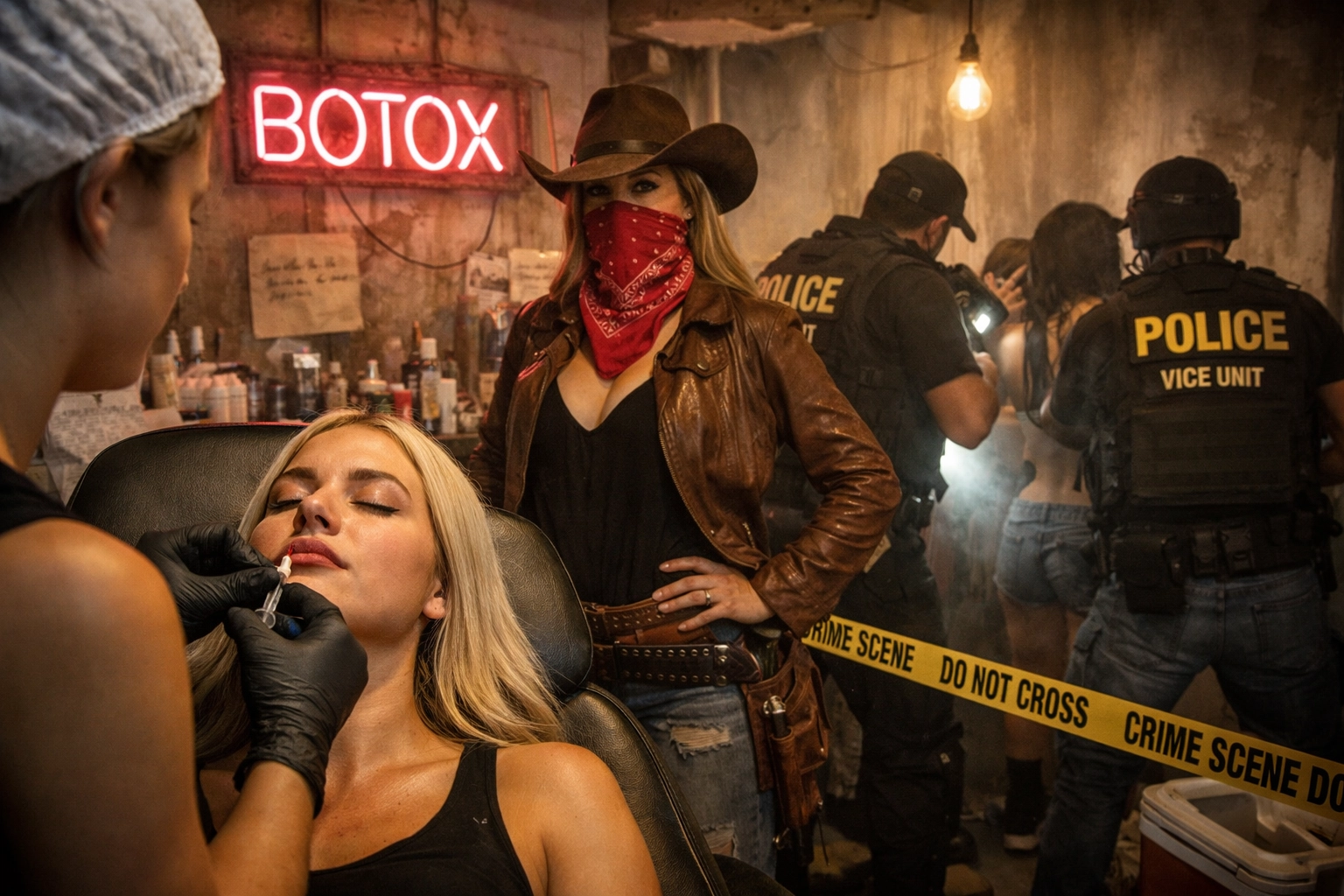
The rise of the "lunchbreak facelift" has transformed the British high street. In almost every town across the UK, you can now find a clinic, a hair salon, or even a home-based studio offering to plump your lips, freeze your forehead, or sharpen your jawline. On the surface, it can look like beauty has become more accessible than ever. Procedures that once felt out of reach are now available to almost anyone with a spare hundred pounds and an hour to spare. But behind the polished social posts and glowing testimonials sits a messier reality many now describe as the aesthetic wild west.
At NowPWR, we focus on the independent news uk readers need when major issues are hiding in plain sight. The cosmetic industry in Britain has grown into a multi-billion-pound sector, yet the rules around it remain surprisingly thin. While medical professionals have raised concerns for years, this remains one of those untold stories sitting right in front of us. In practical terms, it can feel as though opening a sandwich shop comes with more oversight than injecting filler into someone’s face.
The popularity of these treatments is obvious. Driven by the "Zoom effect" and the constant presence of social filters, demand for dermal fillers has soared. We have become a nation chasing a highly filtered look, and the market has moved quickly to cash in. The problem is that speed and safety do not always go hand in hand, and too often medical standards are pushed aside for convenience, trendiness and easy money.
The Regulatory Void and Practitioner Roulette
The fundamental issue facing the UK aesthetics industry is a lack of statutory regulation. To put it simply, in the UK, it is not currently illegal for someone with absolutely no medical training to pick up a needle and inject dermal filler into another person's face. While Botox is a prescription-only medicine and must be prescribed by a qualified healthcare professional, dermal fillers are classified as "medical devices" or, in many cases, not classified at all in a way that restricts who can buy or use them. This means that beauticians, hairdressers, and even individuals who have only completed a one-day online course can legally perform these procedures.
This lack of oversight has turned the industry into a game of practitioner roulette. Consumers often assume that if a clinic has a professional-looking website and a high following on social media, they must be operating safely. Unfortunately, this is not always the case. Without a mandatory licensing scheme, there is no central database to check a practitioner’s qualifications, insurance, or hygiene standards. The industry relies heavily on self-regulation, which, as history has shown, is rarely enough to protect the public.
The financial incentive to enter the market is massive. The non-surgical cosmetic industry in the UK is estimated to be worth over £3.6 billion. With such high stakes, many "cowboy" practitioners are cutting corners. They might use substandard products purchased from unregulated websites or ignore the necessary consultation processes that identify whether a patient is a suitable candidate for treatment. For many, "action needed" feels like an understatement; it is a full-blown public health crisis waiting to happen.
The government has made some strides, such as the 2021 ban on administering injectables to under-18s for cosmetic purposes. However, for the adult population, the "Wild West" remains very much open for business. The sheer volume of complaints recorded by organisations like Save Face: a government-approved register for practitioners: highlights the scale of the problem. Thousands of people every year report botched procedures, with a staggering majority of those complaints involving practitioners who have no medical background whatsoever.
When Beauty Goes Wrong: The Human Cost
When we talk about "botched" fillers, it is easy to think of "trout pouts" or slightly uneven features. While those are certainly undesirable, the medical reality can be far more horrific. When a filler is injected incorrectly, it can enter a blood vessel, causing a vascular occlusion. This blocks the blood supply to the skin, leading to tissue death, or necrosis. In the most extreme cases, if a filler is injected into the vessels supplying the eye, it can cause permanent blindness.
These are not just theoretical risks; they are documented complications that occur with alarming frequency in unregulated settings. A medically trained professional: such as a doctor, nurse, or dentist: is trained to recognise the signs of a vascular occlusion immediately and has access to Hyaluronidase, an enzyme that can dissolve the filler and restore blood flow. An untrained practitioner, however, may not even realise what has happened until the patient is at home and the skin begins to turn black. By then, the damage is often irreversible.
The psychological impact of these failed procedures is equally devastating. Many individuals seek out cosmetic treatments to boost their confidence or manage anxiety regarding their appearance.
When a procedure goes wrong, it doesn't just leave a physical scar; it can lead to severe mental health struggles, social withdrawal, and a loss of identity. The "untold stories" of these victims are often buried under the shame of having "chosen" to have the procedure in the first place, but the blame lies squarely with a system that allows untrained individuals to perform medical-grade interventions.
Furthermore, there is the issue of the "vanishing practitioner." In the unregulated market, if a complication occurs, some practitioners simply delete their social media profiles, change their phone numbers, and disappear. Without a formal licensing system or a requirement for medical malpractice insurance, the victim is left with no recourse, no compensation, and a medical bill to fix the damage in the private sector or via an already overstretched NHS.
Paving the Way for a Safer Future
The tide is slowly starting to turn, but the pace of change is glacial. Following years of campaigning by medical professionals and victim advocacy groups, the UK government has moved towards a proposed licensing scheme for non-surgical cosmetic procedures in England. This scheme would theoretically require practitioners to meet certain standards of training and hygiene and to hold appropriate insurance. It would also likely categorise procedures based on risk, ensuring that high-risk treatments are only performed by those with the necessary expertise.
However, the details of this scheme are still being ironed out, and the industry remains in a state of limbo. In the meantime, the burden of safety falls entirely on the consumer. Until the law catches up, the best advice for anyone considering lip fillers or any other aesthetic injectable is to do their homework. This means looking for practitioners who are registered with professional bodies such as the General Medical Council (GMC), the Nursing and Midwifery Council (NMC), or the General Dental Council (GDC).
Education is the most powerful tool we have. Potential patients should ask see a practitioner's qualifications, enquire about the specific brand of filler being used, and ensure that the clinic has a protocol for dealing with emergencies. If a price seems too good to be true, it almost certainly is. High-quality, regulated filler is expensive to source, and a practitioner charging £50 for a treatment is likely using substandard products or lacks the insurance and training required to keep you safe.
The dream of easy, affordable beauty shouldn't have to be a nightmare. By highlighting these issues, we hope to push the conversation forward and demand better protection for everyone. The aesthetics industry has the potential to provide wonderful, confidence-boosting results, but it can only do so safely when the "Wild West" is finally tamed by sensible, robust regulation.
The current state of the UK's aesthetic industry highlights a significant gap between consumer demand and legislative protection. While the allure of quick cosmetic enhancements remains strong, the risks associated with an unregulated market are substantial and well-documented. As the government continues to work on licensing and oversight, the responsibility remains with the individual to seek out qualified medical professionals. Achieving a balance between accessibility and safety is essential for the future of cosmetic medicine in Britain, ensuring that the pursuit of beauty does not come at the cost of health and well-being.