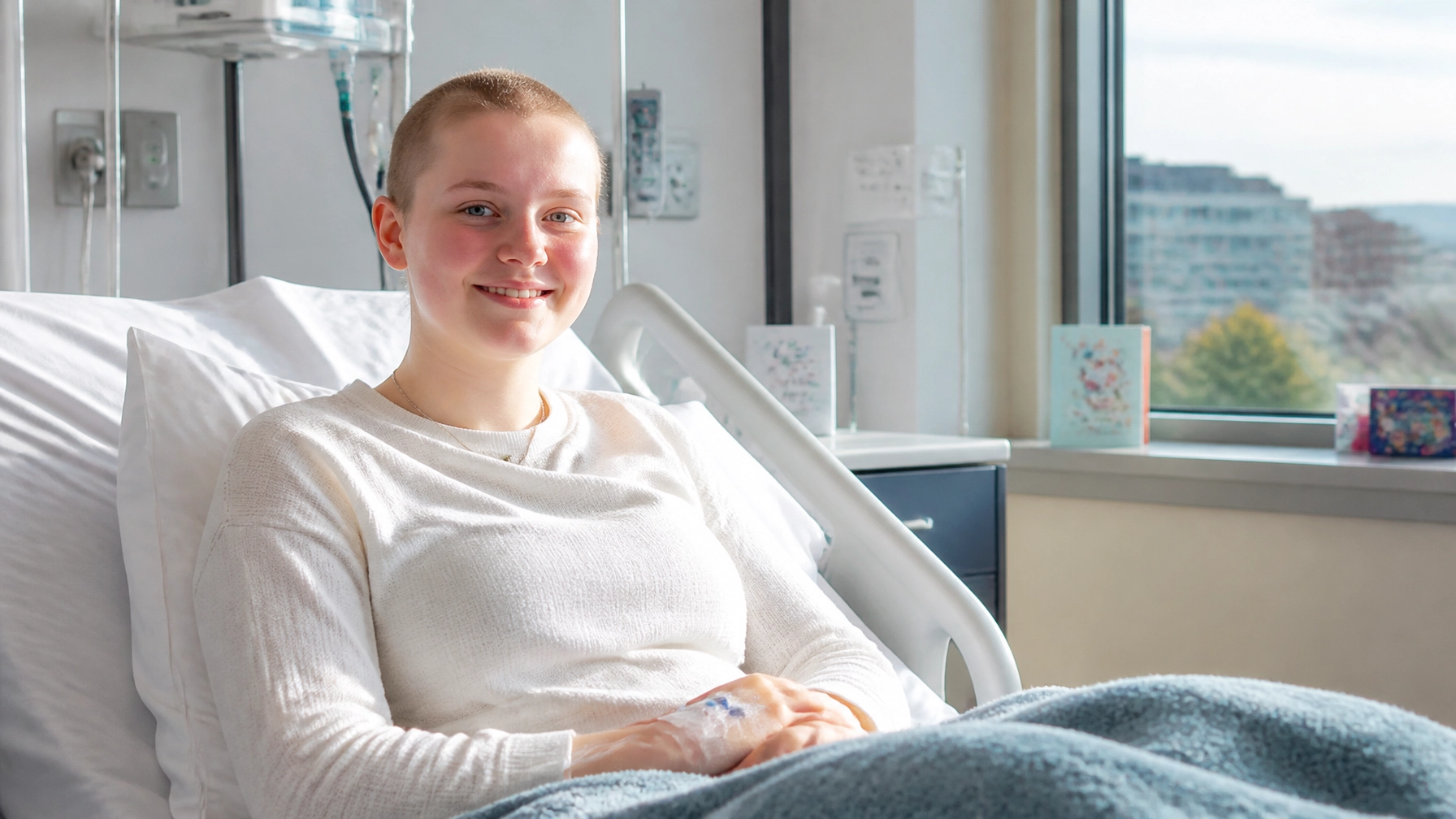
For a young girl from Eastbourne, the simple act of waking up without a headache or the fear of a sudden fainting spell is nothing short of a miracle.
Millie Fairley, a teenager whose life was recently upended by a devastating medical diagnosis, has finally received the news her family has been praying for: a successful stem cell transplant. This breakthrough comes after a grueling months-long search that spanned the globe, highlighting both the fragility of human health and the incredible power of international cooperation. Millie’s journey from a regular schoolgirl to a symbol of hope for thousands waiting on donor registries is a story of resilience, medical expertise, and the kindness of a stranger thousands of miles away.
The nightmare began with symptoms that seemed, at first, relatively innocuous. Headaches and fatigue are common enough for active teenagers, but when Millie began to suffer from heavy bruising and fainting episodes, her parents knew something was seriously wrong. A trip to the GP led to a series of urgent blood tests, which quickly escalated into a transfer to King’s College Hospital in London. There, the family received the news that would change everything: Millie was diagnosed with aplastic anaemia. It is a condition so rare that it affects roughly only two people per million in the United Kingdom. In Millie’s case, her bone marrow had effectively stopped producing enough new blood cells for her body to function, leaving her immune system compromised and her life hanging in a delicate balance.
The Long Road to a Lifeline
The diagnosis of aplastic anaemia is a daunting one. Unlike many other blood-related conditions, the primary treatment for severe cases often involves a complete reset of the patient’s immune system through a stem cell transplant. For Millie, this meant her survival depended entirely on finding a genetic match: a "twin" of sorts: whose healthy stem cells could be harvested and infused into her own body to kickstart the production of life-sustaining blood cells. The search began within her own family, but as is the case for many patients, a compatible sibling match was not found. This reality thrust Millie and her supporters into the high-stakes world of international donor registries, where the odds of finding a perfect match can feel like searching for a needle in a haystack.
During the wait, Millie’s life was transformed into a cycle of hospital visits and careful isolation. While her peers in Eastbourne were attending classes and planning social events, Millie was receiving ongoing care at Brighton Royal Children’s Hospital, undergoing regular blood and platelet transfusions just to keep her stable. The physical toll was significant, but the emotional weight was perhaps even heavier. The uncertainty of when, or if, a donor would be found loomed over every day. Yet, rather than withdrawing, the Eastbourne community rallied. Local campaigns, supported by charities like DKMS, saw hundreds of people signing up for the stem cell register, each person hoping they might be the one to save Millie’s life.
This period of waiting was marked by a profound sense of community spirit. From local sports clubs to small businesses, the message was clear: Eastbourne was standing with Millie. The drive to find a donor was not just about one girl; it became a mission to raise awareness about how simple it is to join the registry. A cheek swab and a few minutes of time were all that was required to potentially save a life. As the weeks turned into months, the search expanded beyond British shores, tapping into a network of millions of potential donors worldwide. The search was no longer just local; it was a global effort to find the specific genetic signature required to give Millie a second chance at life.
A Global Search Ends in Success
The breakthrough finally came from an unexpected corner of the globe. After months of searching through international databases, a match was identified. The news brought a mixture of overwhelming relief and renewed anxiety for the Fairley family. Finding a donor is only the first step; the transplant itself is a complex and risky procedure that requires the patient to undergo intensive conditioning, often involving high-dose chemotherapy to deplete their own failing bone marrow and make room for the new cells. It is a process that pushes the human body to its absolute limits, requiring constant monitoring by specialist medical teams.
The donor, whose identity remains anonymous in accordance with standard medical privacy protocols, underwent a collection process that is far simpler than many people realise. In the majority of cases, stem cells are collected via the blood in a procedure remarkably similar to donating platelets. These cells were then transported across borders, handled with the utmost care to ensure their viability, and delivered to the hospital where Millie waited. The infusion itself, often described by patients as surprisingly anticlimactic given its importance, involves the donor cells being fed into the patient’s bloodstream via a central line. From there, the "seeds" of a new immune system find their way to the bone marrow and begin the vital work of engraftment.
Following the transplant, the days that followed were some of the most critical. Doctors watched for signs that Millie’s body was accepting the new cells and that they were beginning to produce the red cells, white cells, and platelets she so desperately needed. This period, known as the engraftment phase, is a time of extreme vulnerability, as the patient effectively has no immune system of their own. Every fever or minor fluctuation in blood counts is analysed with intense scrutiny. Fortunately, Millie’s recovery has exceeded many expectations. The new cells have taken hold, and her blood counts have begun the steady climb toward healthy levels, marking the beginning of a new, healthier chapter in her young life.
A New Chapter and a Call for Awareness
As Millie prepares to return to a more normal routine, the impact of her journey continues to resonate far beyond her home in East Sussex. Her story has highlighted the critical shortage of donors on the stem cell registry, particularly those from diverse backgrounds or younger age groups. While Millie was fortunate enough to find her miracle match, many others are still waiting. The success of her transplant is a testament to the importance of the global registry and the selfless individuals who choose to sign up, often never knowing if they will ever be called upon to help.
The recovery process for a stem cell transplant recipient is long and requires patience. Millie will need to be monitored for months and even years to ensure her new immune system remains stable and to manage any potential long-term side effects of the treatment. However, the outlook is brighter than it has been since her diagnosis. She is looking forward to the things most teenagers take for granted: spending time with friends, returning to her studies, and enjoying the simple pleasure of a walk along the Eastbourne seafront without the shadow of illness hanging over her. Her resilience has been an inspiration to those who followed her story, proving that even in the face of a one-in-a-million diagnosis, hope and community action can prevail.
Ultimately, Millie’s experience serves as a powerful reminder of the interconnectedness of the modern world. A teenager in a coastal English town found her lifesaver through a global network of volunteers, bridging geographical and cultural divides. The Fairley family’s gratitude extends not just to the medical professionals at King’s College and Brighton, but to the anonymous donor who made the choice to give a stranger a future. As Millie continues her recovery, her story remains a beacon for others navigating similar paths, reminding us all that the gift of life is often just a cheek swab away. The "miracle match" found for Millie is more than just a medical success; it is a celebration of human generosity on a global scale.