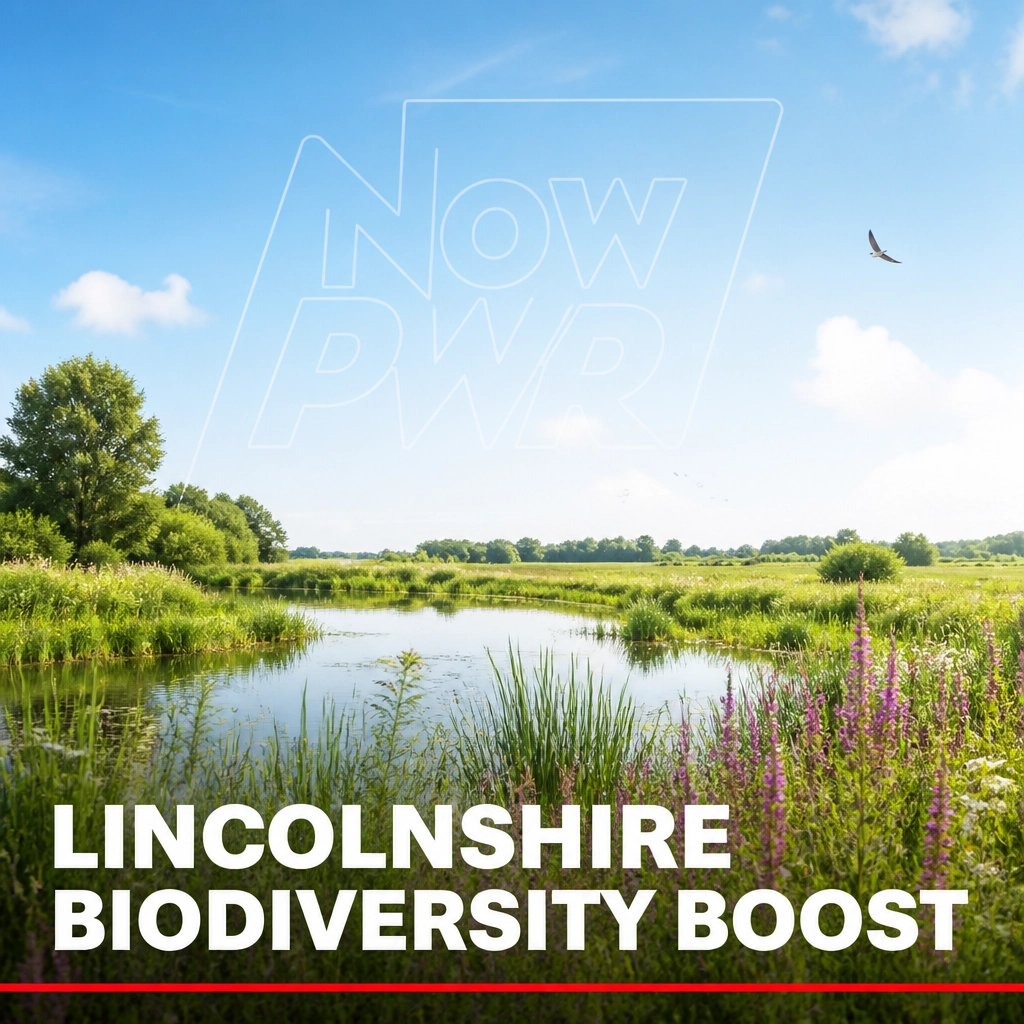
A 617-hectare expanse in the heart of Lincolnshire has provided a stunning blueprint for the future of British conservation, revealing that nature can rebound with extraordinary speed when the shackles of intensive industry are removed. The Boothby Wildland project, a former grade 3 arable farm, has seen its biodiversity metrics surge by a staggering 108 per cent in just three years. This isn't just a marginal gain; it is a total transformation of a landscape that once prioritised monoculture over the complex, buzzing web of life that currently calls the site home.
The shift from the rigid lines of cereal farming to a mosaic of natural habitats has allowed the local flora and fauna to reclaim territory that had been under the plough for generations. While many environmental projects struggle to show tangible results over short timeframes, the data emerging from Boothby is defying traditional expectations. By allowing fields to "scrub up" and re-vegetate through natural colonisation, the project has created a corridor for species that were previously clinging to the narrow fringes of the farm’s boundaries. These small, species-rich hotspots are now bleeding back into the centre of the land, creating a vibrant ecosystem that is as resilient as it is diverse.
Nature Reclaims the Former Farmland
The transition at Boothby began with a fundamental change in philosophy. For decades, the land was managed for maximum yield, a process that inherently required the suppression of "weeds" and the control of water. When the intensive farming practices were phased out in 2023, the land was effectively left to its own devices, guided only by light-touch interventions designed to kick-start natural processes. The results were immediate. Without the constant application of fertilisers and pesticides, the soil health began to recover, providing a foundation for a wider variety of plants to take root.
Monitoring this change has been a feat of modern ecological science. Baseline surveys conducted in 2023 used a combination of camera traps, drones, bioacoustic sensors, and traditional boots-on-the-ground observation to establish a "year zero" data set. What they found then was a landscape that, while functional as a farm, was ecologically simplified. Fast forward to the present day, and those same monitoring tools are recording a different world. The 108 per cent increase in biodiversity is a reflection of both the number of species present and the sheer volume of life within those species groups.
Birds have been amongst the most visible beneficiaries of this wilding revolution. Recent bioacoustic surveys recorded 52 different bird species across the site. Perhaps most significantly, 41 of these are on the UK Red List of conservation concern. Species like the skylark, yellowhammer, and grey partridge: birds that have seen their numbers plummet across the British countryside due to the loss of nesting sites and food sources: are finding a sanctuary here. The presence of these birds suggests that the insect populations, the vital foundation of the food chain, have also experienced a massive resurgence. As the habitats continue to mature, experts anticipate the arrival of even rarer visitors, such as the turtle dove and the nightingale, whose songs were once a staple of the Lincolnshire landscape.
The Return of the Ecosystem Engineers
While the birds and bees have returned of their own accord, one specific species was given a helping hand to accelerate the restoration of the land's hydrology. A family of beavers was reintroduced into a 200-hectare enclosure, marking the largest beaver project area in England. These "ecosystem engineers" have wasted no time in making their mark on the Boothby Wildland. By building dams and creating intricate pond systems, the beavers have fundamentally altered the way water moves through the site.
The West Glen River, which had been straightened and deepened in the past to drain the land for farming, is being encouraged to "re-wiggle." This natural restoration of the river's curves allows it to slow down, holding water in the landscape for longer periods. This is a critical development in an era of increasingly unpredictable weather. By retaining water on-site, the beaver-created wetlands act as a natural sponge, reducing the risk of downstream flooding during heavy rains and providing a vital moisture reserve during summer droughts.
The impact of these wetlands on biodiversity cannot be overstated. The ponds created by beaver activity are magnets for invertebrates, which in turn support amphibians, small mammals, and a host of predatory birds. It is a cascading effect where one species’ natural behaviour creates the conditions for hundreds of others to thrive. The beavers are not just inhabitants of the wildland; they are the architects of its future. Their activity ensures that the landscape remains dynamic, shifting and changing in a way that static, human-managed reserves rarely do.
Quantifying a Wilding Revolution
What makes the Boothby Wildland project particularly significant is its role within the wider national strategy for environmental recovery. As part of the Landscape Recovery initiative under the Environmental Land Management Scheme, the project serves as a live laboratory for how large-scale rewilding can coexist with the needs of the modern world. It proves that restoring nature is not about turning back the clock to a pre-human era, but about finding new ways to integrate wild processes into our current landscape.
The success at Boothby is also a testament to the power of natural colonisation. While some projects rely heavily on planting thousands of trees, Boothby has largely allowed the land to decide what grows and where. This leads to a more natural "scrub" environment: a mix of thorns, brambles, and saplings: which is often far more beneficial for wildlife than a neatly planted woodland. This messy, complex habitat provides better cover and a more varied diet for the animals that live there.
Plans are already in motion to introduce free-roaming herbivores, such as cattle or ponies, which will mimic the grazing patterns of ancient wild herds. Their movement across the site will prevent any one species of plant from dominating, ensuring that the mosaic of habitats remains diverse. This "dynamic grazing" is the final piece of the puzzle, creating a self-sustaining system that requires minimal human interference.
For the residents of Lincolnshire and the wider UK, the story of Boothby is one of hope. It demonstrates that the decline of our natural world is not inevitable and that, given the space and the right conditions, the wild can return with a vibrancy that is both surprising and inspiring. From 2026, the site has opened its doors to the public for guided tours, allowing people to witness first-hand the transformation of a former industrial farm into a thriving haven for life. As the biodiversity numbers continue to climb, Boothby stands as a powerful reminder that when we give nature an inch, it takes a mile: and brings the rest of the ecosystem along with it.