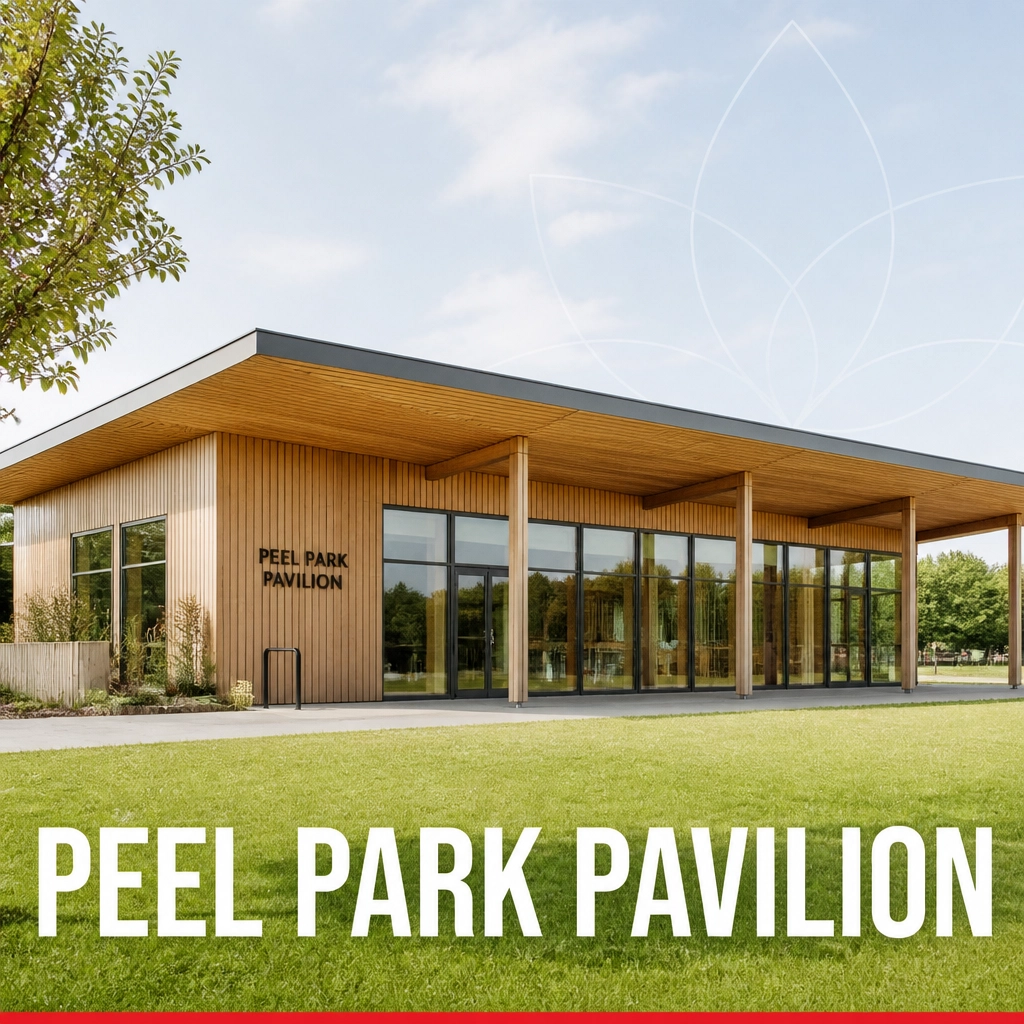
In an era where major construction projects are often defined by corporate contractors and steel-and-glass monotony, a small corner of Little Hulton in Salford has produced something truly remarkable. The Peel Park Pavilion, a structure that would have been a significant achievement for any established firm, has recently secured two of the most prestigious honours at the Manchester Society of Architects awards. What makes this victory particularly sweet for the local community is not just the architectural finesse of the building, but the hands that built it. Unlike the vast majority of award-winning structures, this hub was constructed with the help of over 100 volunteers, including 60 local schoolchildren who swapped their pens for power tools to bring the project to life.
The project, a collaboration between the design firm Architecture Unknown and the local group CommUNITY Little Hulton, took home both the Community Built Award for Best Community Building and the coveted Judges’ Choice Award for Design. For a project rooted in one of the more economically challenged areas of Greater Manchester, these accolades represent a massive shift in how urban regeneration is perceived and executed. It proves that when local residents are given the agency to shape their own environments, the results can stand toe-to-toe with the very best in the industry.
The pavilion sits as a beacon of sustainable, community-led design in Peel Park, a space that had long been underused and overlooked. The journey from a conceptual dream to a physical reality was paved with grit, determination, and a radical approach to construction that saw primary school pupils learning the intricacies of timber framing and assembly. By involving the youth of Little Hulton from the very first day, the project ensured that the building belonged to the next generation before the first lick of paint had even dried.
A Collective Vision for Little Hulton
The story of the Peel Park Pavilion begins with a problem that is all too common in urban parks across the country: a lack of facilities and a sense of disconnection from the local population. Little Hulton, a residential area in Salford, has often felt the sting of being left behind by the broader economic boom of Manchester’s city centre. For years, Peel Park was a vast green space with immense potential but very little to offer in terms of a safe, sheltered hub for families and young people. The drive for change came from within, led by CommUNITY Little Hulton and the Little Hulton Big Local initiative, groups that refused to wait for top-down investment that might never arrive.
Architecture Unknown entered the fray not as traditional consultants, but as facilitators. Their philosophy centered on the idea that architecture should not be something done to a community, but rather something done with it. This led to a design process that was heavily influenced by the needs and desires of those who would actually use the building. The result was a plan for a versatile, sustainable pavilion that could host everything from youth clubs and health clinics to community cafes and educational workshops.
The construction phase was where the project truly deviated from the norm. Instead of fencing off the site and bringing in a fleet of heavy machinery, the organisers opened the gates. The call for volunteers saw an overwhelming response. Residents of all ages turned up to contribute, but it was the participation of 60 local schoolchildren that captured the imagination of the region. These children were not just spectators; they were active participants in the build. Under professional supervision, they learned how to handle materials, understand blueprints, and contribute to the structural integrity of a building that would serve them for decades to come. This hands-on involvement created an immediate and unbreakable bond between the community and the structure.
Designing for the Next Generation
Architecturally, the Peel Park Pavilion is a masterclass in honesty and sustainability. The use of timber as a primary material was a conscious choice, reflecting a commitment to low-carbon construction and a desire to create a warm, inviting atmosphere that contrasts with the often-stark surroundings of social housing blocks. The design features large windows that flood the interior with natural light, blurring the lines between the indoor community space and the sprawling greenery of the park outside.
The Manchester Society of Architects judges were particularly impressed by the "genuine community-built" nature of the project. They noted that the pavilion was not just a building that served the community, but one that was physically birthed by it. The Judges’ Choice Award for Design is a testament to the fact that "community-built" does not have to mean amateurish or aesthetically compromised. On the contrary, the pavilion exhibits a level of detail and thoughtful spatial planning that rivals high-budget commercial projects. The modular nature of the timber frame allowed for a build process that was accessible to non-professioners, while the final silhouette of the building provides a modern landmark for Little Hulton.
Beyond the aesthetics, the pavilion addresses practical needs. It provides a focal point for the park, offering a sense of safety and surveillance that encourages more people to use the outdoor space. For the children who helped build it, the pavilion is a source of immense pride. It is a physical manifestation of their potential and a reminder that they have the power to change their environment. This psychological impact is perhaps more valuable than the building itself, fostering a sense of civic responsibility and a "can-do" attitude in an area where such sentiments can sometimes be hard to find.
Setting a New Standard for Urban Renewal
The success of the Peel Park Pavilion at the MSA awards sends a clear message to urban planners, architects, and local councils across the UK. It challenges the traditional model of regeneration which often relies on outside developers who have little connection to the social fabric of the areas they are transforming. The Little Hulton model shows that with the right guidance and a willingness to embrace a bit of chaos, communities can be the primary drivers of their own renewal.
This project is an example of what can be achieved when social value is placed on equal footing with architectural merit. The "untold story" here is not just about a new building, but about the 100 people who now know how to build, the 60 children who see themselves as creators, and the thousands of residents who now have a place to call their own. It is an alternative news narrative that focuses on grassroots triumph over bureaucratic stagnation.
As we look toward the future of our towns and cities, the Peel Park Pavilion serves as a blueprint. It suggests that the solution to underused public spaces isn't always a massive influx of capital, but rather a redistribution of power. By giving people the tools and the permission to build their own future, we create spaces that are more resilient, more loved, and more beautiful. The awards won by Architecture Unknown and CommUNITY Little Hulton are well-deserved, but the real prize is the revitalised spirit of Little Hulton itself. This hub is more than just timber and glass; it is the heart of a community that decided to build its own way forward.