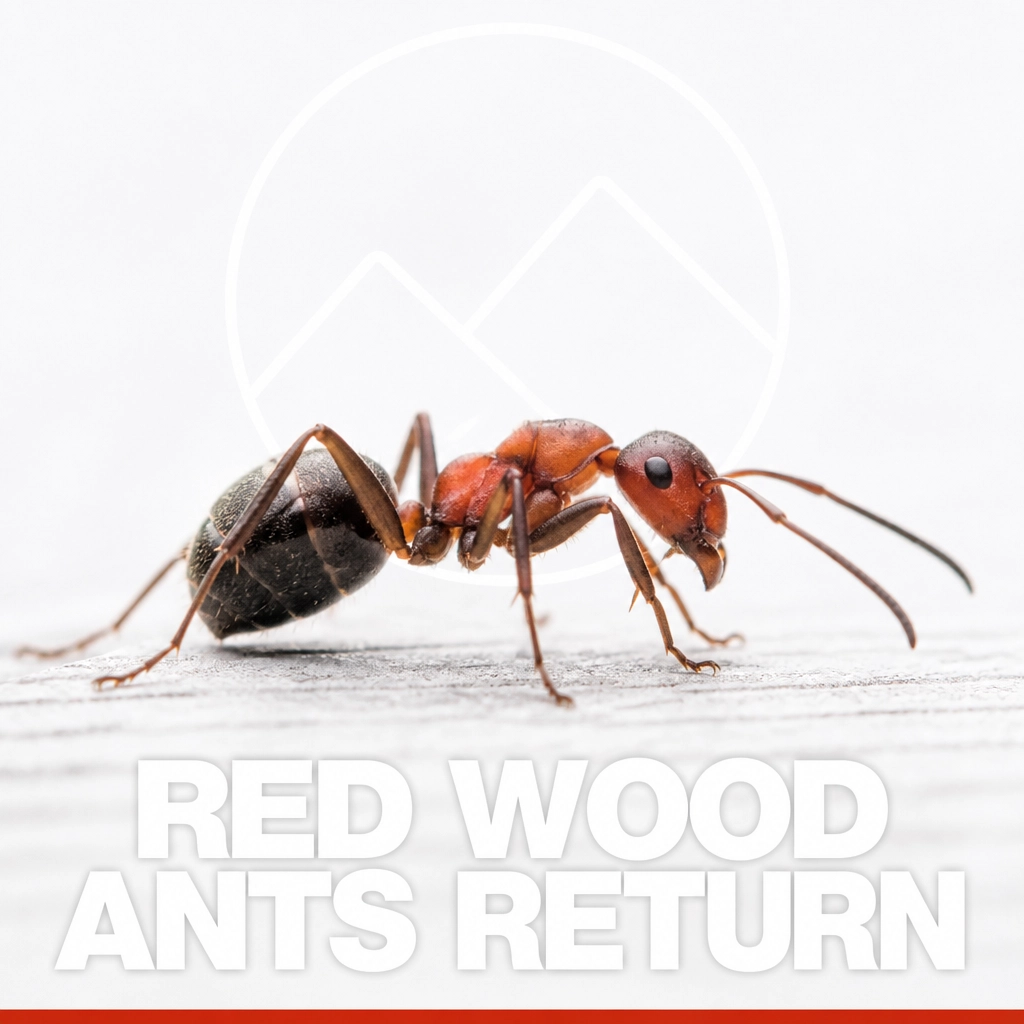
A small but mighty force is returning to the Shropshire landscape. In a significant move for local conservation, the National Trust has successfully reintroduced the southern red wood ant to Comer Woods, part of the Dudmaston Estate near Bridgnorth. This project marks a vital step in restoring the natural balance of the region's woodlands, bringing back a species that has been absent from much of the Midlands for decades. The return of these industrious insects is not just about one species; it is about revitalising an entire ecosystem that relies on the complex social and physical work these ants perform every day.
The southern red wood ant, known scientifically as Formica rufa, is often referred to as a "woodland engineer." These ants are famous for building large, dome-shaped thatch nests that can house tens of thousands of individuals. However, despite their reputation for resilience, they have faced a steep decline across the United Kingdom. Listed as Near Threatened on the IUCN Red List, they have largely disappeared from the Midlands, as well as parts of Northern and Eastern England. Their reintroduction to Shropshire is therefore a landmark moment for conservationists who have spent years preparing the ground for their return.
Working in partnership with experts from Swansea University and the specialist group Ant Antics, the National Trust has been carefully moving established colonies into their new home. This is a delicate operation that requires precise timing and a deep understanding of the ants’ needs. By selecting specific areas within Comer Woods that offer the right balance of sunlight, shelter, and food, the team hopes to give these new residents the best possible start. The goal is to see these colonies settle, expand, and eventually become a self-sustaining part of the Shropshire countryside once again.
Restoring a Lost Ecological Engineer
To understand why the return of a single ant species matters so much, one has to look at the massive impact they have on their surroundings. Red wood ants are the heavy lifters of the forest floor. As they forage, they move vast quantities of soil and organic matter, which helps to aerate the ground and recycle nutrients. Their presence changes the very chemistry of the woodland, making it a more hospitable place for a wide variety of plants and other insects. In many ways, a woodland without its wood ants is like a city without its maintenance crews; things slowly start to stagnate.
The ants are also formidable predators. They hunt a wide range of other invertebrates, which helps to keep populations of certain forest pests in check. Conversely, they also provide a vital food source for larger animals. Woodpeckers, in particular, are known to feast on these ants, and the relationship between the two species is a fascinating example of woodland interdependence. Beyond being a snack, the ants provide a unique service to birds through a behaviour known as "anting." Birds will often sit on or near an ant nest, allowing the ants to crawl through their feathers. The ants release formic acid, which acts as a natural pesticide, helping the birds to rid themselves of parasites.
Furthermore, the iconic mounds that the ants build are ecosystems in their own right. These nests, made from twigs, pine needles, and grass, are designed to trap heat from the sun, keeping the colony warm even in the cooler British months. These structures provide a habitat for many other rare "myrmecophilous" species: creatures that live exclusively in or around ant nests. By bringing the red wood ant back to Comer Woods, conservationists are effectively opening a high-end apartment complex for dozens of other species that have been struggling to find a home in the area.
The Delicate Art of Relocating a Colony
Relocating an ant colony is not as simple as picking up a nest and moving it. It is a scientific process that requires months of planning and a high degree of care. The team at Comer Woods had to ensure that the environment was perfectly suited to the ants' specific requirements. Red wood ants are notoriously picky about their real estate; they require open, sun-dappled glades where the light can hit their nests for several hours a day. If a woodland becomes too dense or overgrown, the ants will struggle to maintain the internal temperature of their mounds, and the colony will eventually perish.
The partnership with Swansea University has been crucial in this regard. Researchers have been monitoring the light levels and vegetation structure in Comer Woods to identify the most promising release sites. Once the sites were chosen, the colonies were carefully transported from donor sites where populations are still thriving. This method ensures that the genetic diversity of the species is maintained and that the new Shropshire population has the best chance of long-term survival. The ants were moved during their less active periods to minimise stress on the queen and the workers, ensuring that the social structure of the colony remained intact during the transition.
Since the move, the focus has shifted to monitoring. Experts are keeping a close eye on how the ants are interacting with their new environment. They are looking for signs of nest building, foraging activity, and, most importantly, the production of new offspring. Early reports from the field are encouraging, with the ants seen actively exploring the surrounding area and beginning to construct the foundations of their new homes. This ongoing research will provide valuable data that can be used to inform future reintroductions across the country, making Comer Woods a laboratory for modern conservation techniques.
A Greener Future for Comer Woods
The reintroduction of the red wood ant is just one piece of a much larger puzzle. The National Trust has been working tirelessly to restore the wider Dudmaston Estate, creating a landscape that is more resilient to climate change and more hospitable to wildlife. This involves creating "wildlife corridors" that allow animals to move freely between different pockets of woodland and heathland. By linking Comer Woods with other nearby sites like Kinver Edge: where similar reintroduction projects are also underway: the Trust is helping to build a regional network of biodiversity that is far stronger than any single isolated wood.
For the people of Shropshire, the return of the red wood ant offers a chance to witness a natural recovery in real-time. Comer Woods is a popular spot for walkers, cyclists, and nature lovers, and the National Trust is keen for visitors to appreciate these new residents. However, they are also reminding the public to tread lightly. The new ant nests are fragile structures, and the success of the reintroduction depends on the colonies being left undisturbed. Visitors are encouraged to keep to the waymarked trails and to keep dogs under close control to avoid accidentally damaging the mounds.
As the years go by, the hope is that the red wood ant will once again become a common sight in the Shropshire countryside. Their return is a testament to what can be achieved when conservationists, scientists, and the public work together to right the wrongs of the past. It is a story of hope and renewal, proving that even the smallest creatures can have a massive impact on the health of our planet. By giving these ants a second chance, we are ensuring that the woodlands of Shropshire remain vibrant, healthy, and full of life for generations to come.