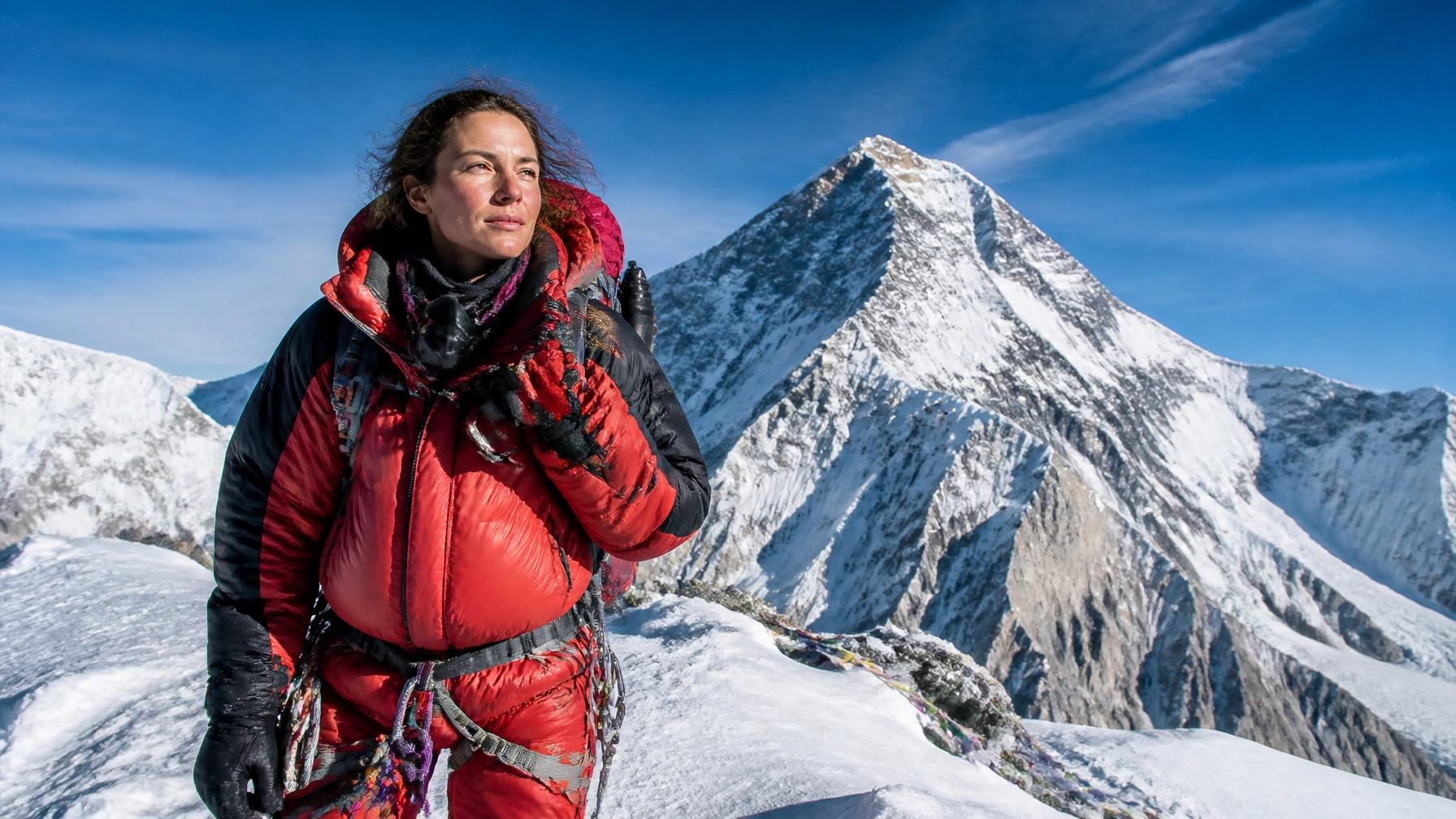
Dr Shaunna Burke has achieved what many would consider the impossible, becoming the first woman with stage four incurable cancer to reach the summit of Mount Everest. The researcher from Addingham, who works at the University of Leeds, stood at the top of the world’s highest peak after a grueling expedition that tested the very limits of human endurance. This was not merely a feat of mountaineering; it was a profound statement of intent from a woman who refused to let a terminal diagnosis dictate the boundaries of her life.
Living with secondary breast cancer that has spread to her bones, Dr Burke’s journey to the 8,848-metre summit was a carefully calculated risk. It followed a previous attempt on the mountain years earlier, before her diagnosis, which was cut short by high-altitude pulmonary oedema. Returning to the Himalayas with an incurable condition added a layer of complexity that few climbers could fathom. Her successful ascent serves as a beacon of hope for those living with chronic and terminal illnesses, proving that while a diagnosis may change the trajectory of a life, it does not necessarily have to end the pursuit of one's greatest ambitions.
The expedition was part of a broader mission to raise funds and awareness for cancer research. Dr Burke, an expert in psychology and physical activity, used her own body as a living laboratory to explore how extreme altitude affects cancer markers and the physical resilience of patients with advanced disease. The data gathered during this climb is expected to provide unique insights into the physiological stresses of high-altitude environments on those with compromised health, potentially opening new avenues for understanding how exercise and environment interact with cancer progression.
The physical and mental challenge of the death zone
Reaching the summit of Everest involves navigating the "death zone," the area above 8,000 metres where oxygen levels are insufficient to sustain human life for long periods. For Dr Burke, the challenge was twofold. Not only did she have to contend with the thinning air, sub-zero temperatures, and treacherous terrain that every climber faces, but she also had to manage the symptoms and treatment side effects of her stage four cancer. The physical toll of the climb is immense even for the most elite athletes, involving months of acclimatisation and a slow, methodical push toward the top.
The mental fortitude required to continue upward while knowing your body is fighting a secondary internal battle is almost incomprehensible. Dr Burke has spoken about the importance of mental resilience and the psychological tools she used to manage the pain and exhaustion during the weeks spent on the mountain. Her background in psychology undoubtedly played a role in her ability to compartmentalise the fear and physical discomfort, focusing instead on the singular goal of the summit. The sheer willpower required to keep moving when every breath is a struggle and every step feels like a monumental effort is what defines this achievement.
The logistics of the climb were also significantly more complex due to her medical needs. Ensuring she had the necessary support and monitoring throughout the ascent required meticulous planning. The team accompanying her had to be prepared for any medical emergencies related to her condition, all while operating in one of the most hostile environments on Earth. This level of preparation highlights the collaborative effort involved in such a feat, where medical expertise and mountaineering skill intersected to make the impossible possible.
A mission for research and representation
Beyond the personal victory, Dr Burke’s summit is a significant contribution to the field of exercise oncology. By documenting her physical responses to the extreme conditions of Everest, she is helping to challenge the traditional view that patients with advanced cancer should avoid intense physical activity. Her work suggests that, with the right support and monitoring, individuals with serious illnesses can still engage in high-level physical challenges, which can have profound benefits for their mental well-being and sense of agency.
The funds raised through her climb are destined for charities that support those living with secondary breast cancer. This form of the disease, where the cancer has spread to other parts of the body, is currently incurable, though it can be managed with treatment. By putting herself in the global spotlight, Dr Burke has brought much-needed attention to the specific needs and challenges faced by this patient group. She has become a powerful advocate for the idea that people living with incurable cancer are still very much alive and capable of contributing to the world in extraordinary ways.
Her achievement also challenges the narrative of the "cancer journey," which often focuses solely on the struggle and the limitations imposed by the disease. Dr Burke’s story is one of reclaiming power and choosing to live life on one's own terms, despite the presence of a life-limiting condition. This perspective is vital for the thousands of people in the UK and around the world who are living with similar diagnoses. It provides a counter-narrative to the idea of being a victim of circumstance, offering instead a vision of strength and defiance.
Legacy and the path forward from the summit
The descent from the summit is often described by mountaineers as the most dangerous part of the journey, and for Dr Burke, returning to base camp was as much a part of the triumph as the climb itself. Now back in the UK, the focus shifts to the analysis of the data collected during the expedition and the continued efforts to support cancer research. The impact of her climb will be felt long after the snow has settled on her tracks, as researchers begin to unpack the physiological and psychological lessons learned from her time on the mountain.
Her story has resonated deeply with the local community in Addingham and the wider academic community at the University of Leeds. It serves as a reminder of the capacity for human resilience and the importance of pursuing one's passions, no matter the obstacles. Dr Burke’s feat has sparked conversations about the role of physical activity in cancer care and the need for more nuanced understandings of what patients can and should be able to do.
As she continues her work and her personal journey with cancer, Dr Burke remains a symbol of what can be achieved through courage and determination. Her summit of Mount Everest is more than just a record-breaking climb; it is a testament to the enduring human spirit. It stands as a reminder that even when faced with the most daunting of peaks: be they physical mountains or personal health crises: it is possible to find the strength to keep climbing. The view from the top, both literally and metaphorically, represents a triumph of life over a terminal diagnosis, and a legacy that will inspire many for years to come.