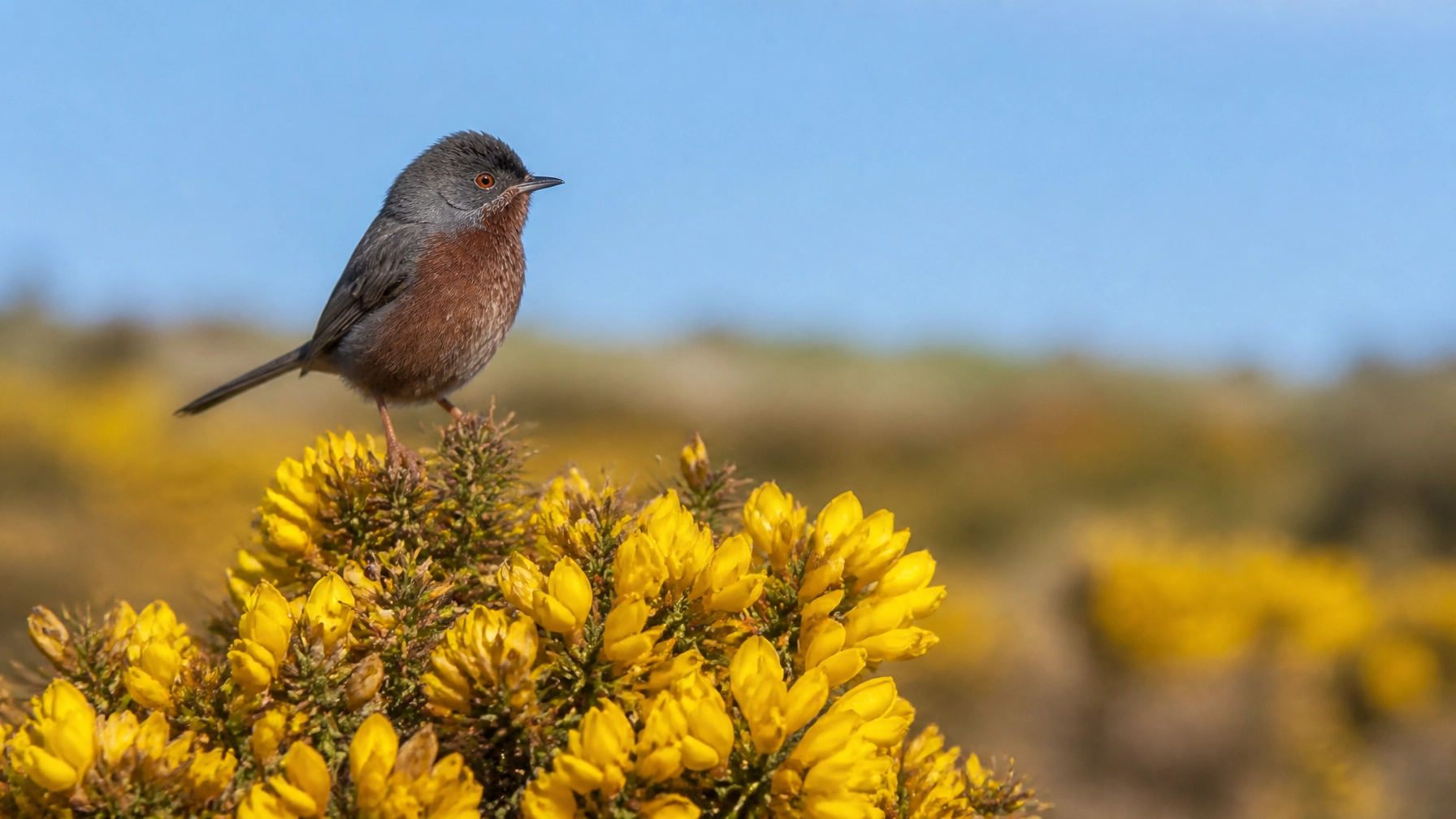
Britain’s heathlands are echoing with a song that was once nearly silenced forever. In a landmark announcement for United Kingdom conservation, recent surveys have confirmed that the Dartford warbler has reached its highest ever recorded numbers on nature reserves across the country. Data released this May reveals that 264 breeding pairs were documented during the last season, marking a monumental milestone for a species that was almost wiped out within living memory. This surge in population is being hailed as a triumph of dedicated habitat restoration, proving that when the right environment is provided, nature possesses an incredible capacity for resilience and recovery.
The Dartford warbler is a peculiar and charming resident of our shores. Unlike many other warblers that migrate to the warmer climes of Africa during the harsh British winter, the Dartford warbler is a hardy permanent resident. It is a small, dark, long-tailed bird, often seen darting between the prickly stems of gorse or singing from the very top of a shrub on a sunny morning. Its survival is inextricably linked to the health of lowland heathland, a habitat that is rarer than tropical rainforest on a global scale. The fact that these birds are now thriving in record numbers is not just a win for the species itself, but a vital health check for the entire British ecosystem.
A Landscape Reborn through Conservation
The story of the Dartford warbler is one of the most dramatic "back from the brink" narratives in British ornithology. In the early 1960s, the species faced an existential crisis. Following a series of exceptionally brutal winters, particularly the infamous Big Freeze of 1963, the UK population plummeted to just a handful of pairs, restricted almost entirely to the heathlands of Dorset. At that point, many feared the bird would vanish from our landscape entirely. The recovery from those dark days has been slow, meticulous, and fraught with challenges, making the current record-breaking figures even more significant.
The primary driver behind this recovery is the extensive and ongoing restoration of lowland heathland. Over the last few centuries, Britain lost more than 80 percent of its heathland to agriculture, commercial forestry, and urban development. What remained was often fragmented and neglected, allowing invasive scrub and trees to choke out the heather and gorse that the warblers require for nesting and foraging. Conservationists have worked tirelessly to reverse this trend, using traditional management techniques such as controlled grazing with hardy ponies and cattle, as well as the mechanical removal of invasive species. By clearing back the encroaching woodland and encouraging a mosaic of different-aged heather and gorse, they have created the perfect "apartment blocks" for these birds to raise their young.
Recent data shows that this management is paying off across a wide geographical range. While Dorset remains a stronghold, the birds are expanding their footprint. In Suffolk, the famous coastal reserves have seen a remarkable influx, with over 40 pairs recorded at a single site. Further west, in Devon, the numbers on managed commons have hit double digits, providing a crucial western anchor for the population. This expansion is vital because a larger, more widespread population is far less vulnerable to localized threats or extreme weather events in a single county.
The Critical Importance of Lowland Heath
To understand why the Dartford warbler is doing so well, one must look at the unique characteristics of the lowland heath. This is a human-influenced landscape that requires active intervention to survive. Without grazing or management, heathland naturally transitions into woodland, a process known as succession. While woodland is valuable, the open, sandy, and nutrient-poor soils of the heath support a specialized array of wildlife that cannot survive anywhere else. The Dartford warbler is the "canary in the coal mine" for this habitat; if the warbler is doing well, it usually means the nightjars, woodlarks, sand lizards, and rare silver-studded blue butterflies are also finding the conditions they need.
The role of gorse in this relationship cannot be overstated. For the Dartford warbler, gorse is everything. It provides a year-round source of food, as the dense, thorny bushes harbor a wealth of spiders and insects even in the depths of winter. It also offers unparalleled protection from predators like sparrowhawks and shelter from the biting winds. Modern conservation strategies have focused on ensuring that there is always "young" gorse available, which is more nutritious and provides better cover than old, leggy bushes that are prone to splitting.
The record numbers are also a testament to the success of landscape-scale conservation. Rather than just protecting isolated "postage stamp" reserves, there has been a concerted effort to link up fragments of heathland. By creating "wildlife corridors" and working with private landowners adjacent to protected areas, conservationists have allowed the birds to move more freely between sites. This genetic exchange is crucial for the long-term health of the species, ensuring that populations do not become inbred and susceptible to disease. The sight of a Dartford warbler in Kent or Surrey, where they were once absent for decades, is a direct result of this "joined-up" thinking.
Future Challenges for a Fragile Resident
While the current figures provide a moment of celebration, the future of the Dartford warbler remains delicately balanced. The species is still highly sensitive to climate fluctuations. Because they do not migrate, a single exceptionally cold winter with prolonged snow cover can still cause a catastrophic population crash. Snow is particularly dangerous as it covers the gorse, cutting off the birds' access to their insect food stores. While the general trend of milder winters in the UK has undoubtedly aided their recent success, the increasing frequency of extreme and unpredictable weather events remains a significant concern.
Climate change also brings the threat of wildfires. Heathlands are naturally dry environments, and during the increasingly hot and arid British summers, the risk of fire is high. A single blaze can devastate hundreds of hectares of prime breeding habitat in a matter of hours. Because Dartford warblers are so reliant on mature gorse and heather, it can take years for a burnt site to recover sufficiently for them to return. Managing public access and educating visitors about the dangers of fires on the heath is now as much a part of warbler conservation as habitat management itself.
Furthermore, the pressure of human disturbance cannot be ignored. Heathlands are popular places for recreation, dog walking, and exercise. As ground-nesting or low-nesting birds, Dartford warblers are easily disturbed during the breeding season. If a pair is repeatedly flushed from their nest by people or dogs, they may abandon their eggs or chicks. Maintaining a balance between providing a space for people to connect with nature and ensuring that rare wildlife has the peace it needs to thrive is one of the greatest challenges facing site managers today. The record numbers seen this year are a result of careful zoning and public cooperation, but as the UK population grows and the demand for outdoor space increases, this pressure will only intensify.
The success of the Dartford warbler serves as a beacon of hope in an era where headlines about biodiversity are often grim. It demonstrates that we have the knowledge and the tools to bring species back from the very edge of extinction. The record-breaking counts across Britain’s heathlands are a tribute to the thousands of hours put in by volunteers and professionals who have waded through gorse and braved the elements to monitor and manage these sites. As long as we continue to value and protect these ancient, purple-hued landscapes, the distinctive, rattling song of the Dartford warbler will continue to be a staple of the British summer.