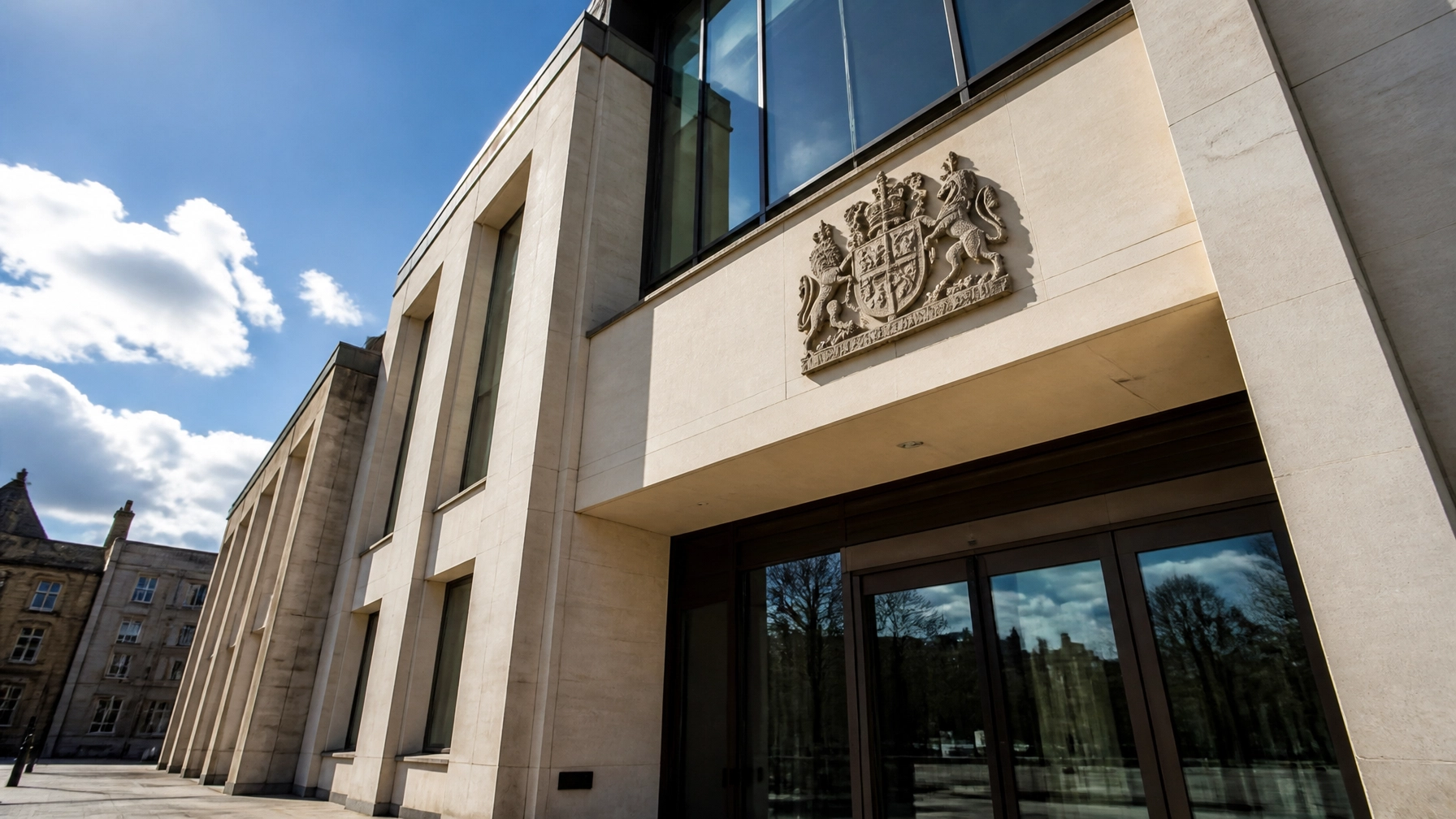
A courtroom in Basildon has delivered a final, sobering verdict in a case that has shocked the local community and raised significant questions about the nature of public figures and personal accountability. Hollie Dance, a woman who previously found herself at the centre of an intense national media spotlight, has been sentenced to four years in prison. The sentencing follows her conviction for a targeted and violent road-rage attack that left another motorist with life-changing physical and psychological scars. Alongside her, her son, Thomas Summers, has been handed a five-year custodial sentence for his primary role in the assault.
The incident, which took place in the heart of Essex, was not a momentary lapse in judgement or a simple case of modern driving frustrations boiling over. Instead, the court heard evidence of a calculated and aggressive pursuit, described as a "revenge attack" sparked by a minor dispute on the road. What followed was a terrifying display of vigilantism that saw a father-of-two driven off the road, cornered, and physically assaulted. The victim, who had been simply trying to navigate his way through daily traffic, was left with multiple injuries that required extensive medical intervention.
The judge presiding over the case was scathing in their summary, noting that the level of aggression displayed was entirely disproportionate to any perceived slight. The court was told how the victim’s vehicle was pursued through residential streets before the confrontation reached its violent climax. Witnesses described a scene of chaos as Dance and her son confronted the driver, who was eventually forced to flee his own vehicle in a desperate attempt to seek safety. For the victim, the physical trauma of the day was only the beginning; the psychological impact of being hunted by fellow citizens has left him unable to return to the life he once knew.
A Systematic Breakdown of Public Conduct
The conviction of Hollie Dance marks a significant shift in the public narrative surrounding her life. For many months, her name was synonymous with a high-profile legal struggle regarding medical care and parental rights, a situation that garnered immense sympathy from various corners of the globe. However, the details emerging from Basildon Crown Court paint a starkly different picture of the woman behind those headlines. The court was forced to reconcile the image of a grieving mother with that of a participant in a violent, premeditated act of street violence.
Legal experts have noted that the severity of the sentence reflects the judiciary's growing impatience with road-based violence and "retribution" culture. In recent years, there has been an alarming rise in incidents where minor traffic disagreements escalate into serious criminal offences. By sentencing Dance to four years, the court is sending a clear message: personal history, no matter how tragic, does not grant an individual a license to abandon the rule of law or endanger the lives of others. The pursuit of the victim was described as relentless, showing a total disregard for the safety of other road users and pedestrians in the vicinity.
The evidence presented during the trial was comprehensive. Dashboard camera footage, mobile phone recordings, and eyewitness testimonies provided a harrowing timeline of the events. It was revealed that the pursuit lasted several miles, with the defendants' vehicle weaving through traffic to ensure the victim could not escape. When the victim was finally cornered, the aggression did not subside. Instead, it intensified, leading to the physical injuries that would later form the basis of the most serious charges. The court rejected any claim of self-defence, finding that Dance and her son were the clear aggressors throughout the ordeal.
The Weight of Moral and Legal Responsibility
For the family of the victim, the sentencing provides a sense of closure, though the road to recovery remains long. The victim, whose identity has been protected to prevent further distress, spoke via a statement about the "total collapse" of his sense of safety. He detailed the struggle to sleep, the flash-backs of being chased, and the physical limitations now imposed on him due to the injuries sustained during the attack. The sentencing of Thomas Summers to five years reflects his direct physical involvement in the assault, while Dance’s four-year term acknowledges her role in the pursuit and the subsequent confrontation.
The social implications of this case are profound. It highlights a dangerous trend where individuals feel emboldened to take the law into their own hands, often fueled by a sense of entitlement or an inability to regulate emotional responses in high-stress environments like modern urban traffic. The presence of Summers, Dance’s adult son, adds another layer of complexity to the tragedy. Rather than acting as a voice of reason or seeking to de-escalate the situation, the pair acted in concert to inflict harm. This joint enterprise served to amplify the terror experienced by the victim, who found himself outnumbered and outmanoeuvred.
Inside the courtroom, the atmosphere was heavy as the sentences were read out. There were no outbursts, only the cold reality of the prison gates closing on a family that had already experienced significant hardship. However, the legal system remains indifferent to the emotional backdrop of a defendant's life when faced with clear evidence of violent criminality. The rule of law requires that every citizen is held to the same standard of conduct, and in this instance, the standard was found to have been flagrantly violated. The four-year sentence for Dance is a firm reminder that the transition from a victim of circumstance to a perpetrator of crime carries heavy consequences.
Looking Beyond the Sentence to Road Safety
This case serves as a grim case study in the escalation of road-based conflicts. Experts in transport psychology often point to the "dehumanisation" that occurs when individuals are behind the wheel, viewing other drivers not as people, but as obstacles or adversaries. In the case of Dance and Summers, this dehumanisation was taken to its extreme. The victim was not just another driver who had perhaps made a mistake or a move they disliked; he became a target for a release of anger that had no place in a civilised society.
The local authorities in Essex have used this high-profile conviction to reiterate the importance of "dash-cam" technology in securing justice. Without the digital trail left by cameras in the area, the full extent of the pursuit might have been harder to prove. As it stands, the evidence was undeniable. The path forward for the community involves a re-evaluation of how we handle conflict. The "revenge" element of this attack is particularly disturbing, suggesting a level of premeditation that moves the incident out of the realm of "road rage" and into the territory of serious organised violence.
As Hollie Dance begins her four-year term, the public conversation will inevitably continue to oscillate between her past and her present. Yet, for the legal system, the focus remains firmly on the victim and the protection of the public. The motorist who was driven off the road that day was a victim of a system failure: not a legal failure, but a failure of human empathy and restraint. Justice, in this case, has been served not to provide a spectacle, but to ensure that the streets remain a space for transit, not for the settling of personal scores through violence and intimidation. The doors of the Crown Court have closed on this chapter, leaving behind a clear warning to all: the law does not forget, and it does not make exceptions for those who choose the path of conflict.