The French capital was plunged into a night of unprecedented volatility following Paris Saint-Germain’s long-awaited victory in the Champions League final against Arsenal. What began as a historic sporting achievement for the city’s premier football club rapidly descended into widespread civil disorder, leaving hundreds in police custody and hospitals across the country struggling to cope with a surge of casualties. By the early hours of Monday morning, the scent of celebration had been replaced by the acrid sting of tear gas and the smouldering remains of barricades along some of Europe’s most iconic thoroughfares.
Authorities have confirmed that at least 780 people were arrested nationwide as the celebrations spiralled out of control, with more than 450 individuals remaining in custody as investigators work through a mountain of CCTV footage and witness statements. The scale of the unrest has sent shockwaves through the French government, prompting an emergency review of security protocols just as the city prepares for a massive homecoming parade intended to welcome the victorious squad back to the Parc des Princes.
The violence was not contained to a single district but rather erupted in multiple flashpoints across Paris. From the upscale boutiques of the Champs-Élysées to the residential streets surrounding the stadium in the southwest, the night was defined by a series of high-intensity confrontations between mobile units of the Compagnies Républicaines de Sécurité and groups of youths, many of whom appeared more intent on destruction than celebration. The sheer volume of people on the streets: estimated to be in the hundreds of thousands: made traditional crowd control methods almost impossible to implement effectively, leading to a frantic night for the capital’s emergency services.
The Breakdown of Order in the Capital
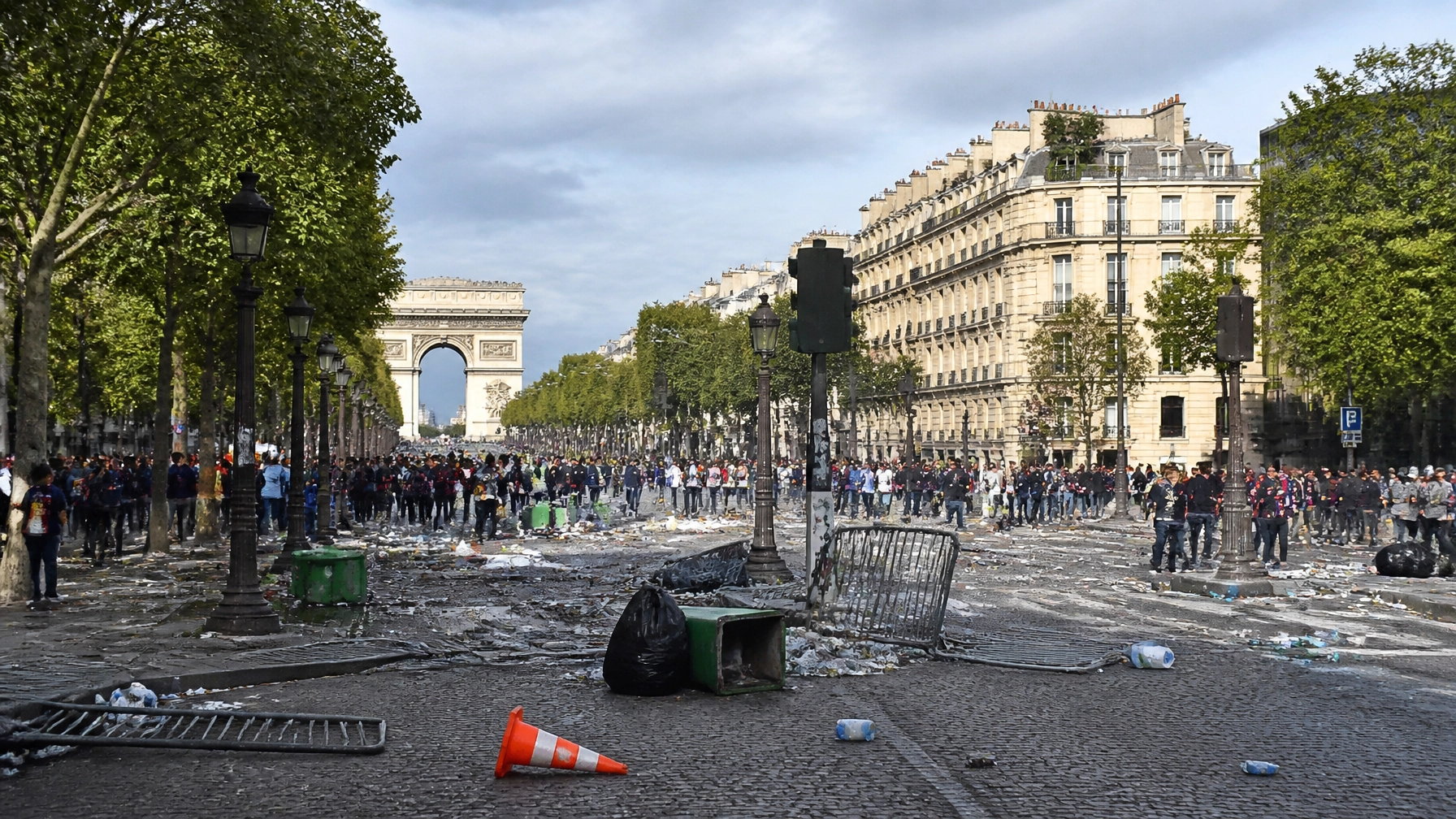
The most intense clashes occurred in the shadow of the Arc de Triomphe, where a sea of red and blue flares initially created an atmosphere of jubilant triumph. However, the mood soured rapidly as the night progressed. Small groups began targeting luxury storefronts, shattering glass and attempting to loot high-end retailers. When police intervention teams moved in to secure the perimeters, they were met with a barrage of projectiles, including heavy-duty fireworks, glass bottles, and paving stones ripped from the gutters.
The response from the authorities was forceful. Interior Minister Laurent Nuñez had deployed a massive police presence in anticipation of the crowds, but even the thousands of officers on the ground found themselves stretched thin as the unrest fragmented into dozens of smaller, faster-moving skirmishes. Tear gas was deployed liberally across the central arrondissements, creating a thick haze that lingered in the stagnant night air. Witnesses described a chaotic scene where ordinary fans, including families and tourists, were caught in the crossfire between rioters and security forces, leading to scenes of panic as people scrambled for cover in side streets and metro stations.
The damage to the city’s infrastructure is significant. Bus shelters were demolished, several vehicles were overturned and set alight, and the historic paving of the Champs-Élysées will require extensive repairs. Public transport in the capital ground to a complete halt as the RATP suspended services on several key metro lines and bus routes due to the danger posed to staff and passengers. Even the Periphérique, the city's vital ring road, became a site of tragedy when rioters attempted to block traffic, leading to a fatal accident that claimed the life of a motorist caught in the chaos.
A Nationwide Surge in Violence
While Paris bore the brunt of the disorder, the unrest was by no means an isolated phenomenon. Reports from across France indicate that the PSG victory served as a catalyst for disturbances in several major cities. In Marseille, Lyon, and Bordeaux, similar scenes of street fighting and property damage were reported. Interior Ministry figures suggest that of the 219 people injured across the country, 57 were police officers who had been tasked with maintaining order in provincial city centres where emotions frequently ran high.
The injuries sustained by the public and police alike range from smoke inhalation and lacerations to more serious trauma caused by blunt force and explosive pyrotechnics. At least eight individuals are reported to be in a serious condition in various hospitals, highlighting the lethal potential of the fireworks that have become a recurring feature of French football celebrations. The government has expressed particular concern regarding the use of "mortar" fireworks, which are designed for professional displays but are increasingly used as weapons against security forces in urban environments.
The political fallout from the night has been immediate. Opponents of the current administration have been quick to criticise the perceived failure to contain the violence, despite the record number of police deployments. Critics argue that the strategies employed: relying heavily on tear gas and defensive cordons: are insufficient for modern urban unrest where social media allows rioters to coordinate movements in real-time. Conversely, the Interior Ministry has defended the actions of the police, stating that the situation was brought under control as effectively as possible given the sheer density of the crowds and the unpredictable nature of the flash mobs.
Securing a City in Celebration
As the sun rose over a battered but victorious Paris, the focus shifted from containment to recovery and the immense challenge of the day ahead. The PSG squad is expected to return to the capital this afternoon for a formal victory parade, an event that is traditionally the crowning moment of a Champions League triumph. However, the shadow of the previous night’s violence looms large over the planned festivities. Security officials have been locked in meetings throughout the morning to determine whether the parade can proceed safely or if significant modifications are required.
Laurent Nuñez has assured the public that additional reinforcements are being drafted in from across the region to ensure that the homecoming event does not see a repeat of the midnight chaos. A "sanitised" route is being established, with thousands of extra barriers and a significantly increased number of plainclothes officers embedded within the expected crowd of 100,000 supporters. The challenge for the authorities is to strike a balance between allowing the city to celebrate its first elite European trophy in decades and preventing the criminal elements that hijacked the previous night from doing so again.
Beyond the immediate security concerns, there are longer-term questions about the social health of the capital. The ease with which a moment of national pride can be transformed into a night of urban warfare is a growing concern for sociologists and urban planners. The deep-seated tensions in the Parisian suburbs, which often manifest during large-scale public gatherings, remain a combustible element in the city’s social fabric. For now, however, the priority remains the cleanup and the pursuit of those responsible for the destruction. As investigators sift through the evidence and the courts prepare for a wave of expedited hearings, Paris remains a city on edge, caught between the thrill of a historic win and the sobering reality of the violence that followed it.