









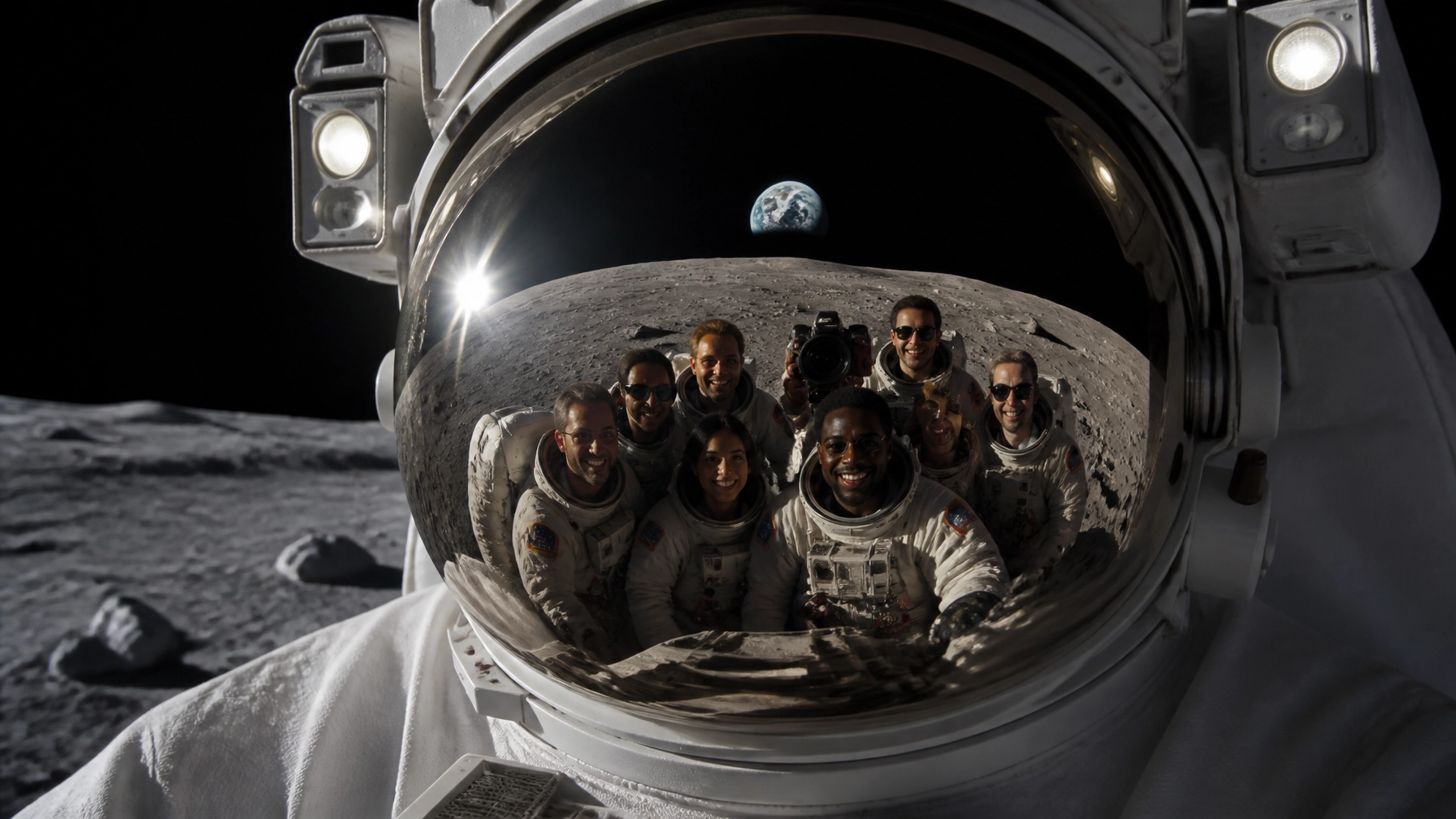
The return of humanity to the lunar vicinity this spring has done more than just advance our technical capabilities; it has fundamentally shifted the way we view our place in the cosmos. Following the successful splashdown of the Artemis II mission in the Pacific Ocean last month, the world has been reflecting on a journey that saw four astronauts travel further into the deep reaches of space than any human being in history. This 10-day odyssey, which looped around the far side of the Moon, was not merely a flight of exploration but a powerful signal of what can be achieved when nations align under a single, peaceful purpose. For the first time in over five decades, the sight of a thin blue crescent Earth rising over the cratered lunar horizon was captured by human eyes, reminding a global audience of our shared fragility and common home.
The mission, which reached its furthest point of approximately 252,756 miles from Earth, broke the long-standing record set by the Apollo 13 crew in 1970. Yet, the significance of this milestone extends far beyond the numbers. Unlike the space race of the previous century, which was defined by cold-blooded competition and nationalistic fervour, the Artemis programme is built upon a foundation of international cooperation. With more than thirty nations now signed onto the governing accords, the mission represents a collective human endeavour. The four-person crew: comprising Commander Reid Wiseman, Victor Glover, Christina Koch, and Jeremy Hansen: carried with them the hopes of billions, proving that the Moon is no longer a destination for a single nation, but a platform for all of humanity.
A New Chapter for Global Collaboration
The success of the recent lunar flyby serves as a testament to the strength of modern international partnerships. While the primary hardware was launched from the coast of Florida, the mission's success was an achievement shared by engineers, scientists, and technicians from across Europe, Canada, and Japan. This collaboration is the bedrock of the Artemis programme, which seeks to establish a sustainable presence on and around the Moon. By working together, these nations are pooling resources and expertise that no single country could provide alone. The European-built service module, for example, provided the essential power and life support for the Orion spacecraft, effectively acting as the heartbeat of the mission.
This spirit of unity is also reflected in the diversity of the crew itself. For the first time, a lunar mission included a woman, a person of colour, and an international partner from Canada. This inclusivity is a deliberate and vital part of the programme's identity, ensuring that the faces we see in space represent the faces we see on Earth. It sends a clear message to the next generation of students and dreamers that space is an environment for everyone, regardless of their background or nationality. By breaking the traditional mould of the lunar explorer, Artemis has created a more inclusive narrative for human history, one where the pursuit of knowledge is a universal right.
Breaking Records and Shattering Boundaries
From a technical perspective, the flight was a flawless demonstration of the Space Launch System and the Orion capsule's resilience. Following the trans-lunar injection burn, the spacecraft’s trajectory was so precise that mission control in Houston was able to cancel subsequent course corrections, a feat that drew praise from across the global aerospace community. As the crew swung behind the lunar far side, they entered a period of total communication silence, a forty-minute window where they were truly alone in the dark. During this time, they focused on imaging the Orientale Basin and other lunar features, providing data that will be essential for the upcoming crewed landings.
The record-breaking distance achieved during the flight was not just a point of pride; it was a necessary test of the spacecraft's life-support systems in the harsh environment of deep space. Testing these systems for ten days in high-radiation zones provides the safety margins required for the even more ambitious missions planned for the end of this decade. The data gathered from this "dress rehearsal" is currently being analysed by international teams to prepare for the Artemis III landing, which will see humans return to the lunar surface. The technical success of the mission has silenced many sceptics and reinforced the belief that the current path toward Mars is not only possible but inevitable.
Inspiring the Next Generation of Explorers
Perhaps the most enduring legacy of the Artemis II mission is the way it has captured the public imagination. In an era often dominated by division, the sight of four human beings venturing into the unknown provided a rare moment of global synchronicity. Schools, universities, and community centres across the country held viewing parties as the live feed showed the Earth receding into the distance, eventually appearing as nothing more than a marble in the blackness of space. This "Earthrise" effect: the cognitive shift that occurs when seeing our planet from a distance: has once again become a catalyst for environmental and social awareness.
The imagery returned from the mission has already begun to saturate our culture, appearing in classrooms and art galleries alike. It serves as a reminder that while the challenges we face on the ground are significant, our capacity for innovation and cooperation is greater. As the programme looks toward the establishment of the Gateway station in lunar orbit, the sense of momentum is palpable. We are no longer just visiting the Moon; we are preparing to stay. This long-term vision ensures that the current generation of young people will grow up in a world where human presence beyond Earth is a reality rather than a fantasy. The Artemis mission has effectively closed the gap between our dreams and our achievements, uniting humanity under a single, brilliant sky.