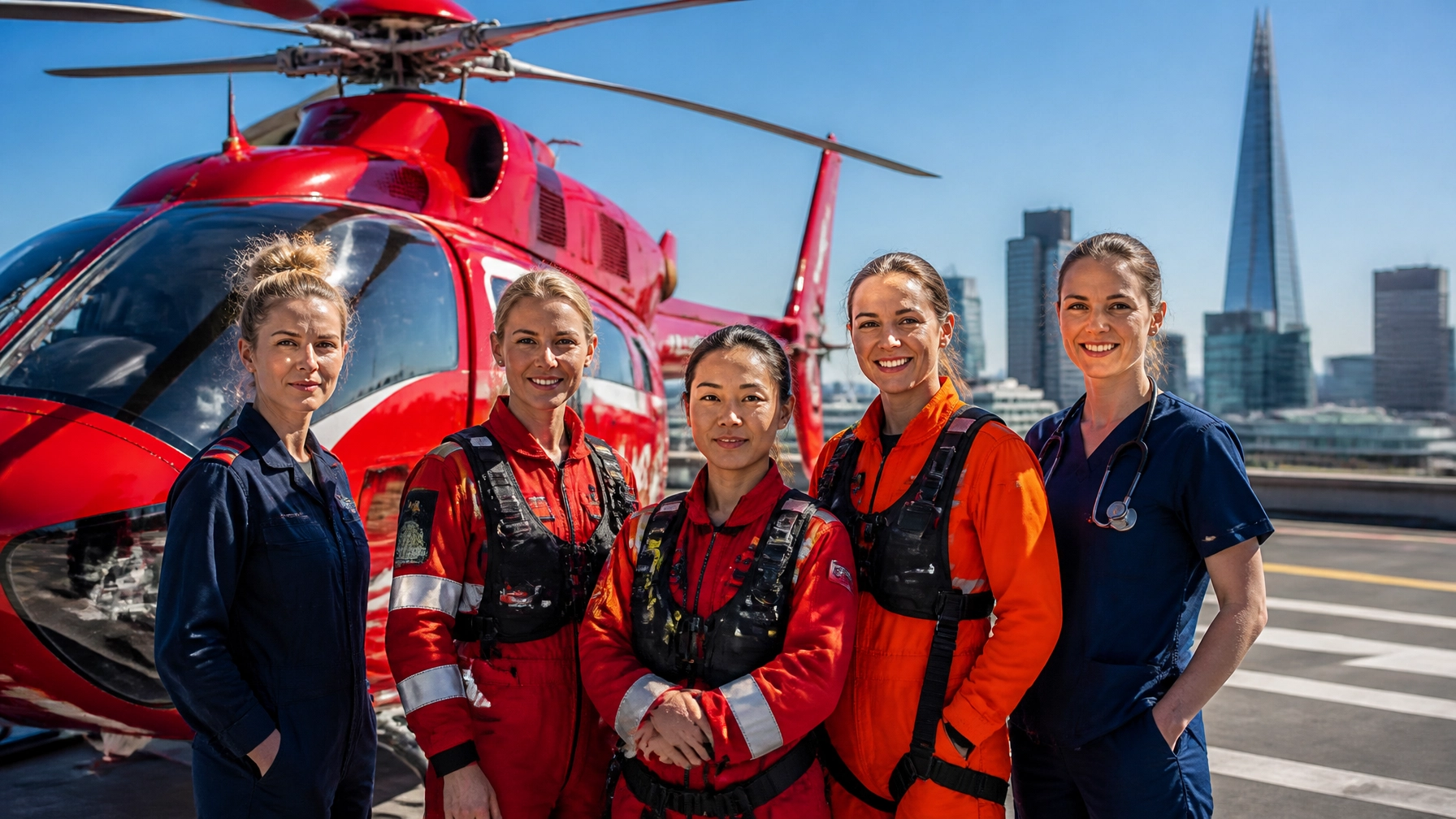
A historic milestone has been reached in the skies above the capital as London’s Air Ambulance deployed its first-ever all-female operational crew. Operating under the call sign HeliMed 27, the team consisted of two female pilots and a complete female medical unit, marking a significant shift for a service that has historically been male-dominated. The flight represents more than just a logistical achievement; it is a visible declaration of the progress made in emergency medicine and aviation over the last decade.
The crew took to the air from their base at the Royal London Hospital in Whitechapel, navigating the complex urban landscape of the city to provide critical care to patients in life-threatening conditions. In a typical shift, these teams are tasked with performing advanced medical procedures on the roadside or in public spaces: tasks usually reserved for hospital emergency departments. The successful coordination of this specific team highlights the depth of female talent within the service, from the cockpit to the clinical frontline.
Precision and Expertise in the Capital’s Skies
The technical demands of flying a helicopter over a dense metropolis like London are immense. Pilots must contend with restricted airspace, unpredictable weather patterns, and the need to find safe landing spots in tight urban environments, often in parks or on busy intersections. On this historic flight, the dual-pilot configuration was entirely female, demonstrating a level of technical mastery that the organisation hope will become the standard rather than the exception.
This operational success is built upon years of rigorous training and experience. The medical team on board, comprised of specialist doctors and paramedics, is trained to deliver pre-hospital emergency medicine (PHEM) under extreme pressure. Their role involves everything from open-chest surgery to administering general anaesthesia at the scene of an accident. The presence of an all-female team performing these high-stakes interventions serves as a powerful testament to the capabilities of women in high-pressure, technical emergency roles.
Shattering the Glass Ceiling in Emergency Medicine
While the number of women entering the medical profession has seen a steady increase, certain specialities, particularly pre-hospital critical care and aviation, have remained difficult to break into. The deployment of HeliMed 27 is a deliberate move to challenge these long-standing barriers. By showcasing a fully female team, the service aims to demonstrate that there are no roles within emergency response that are off-limits based on gender.
This initiative is particularly focused on visibility. For young girls watching a red helicopter land in a local park, seeing a woman step out of the pilot’s seat or lead a medical intervention can be a transformative experience. It provides a tangible example of career paths in Science, Technology, Engineering, and Mathematics (STEM) that might have previously seemed inaccessible. The crew members involved have expressed a shared desire to be the role models they didn’t always see when they were starting their own professional journeys.
Inspiring the Next Generation of Aviation Leaders
The impact of this flight is expected to resonate far beyond the immediate medical missions completed during the shift. There is a concerted effort within the emergency services sector to diversify the workforce to better reflect the communities they serve. This all-female flight is a cornerstone of a broader strategy to encourage more women to apply for roles in helicopter emergency medical services (HEMS), an area where recruitment has traditionally skewed heavily towards men.
As the demand for air ambulance services continues to grow, the need for a wider pool of talent is more pressing than ever. By removing the perceived barriers to entry and actively celebrating milestones like the flight of HeliMed 27, the organisation is laying the groundwork for a more inclusive future. The goal is to ensure that the next generation of pilots and doctors is chosen from the widest possible demographic, ensuring the highest standards of care for the millions of people who live and work in the capital. This flight may have been a first, but the intention is clear: it will certainly not be the last.