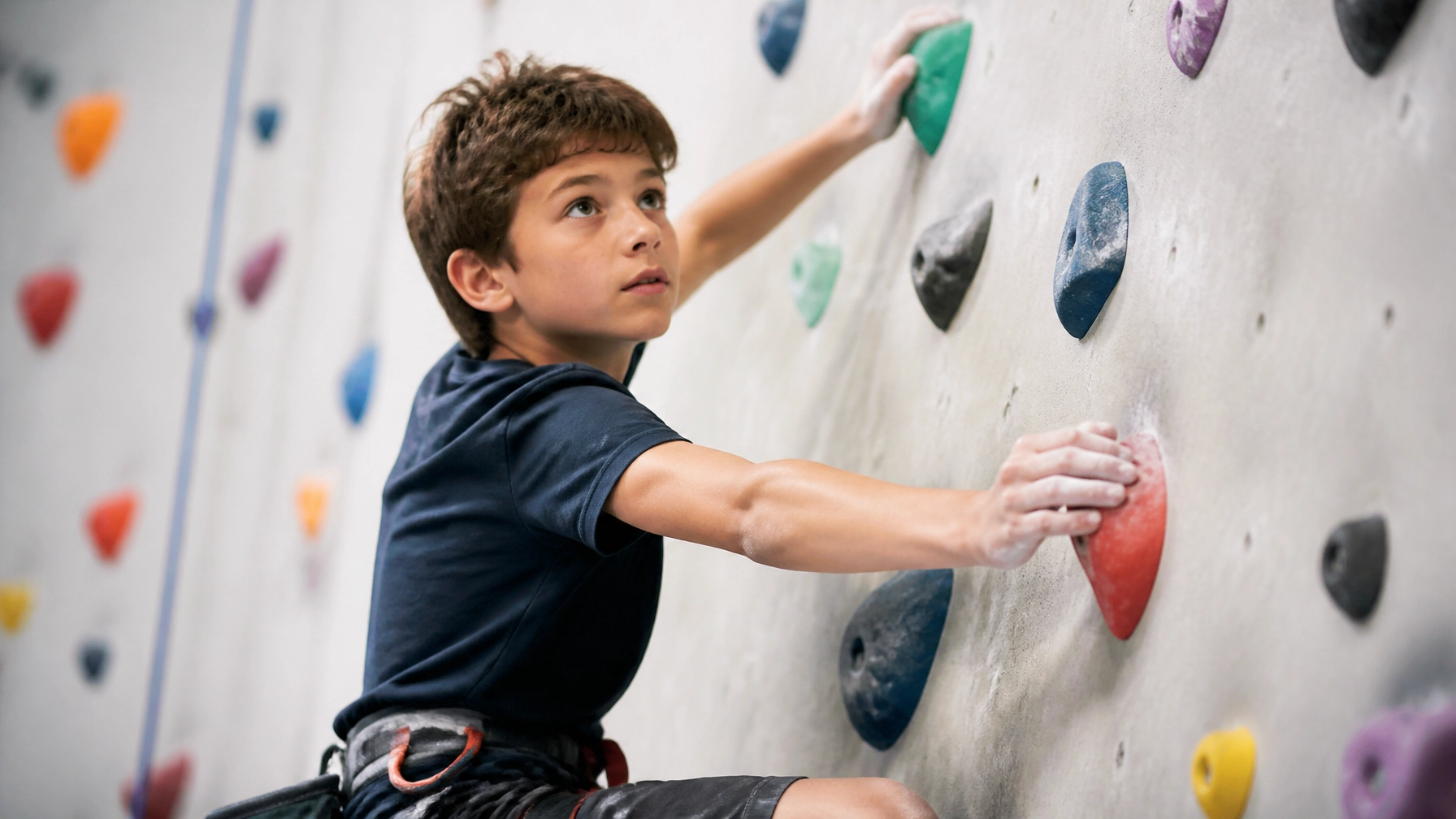
A twelve-year-old schoolboy from Hereford has completed a staggering physical feat, scaling the vertical equivalent of Mount Everest on an indoor climbing wall to raise vital funds for mental health services. Mason, a dedicated young climber, spent his half-term break tackling the 8,848-metre challenge, a distance that matches the height of the world’s tallest peak above sea level. While most children his age might have spent their holiday relaxing or playing video games, Mason committed himself to an exhausting schedule of ascents, driven by a desire to support those struggling with their mental wellbeing in his local community.
The challenge took place at a local climbing centre, where the sheer repetition of the task became as much a mental battle as a physical one. To reach the summit of Everest virtually, Mason had to complete hundreds of individual climbs, accounting for every metre of vertical gain. The project required meticulous planning, with his progress tracked daily to ensure he remained on course to meet the target within the week. Supporters and onlookers watched as the young athlete moved methodically up the wall, his hands coated in chalk and his focus never wavering despite the mounting fatigue in his arms and legs.
This ambitious endeavour was not merely a test of endurance but a targeted effort to raise money for Herefordshire Mind, a charity that provides essential support and advice to people experiencing mental health problems. In an era where public services are under increasing pressure, the role of local charitable organisations has never been more critical. Mason’s initiative highlights a growing trend of young people taking direct action to address social issues, using their hobbies and passions as a vehicle for positive change. The funds raised through his efforts are earmarked for local projects that offer a lifeline to those in crisis, ensuring that support remains available at the grassroots level.
The Scale of the Ascent
To understand the magnitude of Mason’s achievement, one must consider the sheer mathematics of an indoor Everest climb. Mount Everest stands at approximately 29,032 feet, or 8,848 metres. On a standard indoor climbing wall, which might average between ten and fifteen metres in height, this requires the climber to summit the wall nearly nine hundred times. For a twelve-year-old, the physical toll of such repetitive strain is significant. It involves thousands of individual movements, constant grip strength, and the cardiovascular stamina to maintain a steady pace over several consecutive days.
The preparation for such a task began long before the half-term week. Mason had to build the necessary core strength and endurance to handle the high volume of climbing. Unlike a single day of intense activity, a multi-day endurance event requires a careful balance of exertion and recovery. Each morning, Mason returned to the wall, dealing with the inevitable muscle soreness from the previous day’s efforts. His commitment was total, often starting early in the morning and continuing until the centre closed. The technical nature of climbing: choosing the right holds, maintaining balance, and managing energy: added a layer of complexity to what was already a monumental physical burden.
Throughout the week, the local community rallied behind him. The climbing centre became a hub of activity, with fellow climbers, friends, and family members offering encouragement from the ground. This support network was vital in helping him push through the "wall" that many endurance athletes face when the initial excitement fades and the reality of the remaining distance sets in. By the time he reached the final few hundred metres, the atmosphere was one of quiet awe. Mason had turned a personal goal into a collective victory, proving that age is no barrier to significant athletic and philanthropic achievement.
Championing Mental Health Support
The choice of charity was deeply personal and reflected a sophisticated understanding of contemporary social challenges. Mental health, particularly among young people, has become a focal point of public discourse in recent years. By choosing to support mental health services, Mason aimed to shine a light on the invisible struggles that many individuals face daily. The stigma surrounding mental health can often prevent people from seeking help, and high-profile fundraising efforts like this help to break down those barriers by making the conversation more visible and accessible.
The impact of the funds raised is substantial. Local mental health charities often operate on tight budgets, relying heavily on community donations to fund their programmes. These services include everything from one-on-one counselling and crisis helplines to community gardens and peer support groups. For many in Hereford, these resources are the difference between isolation and connection. Mason’s contribution ensures that these programmes can continue to reach those who need them most, particularly in rural areas where access to specialist care can sometimes be limited.
Furthermore, Mason’s challenge served as a metaphor for the journey of recovery. The act of climbing: ascending one hold at a time, facing setbacks, and ultimately reaching a peak: parallels the process of managing mental health. It requires resilience, patience, and the willingness to keep moving forward even when the top seems out of reach. By framing his fundraiser around a climb, Mason successfully communicated the importance of perseverance. His efforts have not only raised money but have also inspired others to consider how they might contribute to the wellbeing of their neighbours and peers.
A Community Inspired by Resilience
As the news of Mason’s climb spread beyond the walls of the climbing centre, it captured the imagination of the wider county. The story of a local schoolboy taking on a global icon: even if only in vertical metres: resonated with people from all walks of life. The success of the fundraiser, which surpassed its initial targets, is a testament to the generosity of the public and the compelling nature of Mason’s story. It demonstrates a collective desire to support youth-led initiatives and a shared recognition of the importance of mental health advocacy.
The legacy of the climb extends beyond the final total on the donation page. For Mason’s peers, he has become a role model, showing that it is possible to make a tangible difference through dedication and hard work. Schools and local youth groups have taken note, with many discussing how they too can engage in social action. This ripple effect is one of the most powerful outcomes of such challenges; it fosters a sense of agency among young people and encourages a culture of empathy and community service.
In the aftermath of the event, Hereford stands a little taller. The sight of a young citizen putting himself through a gruelling physical trial for the benefit of others is a powerful reminder of the strength found in local communities. While the heights of the Himalayas remain far away, the spirit of the climb was very much present in the heart of the city. Mason has completed his descent and returned to his normal school routine, but the impact of his 8,848-metre journey will be felt by those supported by the local mental health services for a long time to come. His story is a beacon of positivity, highlighting that even the tallest mountains can be conquered when there is a clear purpose and a community standing behind the climber.