French naval forces have carried out a dramatic interception of a Russia-linked oil tanker in the international waters of the Atlantic Ocean, marking a significant escalation in Western efforts to dismantle the clandestine maritime networks funding the conflict in Ukraine. The vessel, identified as the Tagor, was boarded by elite French commandos following an extensive multi-national surveillance operation. This seizure represents one of the most high-profile enforcement actions against the so-called shadow fleet: a sprawling armada of ageing tankers used to bypass international sanctions and transport Russian crude to global markets.
The operation, which took place in the early hours of Sunday morning, involved a coordinated strike by the French Navy with strategic support from British aerial assets. Intelligence suggests the Tagor had been operating under a complex web of ownership designed to obscure its ties to sanctioned entities. By bringing the vessel under control and escorting it toward a secured port for a full forensic investigation, French authorities have sent a clear message that the days of consequence-free sanctions-busting are coming to an end. The seizure is not merely a legal manoeuvre; it is a direct strike at the financial arteries that sustain the Russian war machine.
A High-Stakes Interception in the Atlantic
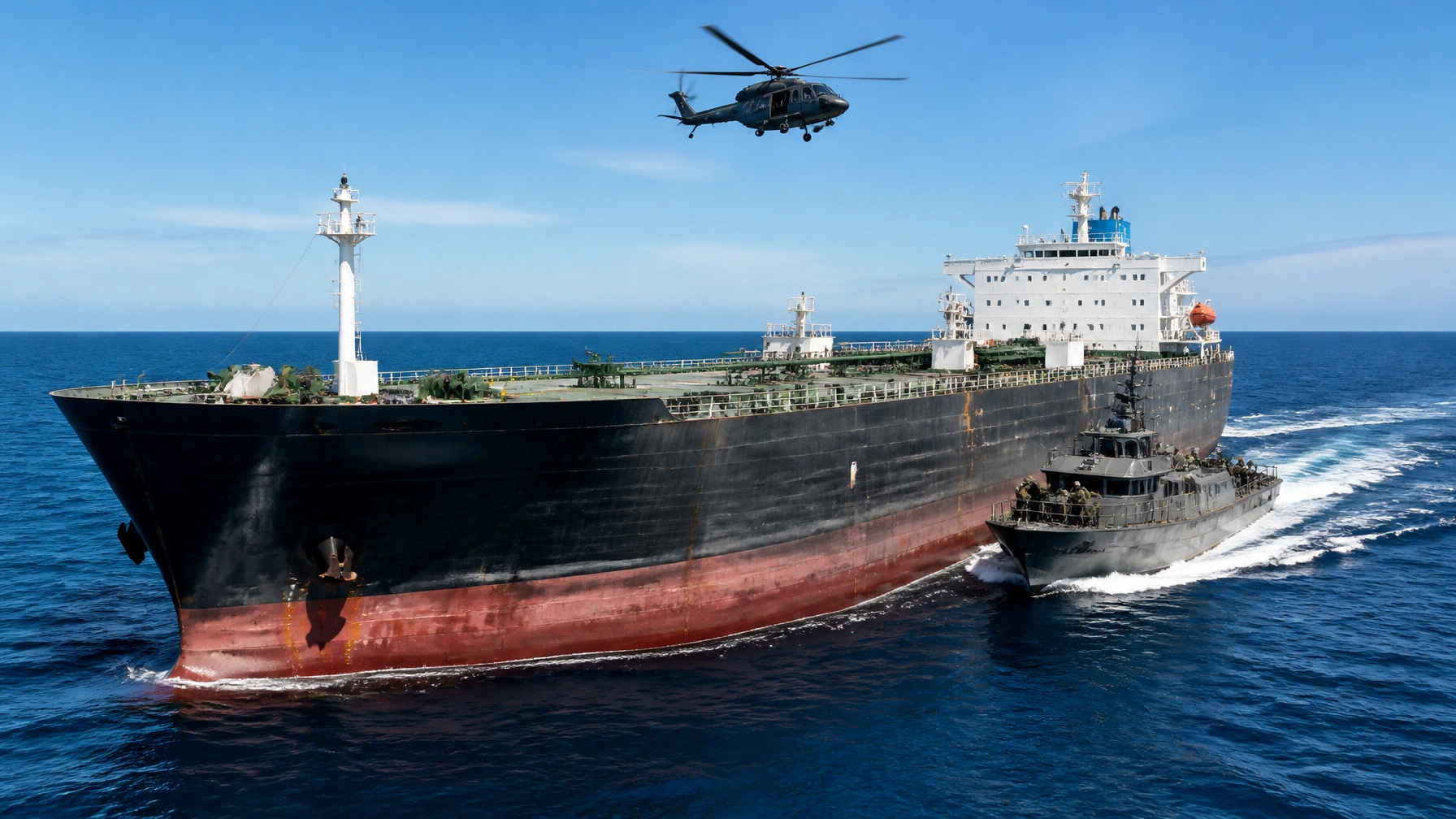
The interception of the Tagor was a precision military operation executed under the cover of the vast Atlantic expanse. French naval commandos, trained for high-risk maritime boardings, used fast-response craft to approach the massive tanker as it navigated international shipping lanes. Overhead, a British military helicopter provided essential reconnaissance and overwatch, illustrating the level of cross-border cooperation currently being deployed to police the high seas. The crew of the Tagor, caught by surprise, offered no resistance as the commandos took control of the bridge and secured the engine room.
This specific vessel had been on the radar of Western intelligence agencies for several months. Tracking data revealed a series of suspicious ship-to-ship transfers and frequent changes in its transponder signals: tactics commonly used by "dark" vessels to hide their true point of origin and destination. The French government has indicated that the Tagor is linked to a prominent Iranian magnate with deep ties to Russian energy interests, further highlighting the interconnected nature of the global shadow economy. By physically seizing the ship, the French have moved beyond passive monitoring into active disruption, a shift in strategy that reflects the growing urgency of the geopolitical situation.
The legal basis for the seizure rests on a suite of European Union and international sanctions aimed at restricting the flow of Russian oil. While international waters often provide a shield for questionable maritime activities, the specific suspicion of sanctions-busting and the vessel's opaque insurance status provided the necessary grounds for intervention. The French Ministry of the Armed Forces stated that the action was entirely consistent with international law, emphasising the responsibility of maritime powers to ensure that global trade remains transparent and compliant with established security protocols.
Unmasking the Shadow Fleet Network
The Tagor is just one small cog in a massive and dangerous machine known as the shadow fleet. Following the imposition of price caps and trade restrictions on Russian oil, Moscow has increasingly relied on a fleet of hundreds of older, poorly maintained tankers to keep its export revenues flowing. These vessels often operate with fraudulent insurance, falsified flags, and ownership structures that lead back to shell companies in jurisdictions with minimal oversight. The existence of this fleet poses a dual threat: it provides a loophole for sanctioned oil to reach the market, and it presents a grave environmental risk to the world's oceans.
The tankers in the shadow fleet are frequently beyond their typical operational lifespan. Unlike the regulated global fleet, these ships often bypass standard safety inspections and environmental certifications. A major spill involving one of these vessels would be a catastrophe, with no clear insurance entity to cover the astronomical costs of a cleanup. By targeting the Tagor, French and allied forces are not only enforcing political sanctions but are also attempting to mitigate the systemic risk these "ghost ships" pose to the maritime environment. The seizure serves as a wake-up call to the owners and operators of these vessels, proving that their anonymity is no longer a guarantee of safety.
Furthermore, the intelligence gathered from the Tagor’s onboard documents and electronic systems is expected to provide a treasure trove of information regarding the wider shadow fleet network. Investigators are keen to trace the financial trails that link the tanker's operations to banks and brokers in the Middle East and Asia. Unmasking the facilitators of these transactions: the middle-men who negotiate the sales and the insurers who provide the "shadow" coverage: is the next phase of the crackdown. The goal is to make the operation of sanctioned vessels so risky and expensive that the shadow fleet becomes economically unviable.
Tightening the Noose on Sanctions Evasion
The seizure of the Tagor comes at a time of heightened tension and renewed resolve among Western allies. For much of the past two years, the focus has been on diplomatic pressure and economic penalties. However, the persistence of the shadow fleet has demonstrated that words alone are insufficient. The move by France suggests a new phase of "active enforcement," where physical assets are used to block the physical movement of contraband oil. This hard-hitting approach is designed to disrupt the logistics of the Russian oil trade at its most vulnerable point: the sea.
This action also signals a tightening of the noose around the various international actors who have profited from Russia’s attempts to evade sanctions. By involving British assets in a French-led operation, the allies are demonstrating a unified front that transcends post-Brexit tensions. The cooperation underscores a shared understanding that the integrity of the global financial and maritime systems is at stake. The message to the international community is unequivocal: those who assist in the evasion of sanctions will be held accountable, regardless of where they are located or how complex their corporate structures may be.
As the Tagor is brought into port, the legal proceedings that follow will be watched closely by maritime lawyers and energy traders worldwide. The outcome of this case will likely set a precedent for future interceptions and seizures. If the French authorities can successfully demonstrate the vessel's involvement in sanctions-busting and maintain its seizure through the courts, it will pave the way for a more aggressive policing of the Atlantic and Mediterranean. The era of looking the other way is over; the international community is now actively hunting the shadows, ensuring that the rules of global trade are respected and that the financing of conflict is met with a firm and decisive response.