For Susan Rousell, a 71-year-old great-grandmother from Highcliffe, the ability to celebrate another birthday or watch her grandchildren grow is a privilege she does not take for granted.
Recently, she was granted a rare opportunity to look into the eyes of the people who made those moments possible. In a poignant meeting at the Christchurch Ambulance Station in Dorset, Susan was reunited with the dedicated team of emergency responders who saved her life following a sudden and devastating cardiac arrest. This meeting was not just a formal thank you; it was a powerful reminder of the thin line between life and death and the extraordinary skill of those who work within the ambulance service.
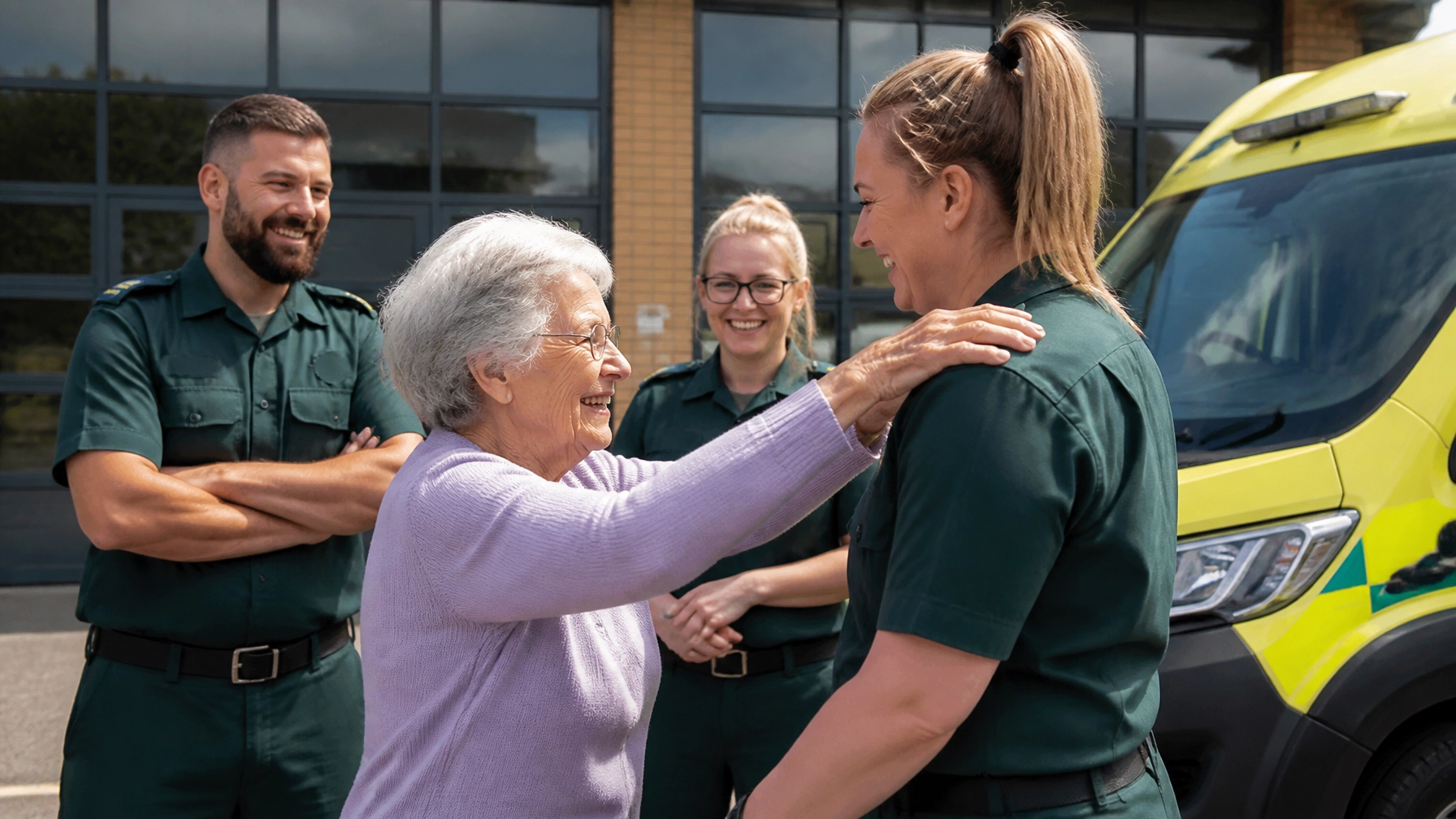
The reunion was filled with visible emotion as Susan, accompanied by her family, met the paramedics and emergency care assistants who had arrived at her home during her darkest hour. For the crew, such meetings are a rarity. Often, they provide critical care in the heat of a crisis and move on to the next emergency, rarely discovering the long-term outcome for the patients they treat. Seeing Susan standing before them, healthy and vibrant, provided a profound sense of closure and professional pride for the team that had refused to give up on her.
A Quiet Morning Turns Critical
The incident that led to this emotional gathering began like any other morning at Susan’s home in Highcliffe. There were no warning signs, no long-standing symptoms to suggest that her heart was about to stop. However, within seconds, a routine day transformed into a life-or-death struggle. When Susan collapsed, it was the immediate and decisive action of her husband that set the wheels of survival in motion. Recognising the severity of the situation, he immediately dialled 999, triggering a high-priority response from the regional ambulance dispatch centre.
While the ambulance was en route, the role of the emergency call handler became pivotal. Over the phone, the husband was guided through the initial steps of cardio-pulmonary resuscitation. This "bystander CPR" is often cited by medical professionals as the single most important factor in surviving a cardiac arrest outside of a hospital setting. By keeping the blood flowing to Susan's vital organs during those first few minutes, her husband provided the foundation upon which the paramedics could build when they arrived. The tension of those moments, waiting for the sound of sirens while performing chest compressions, is a trauma many families face, but in this instance, the chain of survival remained unbroken.
The first responders arrived on the scene within minutes, bringing with them the advanced equipment and clinical expertise required to manage a cardiac emergency. The transition from bystander help to professional medical intervention was seamless. The crew took over the resuscitation efforts, utilising a defibrillator and advanced life support techniques to attempt to restart Susan's heart. It is a process that requires intense focus, coordination, and speed, as every second without a heartbeat reduces the chances of a successful recovery.
The Professionals Behind the Miracle
The team that attended to Susan represented the various roles within the modern ambulance service, from highly trained paramedics to emergency care assistants. At the reunion, Susan was able to speak with each of them, learning about the specific actions they took in her living room that morning. For the crew, the call had been a "red" category incident, meaning it was life-threatening and required the fastest possible response. They spoke of the clinical challenges they faced and the relief they felt when they finally detected a pulse: a moment known in the industry as Return of Spontaneous Circulation.
Once Susan’s heart had been restarted, the work was far from over. The crew had to stabilise her for transport, ensuring her airway was protected and her blood pressure was managed as they moved her to the ambulance. The journey to the hospital is often a critical phase, where the patient is most vulnerable to further complications. Throughout the transit, the paramedics continued to monitor her vital signs with precision, providing the bridge between the scene of the collapse and the specialist care waiting at the hospital.
During the meeting at Christchurch, the paramedics reflected on the technical aspects of the call, but they were also moved by the human element. They noted that Susan’s recovery was a testament not only to their intervention but also to her own resilience and the quick thinking of her family. Seeing her now, months after the event, allowed the team to see the "person" behind the "patient." In the high-pressure world of emergency medicine, where responders often see people at their most vulnerable or in the midst of tragedy, these success stories serve as a vital source of motivation and a reminder of why they chose this demanding career path.
A Legacy of Gratitude and Awareness
For Susan and her family, the reunion served as a form of catharsis. It allowed them to express a depth of gratitude that is difficult to convey in a letter or a phone call. The great-grandmother spoke of the "gift of time" she had been given, highlighting how she can now continue to be a part of her family’s milestones. Her children and grandchildren joined her in thanking the crew, acknowledging that without the swift arrival and expert care of the ambulance team, their family dynamic would have been irrevocably altered.
Beyond the personal thanks, Susan’s story is being shared to raise awareness about the critical importance of CPR training and the availability of public defibrillators. Statistics show that survival rates for out-of-hospital cardiac arrests remain low, but they increase significantly when someone on the scene starts CPR immediately. Susan is now an advocate for these life-saving skills, encouraging everyone: regardless of age: to learn the basics of resuscitation. Her survival is a living example of what can happen when the public and professional emergency services work in perfect harmony.
As the meeting at the ambulance station drew to a close, there were handshakes, hugs, and perhaps a few tears. Susan walked out of the station not just as a survivor, but as a friend to the crew who had stood over her when her life hung in the balance. The paramedics returned to their shifts, ready for the next call, but bolstered by the knowledge that their skills had truly made a difference. In the quiet coastal town of Highcliffe, a family remains whole, and a great-grandmother continues to cherish every second of the time she was so nearly denied.