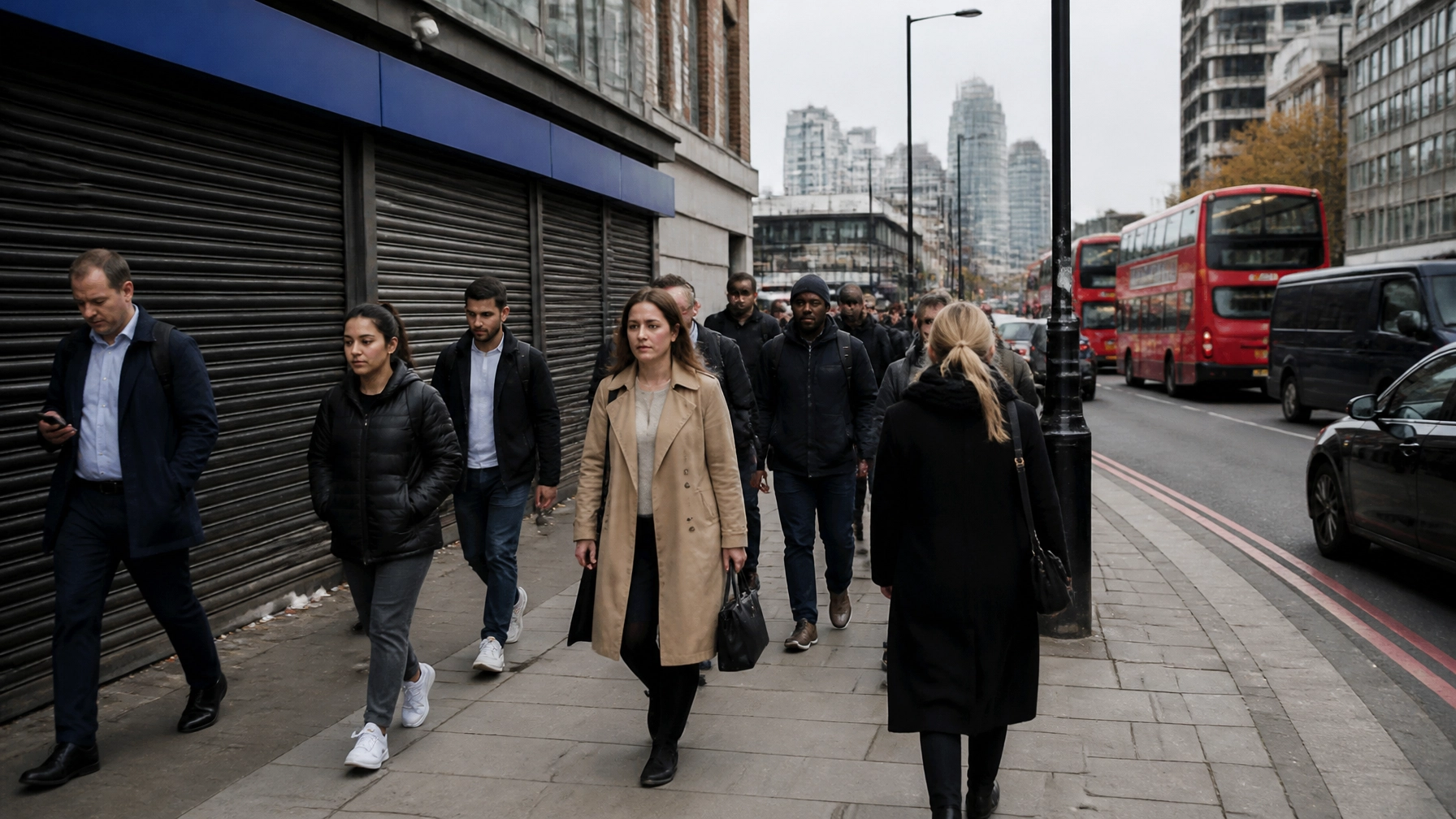
London’s transport network has been plunged back into a familiar state of paralysis as a fresh wave of industrial action grips the capital. Following a day of near-total shutdown across several key lines yesterday, the city finds itself in a precarious limbo. While some services have resumed for a brief twenty-four-hour window, the shadow of tomorrow’s planned walkout looms large over millions of residents, workers, and tourists. The atmosphere across the city's transport hubs is one of weary resignation, punctuated by flashes of frustration as the cumulative impact of these disputes continues to erode the reliability of the London Underground.
The disruption, which stems from a long-running dispute over working conditions and staffing arrangements, has targeted some of the most critical arteries in the capital’s infrastructure. Passengers on the Piccadilly and Circle lines faced the brunt of the chaos on Tuesday, with services entirely suspended for the duration of the day. For those accustomed to the clockwork efficiency of these routes, the sudden absence of trains forced a desperate scramble toward alternative modes of transport. Buses were seen trailing each other in long, stationary lines along the Strand and Euston Road, their decks packed to capacity while hundreds more waited at rain-slicked stops, hoping for a gap in the crowds.
This latest round of strikes represents a significant escalation in the tensions between the unions and transport authorities. While previous months had seen a glimmer of hope with the suspension of planned actions in May, the collapse of recent negotiations has led to a hardened stance on both sides. The result is a capital city that feels increasingly disjointed. Small business owners in the West End have reported a sharp decline in footfall, with many citing the unpredictability of the Tube as the primary reason for a quiet Tuesday trade. Without the constant flow of people emerging from the depths of the Underground, the vibrant energy of London’s commercial heart feels noticeably dampened.
The Aftermath of a City Stilled
The immediate impact of Tuesday’s walkout was felt most keenly during the morning peak, where the usual flow of hundreds of thousands of commuters was diverted onto a surface network ill-equipped to handle the surge. Stations that remained open, such as those on the Elizabeth line and the Docklands Light Railway, became bottlenecks of human movement. Commuters reported wait times of over forty minutes just to enter station concourses, with staff forced to implement one-way systems and temporary closures to prevent dangerous overcrowding on platforms. The ripple effect of these closures extended far beyond the Underground itself, with the capital’s road network experiencing some of its heaviest congestion of the year.
For many, the strike was more than an inconvenience; it was a disruption to the delicate balance of daily life. Parents struggled to reach childcare providers on time, while those with medical appointments in central London found themselves facing multi-hour journeys for what should have been a thirty-minute trip. The financial cost of these delays is difficult to quantify but is undoubtedly substantial. Every hour lost in a queue or trapped on a stationary bus represents a hit to the city's productivity. More importantly, it represents a further straining of the public's patience, which has been tested repeatedly over the last several years of industrial unrest.
Despite the lack of trains, the pickets at major depots remained a focal point of the day’s events. Union representatives have been vocal about their concerns, pointing to what they describe as a relentless drive toward automation and the potential erosion of safety standards. They argue that the current proposals from the transport authorities do not adequately address the long-term security of the workforce or the quality of service that passengers expect. On the other hand, officials have maintained that modernization is essential for the financial sustainability of the network, especially in an era of fluctuating passenger numbers and rising operational costs.
Navigating a Day of Uncertain Recovery
Today, Wednesday, provides a deceptive sense of normality. Trains have begun to run again on the lines that were shuttered yesterday, but the recovery has been anything but smooth. A backlog of maintenance work, combined with the logistical challenge of repositioning rolling stock across the city, has meant that many lines are operating with significant delays. The Piccadilly line, in particular, has seen a staggered return to service, with some stations remaining closed due to staffing shortages caused by the previous day’s action. It is a reminder that the effects of a strike do not simply vanish the moment the official walkout ends.
Commuters heading into the City this morning were greeted by a mosaic of service status boards flashing with "Minor Delays" and "Part Suspended" warnings. The knock-on effect of yesterday’s disruption has meant that the "respite" day is almost as challenging to navigate as the strike day itself. Information displays at major interchanges like King’s Cross St Pancras and Waterloo have been swamped by passengers seeking clarity on which routes are actually viable. For many, the decision has been made to simply stay away, with a noticeable increase in the number of people opting to work from home where possible, further hollowing out the midweek economy of central London.
The atmosphere today is one of bracing for the next blow. There is a sense that the city is holding its breath before the cycle begins anew tomorrow. This stop-start rhythm of transport is perhaps more damaging to the city’s psyche than a prolonged, predictable shutdown. It prevents people from making firm plans and creates a constant undercurrent of anxiety regarding one’s ability to move freely across the capital. As the day progresses, the focus is already shifting toward Thursday’s planned action, which is expected to be even more comprehensive than Tuesday’s, with further lines slated for closure and a predicted total cessation of service on several key branches.
Bracing for the Thursday Shutdown
As the sun sets on this brief window of operation, the reality of tomorrow’s total shutdown is beginning to set in. Transport for London has already issued warnings that services will be severely disrupted from the early hours of Thursday morning, with no service expected on the Piccadilly, Circle, Waterloo & City, and parts of the Central and Metropolitan lines. This second wave of action is designed to maximize the impact on the capital, hitting right at the heart of the working week. The advice being issued is clear: avoid all non-essential travel and seek alternative routes well in advance.
The upcoming strike is set to be a test of the city’s resilience. Unlike Tuesday, where some were caught off guard by the severity of the closures, there is now a collective understanding of what lies ahead. However, understanding does not equate to ease of movement. The Elizabeth line and the London Overground, while not directly involved in the strike, are expected to be under immense pressure as they become the primary east-west and north-south conduits for the entire city. It is anticipated that these services will be exceptionally busy, with the potential for station closures at short notice to manage the sheer volume of people.
The political discourse surrounding these strikes is reaching a fever pitch. There are calls from various quarters for more robust intervention to prevent the capital from being repeatedly brought to a standstill. Yet, the path to a resolution remains obscured by deeply held convictions on both sides of the negotiating table. For the average Londoner, the complexities of industrial relations matter less than the simple requirement of a functioning transport system. As the city prepares for another day of gridlock, the question remains how much longer this cycle of disruption can be sustained before the very fabric of London’s daily life is permanently altered. Tomorrow will once again see the streets filled with those on foot and the roads choked with vehicles, as the Underground falls silent once more.