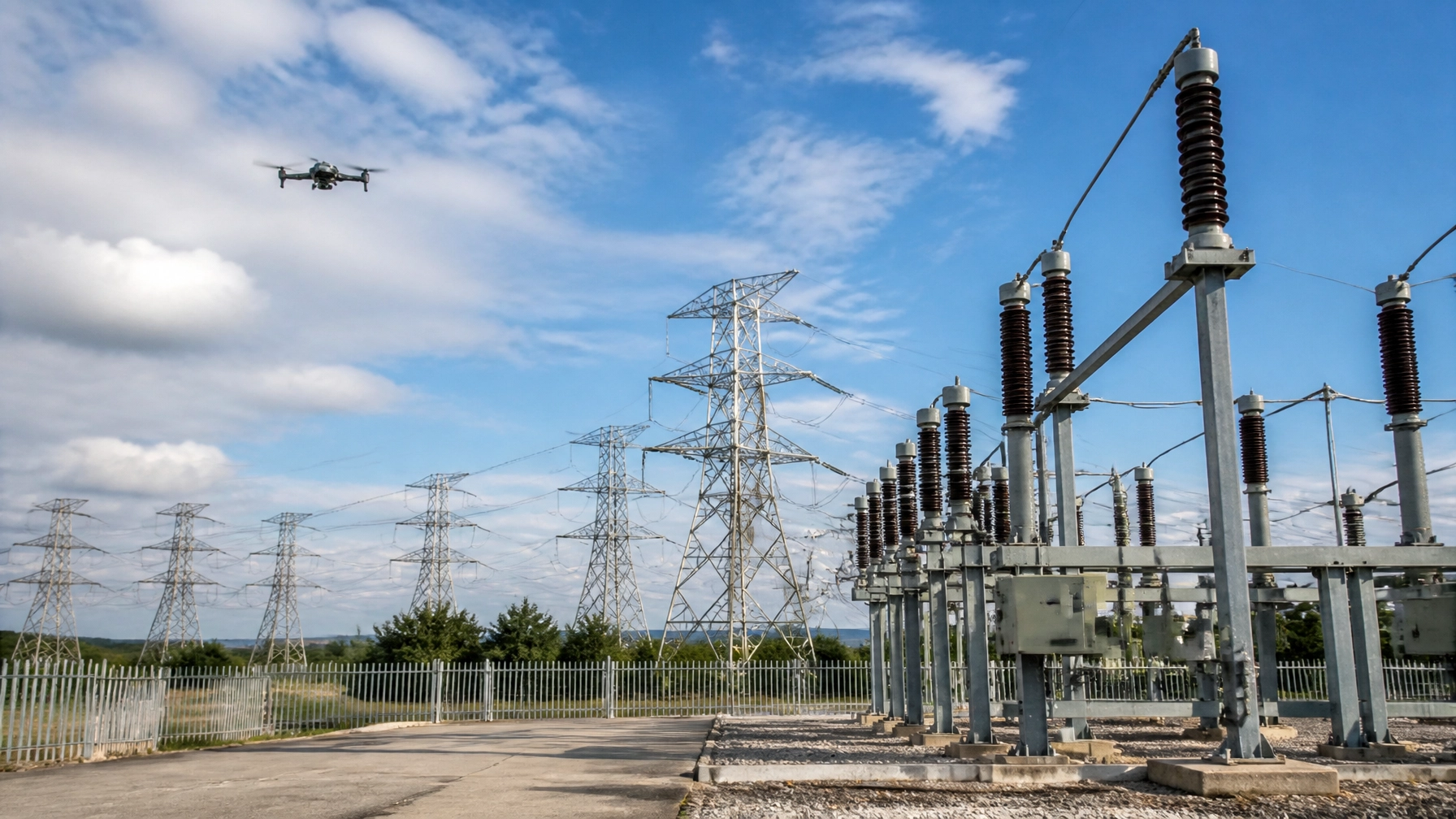
Security experts have issued a stark warning regarding the vulnerability of Britain’s national energy infrastructure to hostile drone activity.
As the technology behind unmanned aerial vehicles becomes increasingly sophisticated and accessible, the risk to the UK's power grid has escalated from a theoretical concern to a pressing national security priority. Authorities are now grappling with the reality that small, relatively inexpensive devices could potentially plunge entire regions into darkness, bypassing traditional ground-based security measures with ease. The threat encompasses not only physical damage through kinetic impact or explosives but also the disruption of critical communication systems and high-voltage components through electronic interference.
The geography of the UK’s energy network presents a unique set of challenges. With thousands of miles of transmission lines, remote substations, and coastal power plants, the perimeter that needs defending is vast. Historically, security has focused on physical barriers: fences, CCTV, and manned patrols. However, these measures are largely ineffective against an aerial threat that can be launched from kilometres away and navigate directly to sensitive equipment. Intelligence reports suggest that hostile actors, including state-sponsored groups and sophisticated criminal organisations, are increasingly looking at these "soft targets" as a way to exert leverage or cause widespread social and economic disruption without the need for large-scale military intervention.
Vulnerabilities in the National Network
The core of the issue lies in the sheer exposure of the National Grid's most vital components. Many of the UK’s largest substations are located in isolated areas where a drone could be operated with little risk of immediate detection. These sites house massive transformers: complex pieces of machinery that are not easily replaced and often have lead times of several months for manufacture and installation. A targeted strike on even a handful of these units could lead to prolonged blackouts that the system would struggle to compensate for. The interconnected nature of the grid means that a failure in one major node can cause a cascading effect, overwhelming neighbouring circuits and leading to a wider systemic collapse.
Beyond the physical hardware, there is the growing concern of "electronic sabotage." Modern drones can be equipped with devices designed to jam radio frequencies or interfere with the Supervisory Control and Data Acquisition systems that manage the flow of electricity. By disrupting the signals that allow engineers to remotely monitor and adjust the grid, a hostile actor could cause equipment to operate outside of safe parameters, leading to self-inflicted damage or automated shutdowns. This type of "cyber-physical" attack is particularly difficult to defend against because it does not require the drone to carry a payload; the mere presence of the device in proximity to sensitive antennas can be enough to trigger a crisis.
Recent assessments have highlighted that the current legislative framework and counter-drone capabilities are struggling to keep pace with the speed of innovation. While the police and security services have some powers to intercept drones near airports and sensitive government buildings, many critical energy sites remain in a legal and technical grey area. The difficulty of identifying a drone’s operator in real-time, combined with the risks of using "hard-kill" measures like kinetic projectiles in an environment filled with high-voltage electricity, creates a significant tactical disadvantage for those tasked with protecting the grid.
The Evolution of Aerial Sabotage
The shift in the threat landscape is driven by the rapid commercialisation of drone technology. What was once the exclusive domain of military forces is now available to anyone with a few hundred pounds and an internet connection. High-definition cameras, GPS-guided flight paths, and long-range signal boosters allow civilian-grade drones to conduct detailed reconnaissance missions over energy sites, identifying specific weak points that would be invisible from ground level. This intelligence-gathering phase is often a precursor to more aggressive actions, allowing attackers to map out security patrol patterns and response times with pinpoint accuracy.
There is also the emerging threat of "swarming," where multiple drones are operated in a coordinated fashion to overwhelm defensive systems. While a single drone might be intercepted or jammed, a dozen devices approaching from different directions present a much more complex problem. If programmed to act autonomously, these swarms do not even require a continuous link to a human pilot, making them immune to standard frequency jamming. This level of sophistication, once the stuff of science fiction, is now a reality that UK security agencies are forced to confront as they look to harden the nation's infrastructure against asymmetric warfare.
International incidents have served as a wake-up call for domestic policy. Observations from conflict zones abroad have demonstrated how effectively small drones can be used to cripple infrastructure. By using "first-person view" technology, operators can fly drones into specific vents or cooling systems of power stations with surgical precision. For the UK, the concern is that these tactics could be adopted by domestic extremists or foreign agents looking to exploit the country's reliance on a stable energy supply. The economic impact of a major blackout, estimated to run into the billions of pounds per day, makes the energy grid an incredibly attractive target for those seeking to cause maximum harm with minimum resource expenditure.
Securing the Future of British Energy
In response to these escalating risks, a multi-agency effort is underway to rethink how the UK protects its most important assets. This involves the deployment of advanced sensor arrays capable of detecting the unique acoustic and radio signatures of incoming drones miles before they reach a sensitive site. Integrated "soft-kill" technologies, which can take control of a drone's navigation system and force it to land safely away from equipment, are being tested at several key locations. However, the rollout of these systems is expensive and technically demanding, requiring seamless integration with existing grid management software.
Another pillar of the strategy is the hardening of the physical infrastructure itself. This includes the installation of physical shields or "cages" around the most vulnerable parts of transformers to prevent direct impact damage. There is also a push for greater redundancy within the network, ensuring that if one site is compromised, power can be rerouted more effectively through alternative paths. However, experts warn that physical hardening is only a partial solution; the ultimate goal must be a comprehensive "no-fly" enforcement mechanism that can proactively identify and neutralise threats before they enter restricted airspace.
Ultimately, the security of Britain's power grid in the age of the drone will depend on a combination of technological innovation, updated legislation, and international cooperation. As the UK transitions to a more decentralised energy system with more wind farms and solar arrays, the number of potential targets will only increase. Ensuring that these new green energy sources are built with "security by design" is essential to preventing future vulnerabilities. The sky is no longer a passive space; it has become a new frontier in the ongoing effort to keep the lights on across the country. Without a sustained and well-funded commitment to counter-drone measures, the silent threat from above will remain a shadow over the nation’s energy security.