A 460-acre stretch of land in east Somerset is providing a profound demonstration of how quickly the natural world can recover when human intervention is replaced by biological autonomy. Once an intensive dairy farm near Bruton, the site now known as Heal Somerset has undergone a radical transformation in just a few short years. The heavy machinery and chemical inputs that once defined this landscape have been replaced by the quiet, industrious work of nature. The results are already being described as a major success for the British rewilding movement, offering a glimpse into a future where biodiversity and land management coexist in a more balanced state.
The project is the first of its kind for Heal, the UK’s first registered charity dedicated solely to raising funds to buy land for rewilding. Since taking ownership of the site, the charity has adopted a strategy of "giving the land back to itself," allowing natural processes to take the lead. This approach has led to a visible and measurable surge in wildlife activity that has surprised even seasoned conservationists. From the return of rare birds to the emergence of complex wetland systems, the Somerset site is proving that nature does not need a long-term plan to begin its recovery; it simply needs the space to breathe.
From Intensive Dairy to Diverse Ecosystem
The history of the site is one shared by much of the English countryside: decades of intensive agricultural use designed to maximise yield. For years, the land was managed as a dairy farm, where the focus on production meant that the natural diversity of the soil and the surrounding environment was sidelined. When the transition to rewilding began, the first priority was to stop the practices that suppressed nature. Hedgerows that had been strictly trimmed were allowed to billow and grow, and fields that were once monocultures of grass began to welcome back a variety of wild flora.
The impact on bird populations has been one of the most immediate indicators of success. In less than three years, the number of recorded bird species on the site has risen from 67 to 94. This jump is not merely a statistical curiosity; it represents a fundamental shift in the habitat's ability to support life. The increase in structural diversity — the mix of tall grasses, burgeoning scrub, and thickening hedgerows — has provided nesting sites and food sources for a range of species that had previously been absent. The presence of these birds serves as a clear signal that the underlying health of the ecosystem is being restored from the ground up.
Central to this transformation is the idea of a "mosaic" of habitats. Rather than focusing on a single type of landscape, such as woodland or meadow, Heal Somerset is encouraging a messy, varied environment. Areas of bare ground sit alongside thickets of bramble and willow, while open grassland is slowly being punctuated by self-sown trees. This variety is crucial for biodiversity, as different species require different conditions to thrive. By removing the rigid boundaries of traditional farming, the project has allowed these habitats to bleed into one another, creating a more resilient and productive environment.
The Beaver Architects and Wetland Restoration
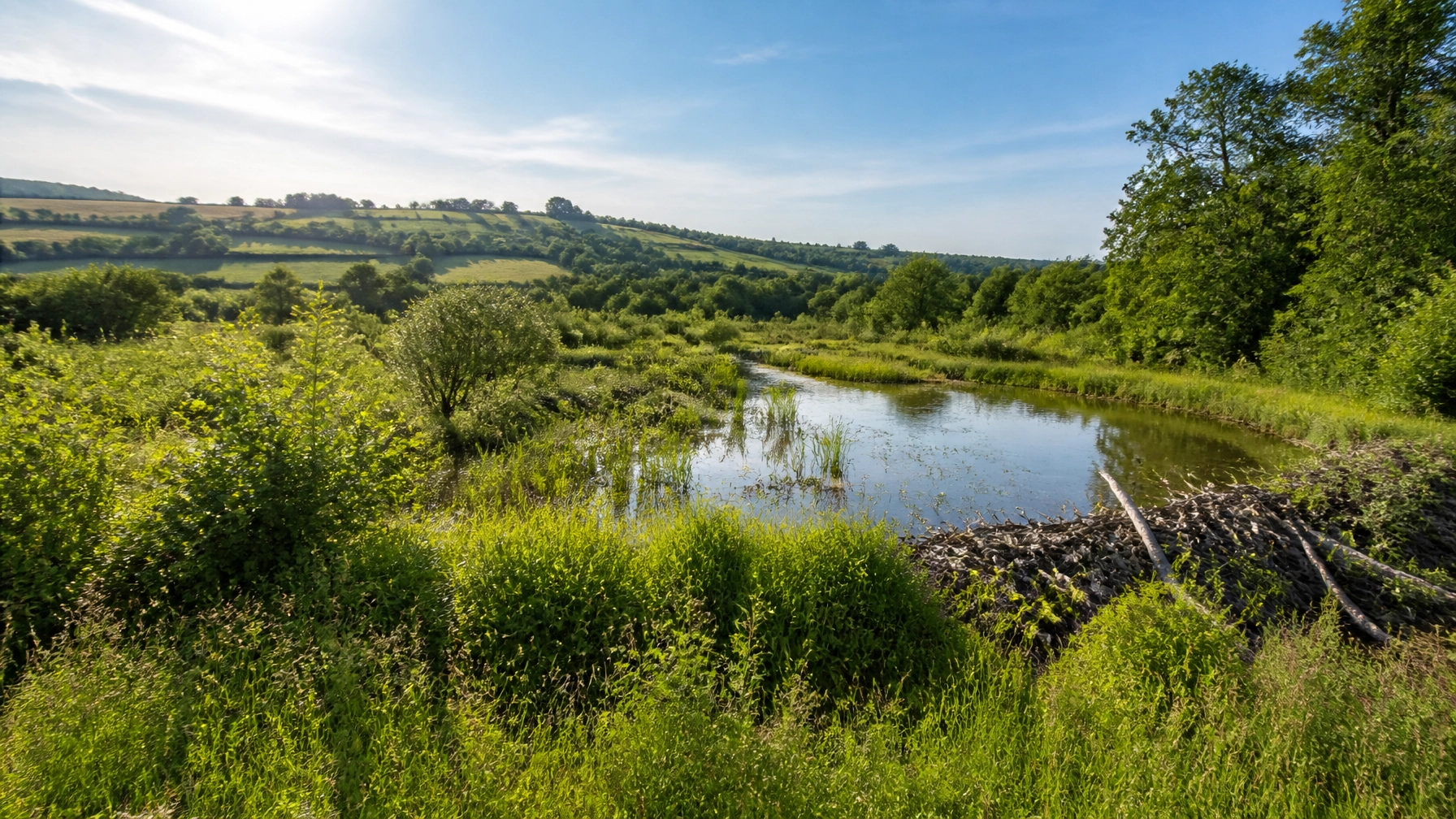
One of the most significant changes to the Somerset landscape has been driven by the arrival of a wild-living beaver family. These "ecosystem engineers" have colonised the site and immediately set about re-engineering the local hydrology. By building dams across the tributaries of the River Frome that run through the property, the beavers have created a series of ponds and wetland areas. These features slow the flow of water, particularly during heavy rainfall, which helps to reduce downstream flooding and erosion while trapping sediment and cleaning the water.
The resulting wetlands have become a magnet for a variety of water-reliant species. Trail cameras and field observations have confirmed the presence of ducks, water rail, snipe, and redshank, all of which have been drawn to the new pools and marshy ground. Perhaps most encouragingly, the beavers have been found to be breeding successfully on the site, with three kits spotted recently. This indicates that the environment is not only suitable for their survival but is healthy enough to support the next generation. The beavers are performing a task that would cost tens of thousands of pounds in manual engineering, and they are doing it in a way that is perfectly integrated into the natural cycle.
To further support this aquatic restoration, the project has worked with partners like the Environment Agency to re-naturalise the flow of water across the land. This has involved blocking drainage ditches that were originally dug to dry out the fields for cattle. By allowing the land to hold more water, the team is creating "scrapes" and boggy areas that are vital for insects and amphibians. This work, combined with the beavers' own efforts, has turned a formerly dry landscape into a vibrant, multi-layered wetland system that continues to expand with every season.
A Blueprint for National Nature Recovery
Heal Somerset is intended to be more than just a single success story; it is designed as a blueprint for a nationwide network of nature recovery sites. The charity has set an ambitious goal to establish a rewilding site in every one of the 48 English counties by 2050. This vision is based on the belief that nature recovery must happen at scale and be accessible to everyone. By demonstrating that an intensive farm can be turned around so quickly, Heal is providing a tangible example of what is possible across the rest of the country.
The management of the site moving forward will involve the use of rare-breed cattle, pigs, and ponies to act as natural disturbances. These animals will not be farmed in the traditional sense; instead, they will be used as tools to keep the landscape dynamic. Their grazing, trampling, and rooting will prevent any single species from dominating, ensuring that the mosaic of habitats remains diverse. This mimics the role that large herbivores would have played in the British landscape thousands of years ago, helping to maintain a balance that supports the widest possible range of wildlife.
The speed at which wildlife has returned to this corner of Somerset serves as a powerful reminder of nature's inherent resilience. It suggests that the "extinction of experience" — the idea that we are becoming increasingly disconnected from a thriving natural world — can be reversed. As the site continues to evolve, it will provide invaluable data on how rewilding can help the UK meet its biodiversity and climate targets. For now, the sound of birdsong and the sight of new wetlands stand as a testament to the fact that when we step back, nature is more than ready to step forward.