Brenda Iveson, a 92-year-old great-grandmother from the North Yorkshire area near Harrogate, has made medical history by becoming the first patient in the United Kingdom to undergo a pioneering robotic-guided cancer treatment. This landmark procedure, carried out at Leeds Teaching Hospitals NHS Trust, represents a significant leap forward in how complex tumours are addressed, particularly in elderly or frail patients for whom traditional surgical interventions carry prohibitive risks. For Brenda, the procedure was not just a clinical milestone but a vital lifeline after being informed that conventional treatments were no longer an option.
The case centred on a liver tumour situated in a notoriously difficult location. Due to the tumour's proximity to major blood vessels and Brenda’s age, standard surgery, radiotherapy, and traditional chemotherapy were ruled out by her clinical team. The situation appeared bleak until she was offered the opportunity to participate in the RESPECT trial, a European research study focused on electrochemotherapy. This specific treatment combines low-dose chemotherapy with short, high-voltage electrical pulses to target cancer cells with pinpoint accuracy, leaving surrounding healthy tissue largely unharmed.
A Revolutionary Leap in Surgical Precision
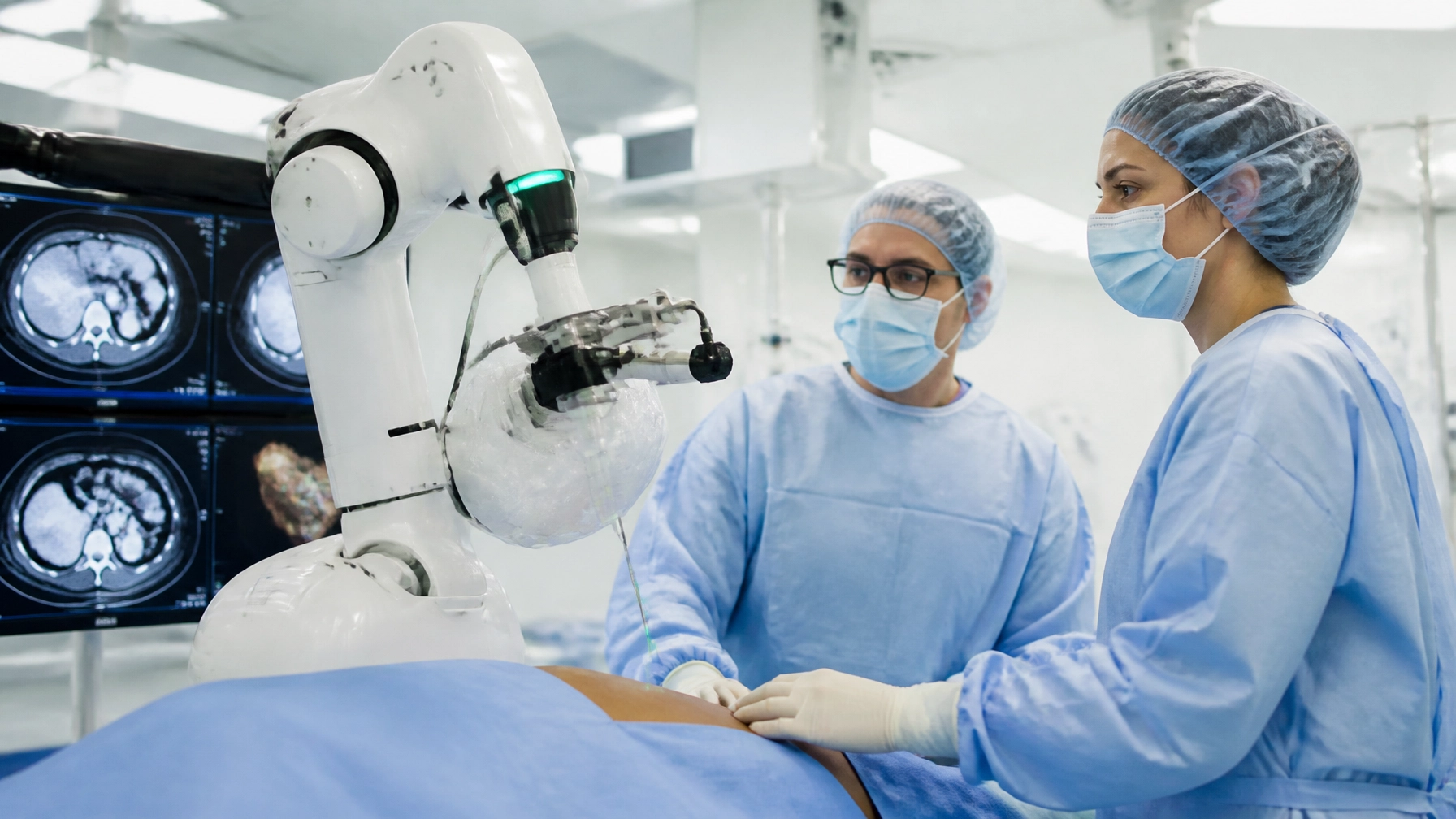
The cornerstone of this medical breakthrough is the integration of robotic technology with interventional oncology. In Brenda’s case, the surgical team utilised a state-of-the-art robotic needle-guidance system. This technology allows clinicians to map the exact coordinates of a tumour in three-dimensional space, providing a level of precision that is often unattainable through manual needle placement alone. For tumours located in deep or high-risk areas of the liver, even a millimetre of deviation can lead to complications or an ineffective treatment. The robot acts as a steady, highly calibrated extension of the consultant’s hands, ensuring that the electrodes are placed exactly where they need to be to deliver the electrical pulses.
Electrochemotherapy works by temporarily increasing the permeability of the cancer cell membranes. When the electrical pulse is applied, microscopic pores open up in the cells: a process known as electroporation. This allows the chemotherapy drug, which is administered in much smaller doses than usual, to flood directly into the cancerous cells. Once the pulse stops, the pores close, trapping the drug inside the tumour to perform its work. Because the dosage is so targeted, the systemic side effects often associated with chemotherapy, such as severe nausea and exhaustion, are significantly reduced. This was a crucial factor for a patient of Brenda’s age, ensuring that the treatment was not only effective but also tolerable.
The use of robotic guidance in this context is transformative. Traditionally, interventional radiologists rely on real-time imaging like CT scans or ultrasound to guide needles into the body. While highly skilled, the human element always carries a margin for adjustment. The robotic system streamlines this process, reducing the time a patient spends under general anaesthesia and increasing the likelihood of successfully treating the entire tumour in a single session. By removing the guesswork from needle trajectories, the technology opens the door for treating patients who were previously deemed "untreatable" due to the technical complexity of their condition.
Defying the Odds Through Innovative Trials
Brenda Iveson’s journey into the history books began when she was referred to the specialist interventional oncology team. Having lived a long and active life in North Yorkshire, the news of a complex liver tumour was a significant blow. However, her willingness to engage with cutting-edge medical research has provided a blueprint for future care. The procedure she underwent is part of the broader RESPECT trial, which aims to evaluate the efficacy and safety of this robotic-assisted approach across multiple European centres.
The procedure itself was minimally invasive. Unlike traditional open surgery, which requires large incisions and lengthy hospital stays for recovery, the robotic-guided approach involves only small puncture wounds where the needles are inserted. Brenda was able to undergo the treatment under general anaesthetic and, remarkably, reported feeling well shortly after waking up. The lack of heat-based destruction: often used in other ablation techniques: meant there was less risk of damage to the vital structures surrounding the liver, such as the bile ducts or major veins.
Follow-up assessments have shown striking results. Recent scans revealed that Brenda’s tumour had been reduced by approximately 80% following the procedure. Furthermore, subsequent monitoring has indicated that the remaining portion of the tumour is stable, with no signs of immediate growth. For a woman in her tenth decade, the ability to achieve such a result with minimal downtime is a testament to the synergy between human expertise and robotic assistance. Brenda has since returned to her daily life, enjoying time with her family and demonstrating that age should not be a barrier to accessing the very best that modern medicine has to offer.
The success of the trial at the Leeds site highlights the importance of clinical research in the National Health Service. By participating in these global studies, hospitals can offer patients access to technologies and treatments that are years away from being standard practice. For Brenda, being "patient number one" was a role she took on with a sense of pragmatism and hope, paving the way for others who may find themselves in similar circumstances.
Paving the Way for Targeted Cancer Treatment
The implications of Brenda’s successful treatment extend far beyond a single case in Harrogate. As the UK population ages, the prevalence of cancer in the elderly is rising, yet these patients are frequently excluded from aggressive treatment plans due to their perceived frailty. The success of robotic electrochemotherapy suggests a shift in the paradigm of geriatric oncology. It proves that with the right technology, sophisticated and effective cancer care can be delivered safely to the most vulnerable age groups.
This technology also addresses a critical gap in liver cancer care. The liver is a complex organ, and tumours often wrap around or sit close to major vessels that cannot be sacrificed during surgery. Because electrochemotherapy is non-thermal: meaning it doesn't use heat or extreme cold to destroy cells: it does not cause the "heat sink" effect where blood flow carries away the treatment's energy, nor does it risk "cooking" adjacent healthy structures. This makes it an ideal tool for the "impossible" tumours that have long frustrated oncologists.
Looking ahead, the integration of robotics into interventional radiology is expected to become more commonplace. The precision offered by these systems reduces the physical strain on clinicians and standardises the quality of care, ensuring that every patient receives the same level of accuracy regardless of the complexity of their anatomy. As more data is gathered from the RESPECT trial, there is hope that this treatment will become more widely available across the UK, moving from a specialist trial to a frontline option for liver, pancreatic, and even lung cancers.
Brenda Iveson’s story is a powerful reminder of the human element behind every technological breakthrough. While the robot provided the precision and the trial provided the framework, it was Brenda’s resilience and the clinical team’s dedication that turned a theoretical possibility into a life-extending reality. Her contribution to medical science ensures that the lessons learned from her procedure will benefit countless patients in the years to come, proving once and for all that innovation knows no age limit. The success seen in Leeds is a beacon of hope for families dealing with a cancer diagnosis, suggesting that even when the traditional doors are closed, new ones are being engineered every day.