For many, a five-hundred-mile round trip is a daunting prospect, a long haul through the unpredictable rhythm of British motorways and coastal roads.
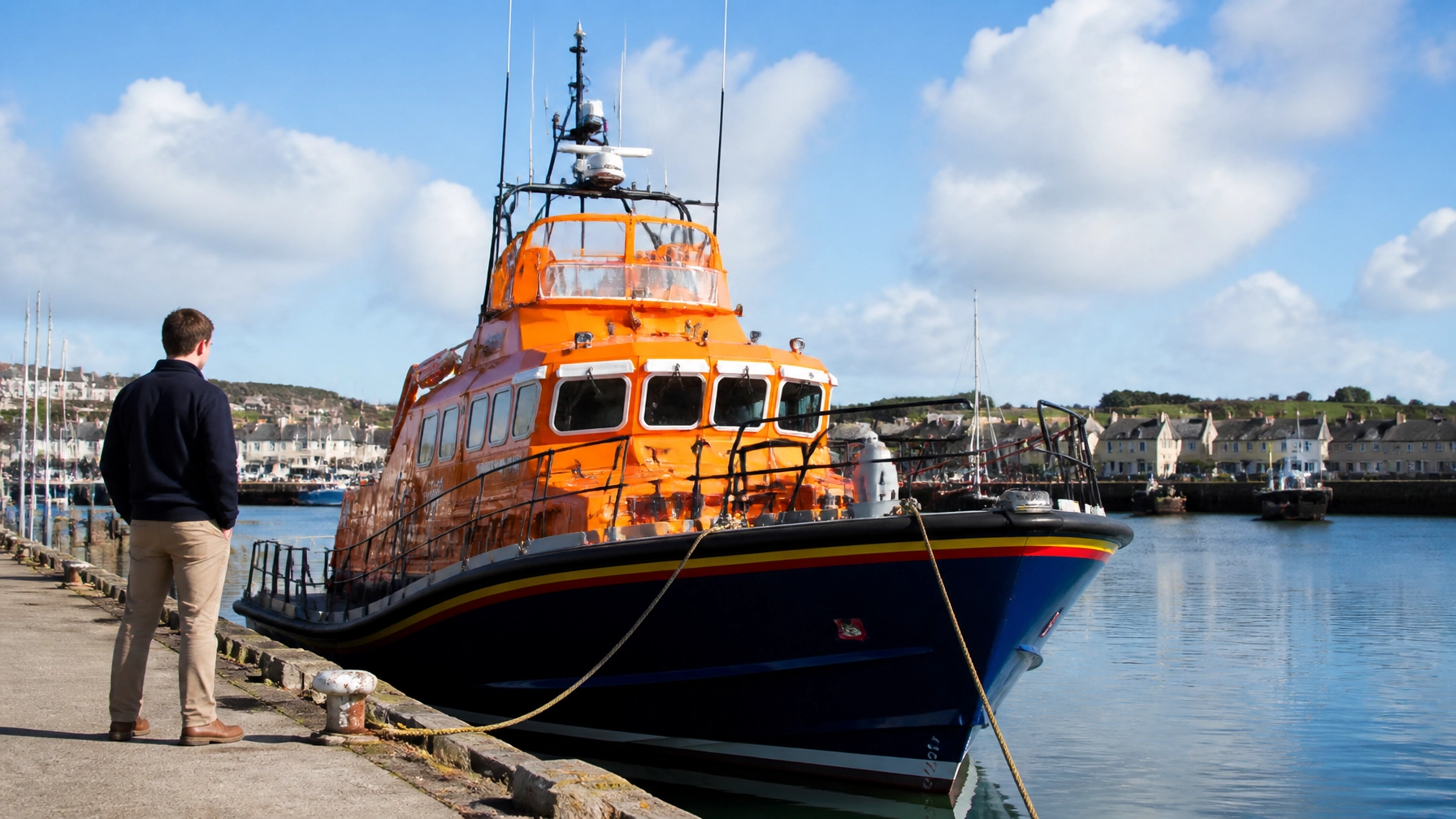
But for Karl Williams, the distance was secondary to the destination. Leaving his home in Coventry, Williams embarked on a pilgrimage to the Norfolk coast, driven by a deep-seated need to connect with a past that has long shaped his family’s identity. The target of his journey was Wells-next-the-Sea, where a modern marvel of maritime engineering sat waiting in the harbour: the Shannon-class lifeboat, 'The Duke of Edinburgh'.
This was no ordinary visit to a seaside town. Williams was there to witness a tribute that had been years in the making. Etched into the very fabric of the vessel, amongst thousands of other names, was that of his grandfather, William ‘Bill’ Williams. The visit represented the culmination of a personal mission to ensure that his grandfather’s memory was not just preserved in family photo albums, but carried forward into the future by a service dedicated to saving lives at sea.
The 'Launch a Memory' campaign has transformed the way many people engage with the work of life-saving charities. By allowing families to submit the names of loved ones to be printed within the decals of a lifeboat's hull, the initiative creates a moving, living memorial. For Williams, seeing the name 'William Williams' appearing in the fine print of the boat’s numbering was an emotional moment that bridged the gap between generations. His grandfather had lived a life defined by hard work and a quiet respect for the power of the ocean, and now, his name would accompany crews on every shout, every rescue, and every journey into the swells of the North Sea.
A legacy etched in steel
The significance of the Shannon-class lifeboat goes beyond its advanced water-jet propulsion and its ability to reach speeds of twenty-five knots. It represents the pinnacle of modern rescue technology, designed to operate in the most punishing conditions imaginable. For the families involved in the memorial campaign, however, the technical specifications are secondary to the emotional weight the boat carries. The decision to place a name on the hull is an act of profound respect, a way to ensure that a loved one remains part of a vital community effort long after they have passed away.
William ‘Bill’ Williams was a man who understood the value of service, even if his own career did not take him directly into the ranks of the lifeboat crews. His grandson describes him as a figure of quiet strength, someone whose stories of the coast and the sea left a lasting impression on the younger Karl. The 500-mile journey from the Midlands to the Norfolk coast was a way for the younger Williams to honour that influence. Standing on the quayside at Wells-next-the-Sea, the industrial landscape of Coventry felt a world away, replaced by the salt air and the steady mechanical hum of a working harbour.
The process of finding the name on the hull is often described by participants as a treasure hunt of sorts. With nearly 10,000 names intricately woven into the letters and numbers on the boat’s side, it requires patience and a sharp eye. When Karl finally located his grandfather’s name, the sense of accomplishment was palpable. It wasn’t just about the physical presence of the letters; it was about the knowledge that this particular vessel, 'The Duke of Edinburgh', is part of a 200-year history of bravery. For the Williams family, the legacy is now literally part of the machinery that protects the coastline.
The long road to remembrance
The drive from Coventry to Wells-next-the-Sea is a journey that takes a traveller through the heart of the country, transitioning from the urban sprawl of the West Midlands into the flat, expansive marshlands of East Anglia. For Karl Williams, the hours spent behind the wheel provided a rare opportunity for reflection. Remembrance is often a private affair, but by participating in a public memorial like this, Williams found himself part of a much larger collective narrative. Every name on that boat represents a story, a family, and a loss, all unified by a shared contribution to a common cause.
The journey was also a reminder of the geographical disconnect many people feel from the maritime heritage of the United Kingdom. Living in a landlocked city like Coventry, the daily realities of the coast can feel abstract. Yet, the support for life-saving services remains strong across the country. The 500-mile round trip served to underline the fact that the sea belongs to everyone, regardless of where they live. By making the effort to visit the station in person, Williams was able to witness the dedication of the volunteers who maintain and launch the vessel, providing a context for the memorial that a simple photograph could never capture.
Upon arrival, the atmosphere at the Wells-next-the-Sea station was one of professional focus and community pride. The crews here are accustomed to visitors arriving to search for names on the hull, and they often speak of the moving encounters they have with families from all corners of the country. For Karl, the experience was heightened by the clear Norfolk light, which caught the orange and blue of the lifeboat as it sat in the boathouse. The trek across the country had been long, but the clarity of the moment: seeing 'William Williams' in that specific, prestigious setting: made every mile of the motorway worthwhile.
Honouring a lifetime at sea
The connection between the past and the present is nowhere more evident than in the traditions of the lifeboat service. While the technology has moved from wooden oars to composite hulls and jet drives, the core mission remains unchanged. This continuity is what makes the inclusion of names like Bill Williams so poignant. It acknowledges that the present-day safety of mariners is built upon the support and the spirit of previous generations. For Karl, the visit was about more than just a single name; it was about acknowledging the entire lineage of his family and their relationship with the wider world.
As the 'The Duke of Edinburgh' continues its service at Wells, it will face the unpredictable and often treacherous waters of the North Sea. It will be launched in the dead of night, in gale-force winds, and in the calm of summer afternoons. In every one of those scenarios, the names on its hull: including that of a grandfather from a previous era: will be there. This thought provides a unique form of comfort to those left behind. It is a way of staying 'on watch', a final, symbolic duty for those who are no longer here to perform it themselves.
Karl Williams returned to Coventry with more than just a set of photographs. He brought back a renewed sense of pride in his heritage and a deeper understanding of the vital work carried out by coastal volunteers. The 500-mile tribute was a testament to the power of memory and the enduring importance of family ties. In an era where history can often feel like something found only in books or on screens, the physical reality of a grandfather’s name on a life-saving vessel provides a tangible, powerful link to the past. It ensures that while the man himself may be gone, his legacy continues to ride the waves, helping to bring others home safely.