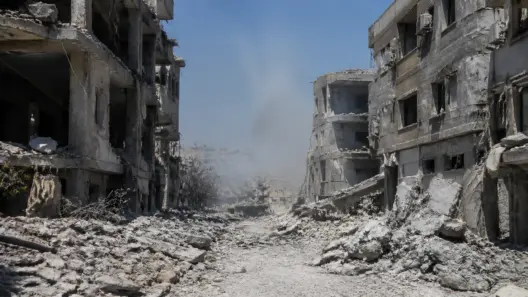
The capital of Ukraine woke to the thunderous roar of explosions this morning as a wave of heavy strikes targeted multiple districts across the city. Shortly before dawn, air raid sirens began their haunting wail, signaling the start of what residents described as one of the most intense aerial bombardments in recent months. As the sun began to peek over the horizon, the silence of the early hour was shattered by the rhythmic thud of air defence systems engaging incoming threats, followed by the terrifying crash of impacts that vibrated through the foundations of the city’s historic and modern quarters alike.
Reports from the ground indicate that the strikes were focused on the northern and central parts of the city, with the Podil and Obolon districts bearing the brunt of the morning’s violence. For the people of Kyiv, this is a grimly familiar routine, yet the scale and intensity of today’s attack have sent shockwaves through a population that has already endured years of conflict. Emergency services were dispatched almost immediately, weaving through smoke-filled streets to reach sites where debris from intercepted missiles and direct hits had caused significant damage to infrastructure and residential areas.
The atmosphere in the city is one of tense determination. While the immediate danger has passed for the moment, the psychological toll of such a concentrated assault is evident. The morning commute, usually a bustling affair of coffee runs and crowded metros, was replaced by a collective retreat into underground shelters and basement corridors. Even as the smoke begins to clear, the smell of burning rubber and scorched concrete lingers in the air, a visceral reminder of the strikes that have once again brought the reality of the front line to the heart of the capital.
Aerial Defences Scramble Amidst Morning Barrage
The assault began in the early hours of June 2, with multiple waves of drones and missiles detected crossing the border. Military officials noted that the coordination of the attack suggested a deliberate attempt to overwhelm the city’s sophisticated air defence network. Observers reported seeing streaks of light across the pre-dawn sky as interceptor missiles were launched from various points around the city, meeting their targets in bright bursts of orange and white. While many of the incoming projectiles were successfully neutralised, the sheer volume of the barrage meant that some were able to penetrate the shield.
In the minutes following the first explosions, the sky over Kyiv was transformed into a battlefield. The sound of anti-aircraft fire was relentless, a staccato backdrop to the deeper, more resonant booms of explosions that could be felt miles from the impact sites. Witnesses in the higher storeys of residential blocks described seeing the horizon light up repeatedly, as the battle for the city’s airspace played out in real-time. The sophistication of the weaponry used in this morning's strike points to a significant escalation in the technology being deployed against the capital, forcing defenders to adapt their tactics on the fly.
Despite the effectiveness of the air defence crews, the falling debris from intercepted missiles poses a lethal threat in its own right. Metal fragments, some the size of car doors, rained down on several neighbourhoods, smashing through roofs and littering public parks. The cleanup operation is expected to take days, as specialist teams work to identify and safely remove unexploded components and hazardous materials. The military has praised the quick thinking of the operators who remained at their posts throughout the height of the bombardment, likely preventing a much higher casualty count through their precision and endurance.
Devastation in Podil and Obolon Districts
As the dust settled, the extent of the damage in the Podil and Obolon districts became painfully clear. Podil, known for its historic architecture and vibrant cultural scene, saw several non-residential buildings suffer heavy damage. Glass from shattered windows carpeted the cobblestone streets, and the facade of a prominent administrative building was left scarred by a direct hit. Local business owners, arriving to open their shops, were instead met with scenes of ruin, as they began the heartbreaking task of sweeping up the remains of their livelihoods.
Further north in Obolon, the situation was equally dire. This densely populated residential area saw debris fall in close proximity to high-rise apartment complexes. One particular strike sparked a significant fire in a commercial area, sending plumes of thick, black smoke high into the morning air. Firefighters battled the blaze for several hours, working under the constant threat of secondary strikes. The bravery of these first responders has been a pillar of the city’s survival, and today was no exception, as they moved into damaged structures to ensure no residents were trapped beneath the rubble.
Casualty figures are still being verified, but early reports suggest that at least five people were wounded in the districts, with one individual in a critical condition. The human cost, however, extends beyond the physical injuries. Families in Obolon described the terror of being jolted awake by explosions that felt like they were in the next room. For the children of these districts, the morning was spent huddled in cold stairwells, a stark contrast to the start of a summer month that should have been filled with play and school activities. The resilience of these communities is being pushed to its limit, yet there remains a defiant sense of solidarity among neighbours who have spent the morning checking on one another and sharing resources.
A Resilience Tested by Relentless Escalation
The broader implications of this morning's strikes are being felt across the political and social landscape of Ukraine. This latest escalation comes at a time when the capital had begun to find a sense of "new normal," with businesses reopening and international visitors returning. The sudden and violent disruption serves as a reminder that the safety of the capital is never guaranteed. Analysts suggest that the timing and targets of the June 2 strikes may be intended to sow fear and disrupt the logistics of the city’s recovery, yet the response from the public suggests the opposite effect is taking hold.
Throughout the afternoon, the people of Kyiv have emerged from their shelters to begin the process of rebuilding once more. Volunteers have flocked to the affected sites in Podil and Obolon, offering everything from manual labour to psychological support. The sight of ordinary citizens, armed with brooms and plywood, working alongside emergency crews is a powerful testament to the spirit of the city. There is a sense that while the infrastructure can be broken, the will of the people remains intact. This collective defiance is perhaps the most potent weapon in the city’s arsenal, a factor that is often overlooked in military assessments.
Looking ahead, the demand for more robust international support for Ukraine’s air defences is likely to grow. The events of this morning have demonstrated that even with high-end systems in place, a sufficiently large and complex attack can still cause significant harm. As the international community watches the smoke rise over Kyiv, the conversation will undoubtedly turn to how best to protect civilian populations from such indiscriminate violence. For now, the people of Kyiv will close their day as they began it: with an eye on the sky and a deep-seated hope that the coming night will be a quiet one. The city remains standing, battered but unbowed, ready to face whatever the morning might bring.