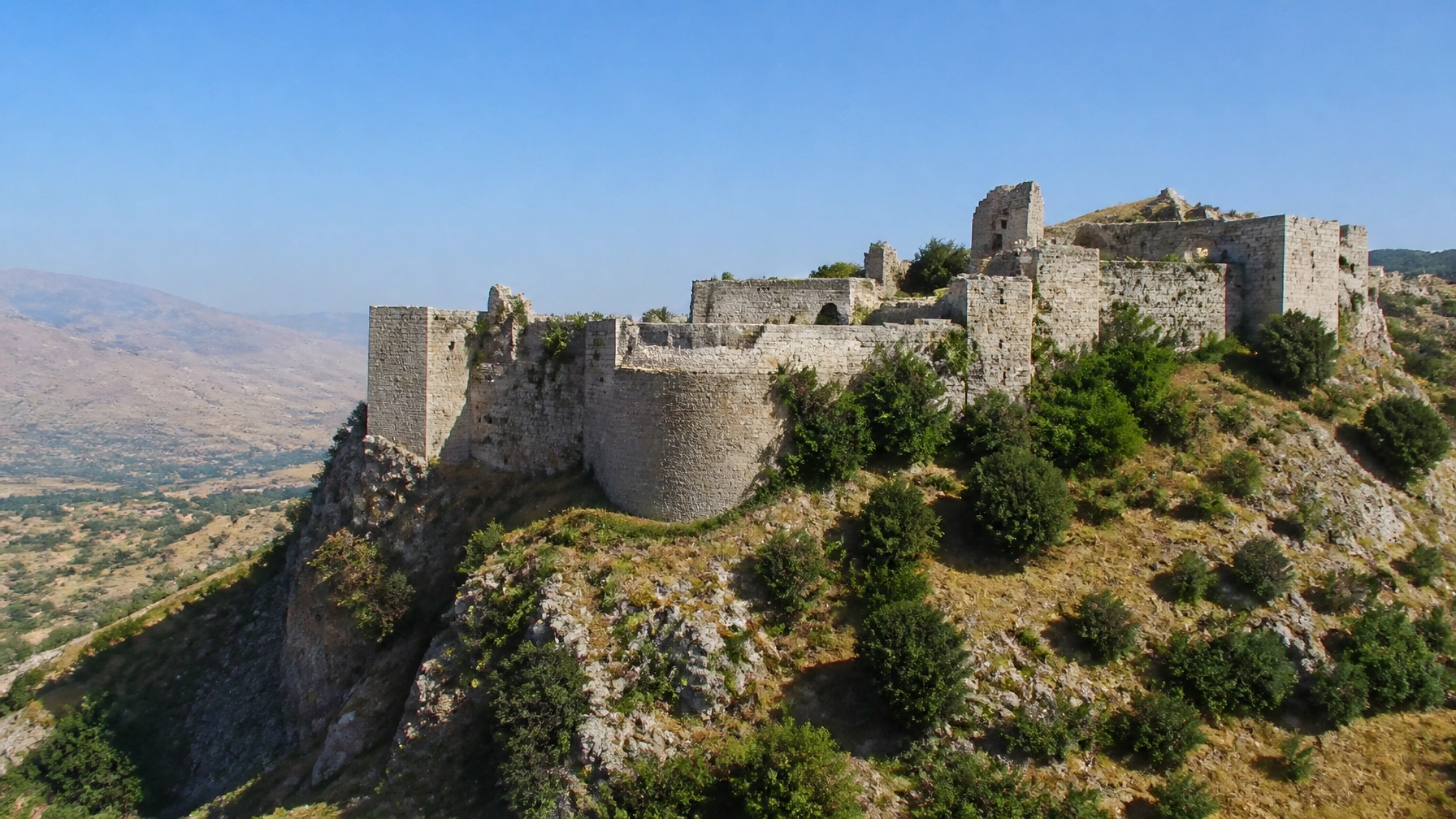
Israeli military forces have taken control of the historic Beaufort Castle in southern Lebanon, marking the deepest ground incursion into the country in more than a quarter of a century. The seizure of the 900-year-old Crusader fortress, known locally as Qalaat al-Shaqif, follows a significant escalation in hostilities across the border and signals a dramatic shift in the regional security posture. Elements of the Golani Brigade were filmed hoisting national flags over the weathered stone ramparts on Sunday afternoon, securing a vantage point that has dominated military strategy in the Levant for centuries.
The operation to capture the fortress and the surrounding Beaufort Ridge was launched in the early hours of the morning, following a period of intense artillery preparation and targeted airstrikes. Military commanders reported that the push was a direct response to a surge in projectile attacks launched from the vicinity of the Litani River, which have increasingly targeted civilian areas in northern Galilee. The ascent to the castle, which sits approximately 700 metres above sea level on a sheer rock face, required a complex manoeuvring of armoured units and infantry through the rugged terrain of the Wadi al-Saluki.
As troops consolidated their positions within the ancient ruins, the symbolic and tactical weight of the achievement was immediately felt. The castle, which overlooks the city of Nabatieh and provides an unobstructed line of sight across large swathes of southern Lebanon and northern Israel, has once again become the focal point of a wider conflict. This move effectively pushes the combat zone beyond the Litani River, a boundary that has long been viewed as a critical threshold in cross-border military engagements.
The Strategic Weight of Beaufort Ridge
The military importance of Beaufort Castle cannot be overstated. From its position atop a limestone crag, any force holding the fortress commands the valley below and the primary routes leading towards the heart of Lebanon. For the current offensive, the ridge serves as a pivotal observation post, allowing for the real-time tracking of movement across the southern plains. Military analysts suggest that the occupation of this high ground is intended to dismantle the infrastructure used for long-range rocket launches, creating a physical buffer that has been absent since the withdrawal of forces in 2000.
The Golani Brigade's entry into the castle grounds was preceded by fierce clashes with local armed groups who had fortified the slopes and subterranean passages surrounding the historic site. Reports from the ground indicate that the fighting was intense, involving close-quarters combat as units cleared the various levels of the medieval structure. The use of the castle as a military asset is a recurring theme in its long history, having been a site of contention since the 12th century when it was built by Fulk, King of Jerusalem, to protect the northern borders of the Crusader states.
In the modern context, the ridge acts as a natural barrier. By securing this height, the advancing forces have gained a decisive advantage in fire control and electronic surveillance. The ability to monitor communications and movement from such a significant elevation provides a tactical umbrella for further operations deeper into the territory. While the primary objective stated by officials is the protection of northern communities from incessant shelling, the occupation of such a permanent and historically significant site suggests a longer-term strategic intent that goes beyond a temporary raid.
Geopolitics and the Fragile Peace
The capture of Beaufort Castle has sent shockwaves through the international diplomatic community, particularly as it occurs in the wake of a recently brokered ceasefire in April. That agreement, which was intended to provide a framework for a more permanent cessation of hostilities, now appears to be in total collapse. The move deeper into Lebanese territory has drawn sharp criticism from several European capitals, with calls for an emergency session of the United Nations Security Council to address the escalating humanitarian and political crisis.
In a televised address following the capture, the Israeli Prime Minister described the event as a "dramatic stage" in the ongoing effort to ensure national security. He asserted that the directive was to deepen and expand control over areas that have served as launchpads for attacks. The rhetoric suggests a move away from a policy of containment towards one of active occupation of strategic security zones. This shift has raised concerns that the region is returning to the era of the "Security Belt," a period of prolonged presence that defined the conflict in the late 20th century.
Regional reactions have been predictably swift and condemnatory. Authorities in Beirut have characterised the seizure as a flagrant violation of national sovereignty and a breach of international law. The diplomatic fallout is expected to be extensive, with planned high-level talks in Washington now under a cloud of uncertainty. Despite the international pressure, the defence ministry has indicated that the presence at Beaufort is a necessary component of a new security architecture designed to prevent the re-establishment of hostile infrastructure within striking distance of the border.
A Legacy of Conflict on the Litani
This is not the first time Beaufort Castle has been at the centre of a major regional conflagration. In 1982, during the First Lebanon War, the castle was the site of a famous and controversial battle that left a lasting mark on the military psyche. For nearly two decades following that conflict, the fortress served as a forward operating base, a stone sentinel overlooking a volatile landscape. Its eventual abandonment in May 2000 was seen by many as the end of an era, making the recent return of troops a moment of profound historical irony.
The 900-year-old walls of the castle bear the scars of these successive conflicts. From the original Crusader masonry to the concrete reinforcements added during the 20th century, the structure is a palimpsest of war. The current occupation faces the challenge of maintaining a presence in a location that is both a strategic asset and a high-profile target. The geography that makes it so difficult to assault also makes it difficult to resupply, requiring a constant and heavily protected aerial and ground corridor.
As the dust settles on the immediate battle for the ridge, the focus shifts to the long-term implications for the local population and the broader regional balance of power. The establishment of a de facto security zone beyond the Litani River significantly alters the rules of engagement. While military leaders argue that the move is purely defensive, the reality on the ground is one of increased tension and the potential for a wider, more protracted struggle. The silent towers of Beaufort, which have watched over empires and armies for nearly a millennium, now stand as a stark symbol of the renewed volatility in the Levant.
The coming weeks will be critical in determining whether this seizure remains a tactical victory or becomes the opening chapter of a much larger campaign. With troops now dug into the ancient stone and advanced surveillance equipment scanning the horizons, the castle is once again the literal and figurative high ground in a conflict that shows no signs of resolution. The international community continues to watch with trepidation, fearing that the return to Beaufort marks the beginning of a cycle of occupation and resistance that many hoped had been consigned to history.