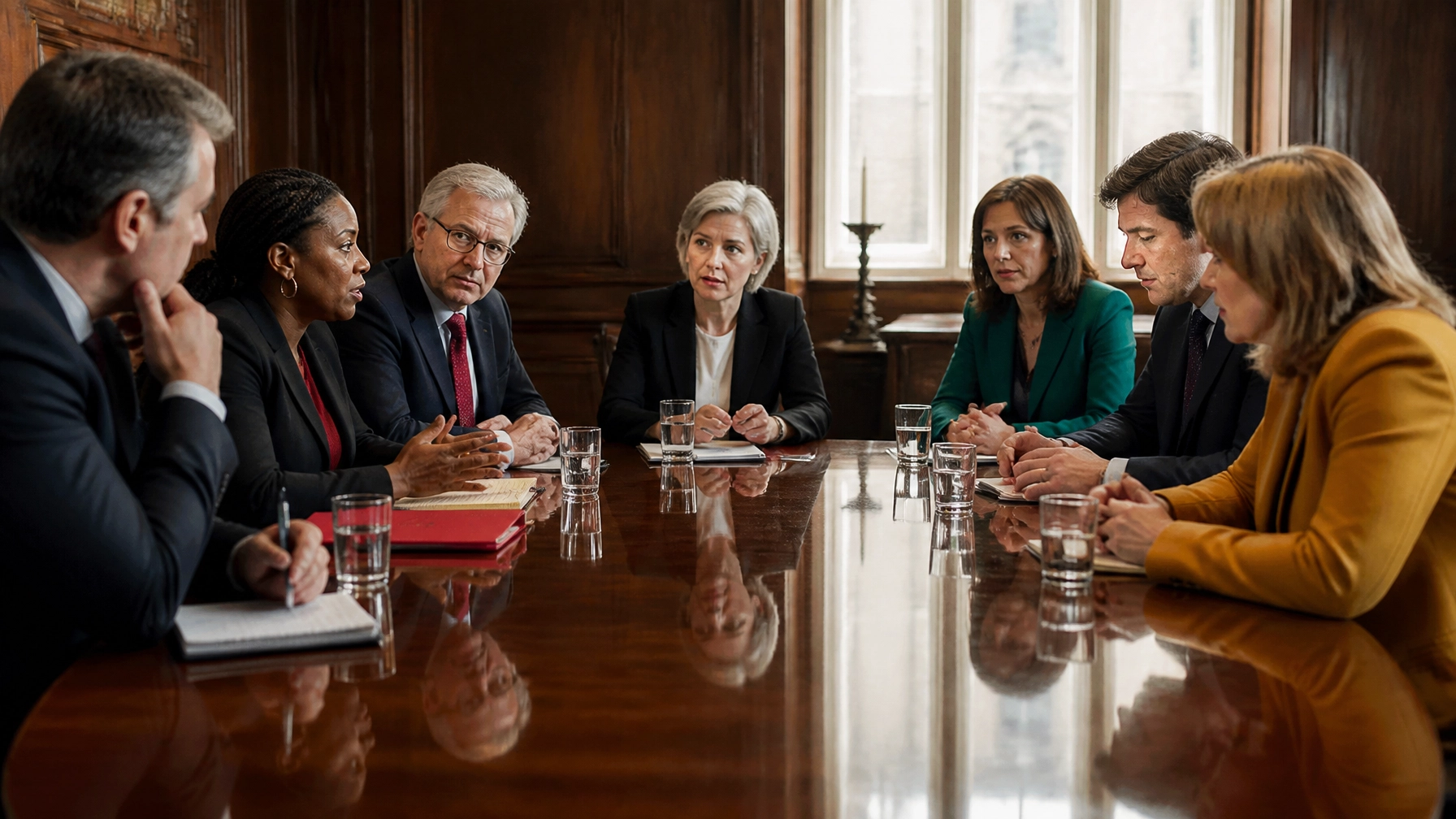
A clandestine alliance of senior political figures is coalescing around a new strategy to prevent a Reform UK victory at the next general election. Allies of Greater Manchester Mayor Andy Burnham are spearheading the formation of a "council for the progressive majority," a cross-party body designed to unite the fractured left and centre-left against the rising tide of Nigel Farage’s populist movement. Led by the thinktank Compass, the initiative marks the most significant attempt to date to bypass traditional party tribalism in favour of a unified electoral front.
The move comes as Reform UK continues to dominate national polling, threatening to capitalise on a split opposition. Under the first-past-the-post system, the "progressive" vote: shared between Labour, the Liberal Democrats, the Greens, the SNP, and Plaid Cymru: has historically resulted in conservative or populist victories despite a cumulative majority of the electorate often favouring centre-left policies. The new council aims to rectify this by coordinating strategy, sharing data, and potentially facilitating electoral pacts that would see parties stand down in key battleground seats.
A New Architecture for the Progressive Majority
The "council for the progressive majority" is not merely an informal talking shop; it is intended to be a robust institutional space where the mechanics of power can be discussed across party lines. Each of the major progressive parties is expected to send two senior representatives to the council, which will be chaired by a non-party figure, likely a high-profile academic or a veteran from civil society. While the official appointments are not yet finalised, the influence of Andy Burnham looms large over the project. Burnham, whose supporters have been increasingly vocal about the need for a radical shift in how the left organises, sees the council as a necessary evolution of British politics.
Neal Lawson, the director of Compass and a long-time advocate for electoral reform, has been the driving force behind the council's inception. He argues that the century-old two-party order has effectively collapsed, leaving Britain in a "two-bloc system" where up to seven parties now wield significant influence. According to Lawson, the progressive majority is a "long-term transformative force" that has been stifled by an archaic voting system. By formalising this bloc, the council intends to ensure that the combined weight of these parties is translated into seats in Parliament, rather than being dissipated through internal competition.
The council is scheduled to meet four times a year, with its first major planning sessions expected to take place by the end of the summer. The agenda is ambitious: it includes the standardisation of voter data sharing, the mapping of tactical voting opportunities, and the sensitive discussion of "paper candidates": where parties might run a minimal campaign to avoid splitting the vote in seats where a rival progressive party has a better chance of defeating Reform UK. This level of cooperation is unprecedented in modern British political history and signals a deep-seated anxiety about the prospect of a Reform-led administration.
Strategic Pacts and the Challenge of Reform
The rise of Reform UK has fundamentally altered the electoral calculus in the United Kingdom. With the party now leading in several national polls, the threat to the political establishment is no longer theoretical. The council’s primary objective is to stop Reform from gaining the "governing prowess" it currently seeks. This involves more than just electoral mathematics; it requires a unified narrative on issues that have traditionally divided the left, such as immigration, economic sovereignty, and environmental policy.
Electoral pacts are the most controversial tool at the council’s disposal. In previous elections, such arrangements have been sporadic and often unofficial. However, the scale of the Reform threat has prompted more formal discussions. Figures like Green Party leader Zack Polanski and former MP Caroline Lucas have expressed openness to such pacts, particularly if they are linked to broader commitments to proportional representation. Polanski has explicitly suggested that his party would be willing to work with Labour under specific leadership conditions, noting that the goal is to create a "progressive electoral force" capable of surviving the volatility of the current political climate.
Data sharing represents another pillar of the council’s strategy. In the digital age, the party with the most sophisticated ground game and voter insight often holds the advantage. By pooling resources, the progressive parties hope to identify "swing" voters who are susceptible to Reform’s messaging but could be swayed by a unified progressive alternative. This would allow for more targeted campaigning and a more efficient use of the limited financial resources available to smaller parties like the Greens and the Liberal Democrats. The council believes that a coordinated "ground war" could be the difference between a Reform landslide and a progressive coalition government.
Internal Fractures and the Road Ahead
Despite the outward appearance of unity, the council faces significant internal hurdles. Within the Labour Party, a divide has emerged between the "soft left" and the more moderate wing. Figures like Clive Lewis, Alex Sobel, and Stella Creasy are seen as natural allies of the cross-party project, but others within the party hierarchy are wary. Some Labour moderates have raised concerns about the reputational risk of formal ties with the Green Party, which has faced recent scrutiny and allegations regarding its internal handling of antisemitism.
The Greens themselves are equally divided. While some see the council as a golden opportunity to exert influence and secure a commitment to electoral reform, others argue that the party should remain an independent challenger to Labour. These "purists" believe that by joining a progressive bloc, the Greens risk being swallowed by a larger Labour machine, effectively silencing their unique environmental and social platform. The tension between tactical pragmatism and ideological purity remains a major obstacle to a truly cohesive alliance.
Furthermore, the Liberal Democrats, represented by figures like Roz Savage, are navigating their own path. Savage has recently noted that her party needs a clear strategy for potential coalitions, but the Lib Dems remain haunted by the memory of the 2010 coalition government. Any agreement that looks like a pre-arranged "deal behind closed doors" could alienate voters who value the party’s independent voice.
The council’s success will ultimately depend on whether these diverse and often conflicting interests can be subordinated to the singular goal of stopping Reform UK. As the next general election looms, the pressure to find common ground is mounting. If the council for the progressive majority can overcome its internal contradictions, it may well rewrite the rules of British politics. If it fails, the path to a Reform UK government may be left wide open, fueled by the very vote-splitting that the allies of Andy Burnham are so desperate to prevent.