








The theft of a child’s toy is often dismissed as a minor incident, a footnote in the daily log of local disturbances. However, for three-year-old Arthur from Middlesbrough, the disappearance of his beloved miniature wheelie bins was nothing short of a tragedy. In a world defined by routine and the simple joys of imaginative play, these toys represented a bridge to the adult world he so admired. When the bins were taken from outside his family home, the impact was felt far beyond the driveway. What followed was not just a replacement of plastic toys, but a significant demonstration of how a community can rally to restore a sense of security and wonder for its youngest members.
Arthur’s fascination with waste collection is a sentiment shared by many children of his age. There is a certain magic in the weekly arrival of the heavy machinery, the rhythmic clatter of the bins, and the diligent work of the crews who keep the streets clean. For Arthur, this wasn't just a passing interest; it was a passion. He spent hours with his toy bins, mimicking the precision and order of the real-life operations he witnessed from his window. The theft, which occurred under the cover of night, left the toddler devastated and his family searching for answers in a digital age where local appeals can sometimes go unheard.
A social media appeal that resonated across the borough
The story began to gain momentum when Arthur’s mother, Rosie, took to social media to share the news of the theft. Her post was not an angry tirade but a heartfelt plea for information. She described how much the toys meant to her son and the confusion he felt when they were no longer where he had left them. In an era where online platforms are often filled with division, this simple story of a boy and his bins struck a chord with the residents of Middlesbrough. It served as a reminder of the small, personal losses that can deeply affect a household, and the community responded with overwhelming empathy.
Among those who saw the appeal was Luke Henman, a local councillor for the Acklam ward. Recognizing that this was more than just a matter of lost property, he saw an opportunity for the local authority to step in and turn a negative experience into something positive. Local government is often viewed through the lens of policy, budgets, and bureaucracy, but at its heart, it is about the people it serves. By coordinating with the environmental services department, the council sought to do more than just drop off a new set of toys; they wanted to create a moment that Arthur would never forget, effectively turning a local councillor into a facilitator of childhood joy.
The planning for the surprise was meticulous. It involved various departments within Middlesbrough Council, showing a level of cross-functional cooperation usually reserved for major infrastructure projects. The goal was to deliver the replacement bins in a way that celebrated Arthur’s interest and reinforced the idea that his community cared about him. The chosen location for the surprise was Arthur’s nursery at Kader Primary School, a setting where he felt safe and surrounded by his peers, ensuring that the celebration would be shared with his friends and teachers.
The morning a real-life hero arrived at the nursery gates
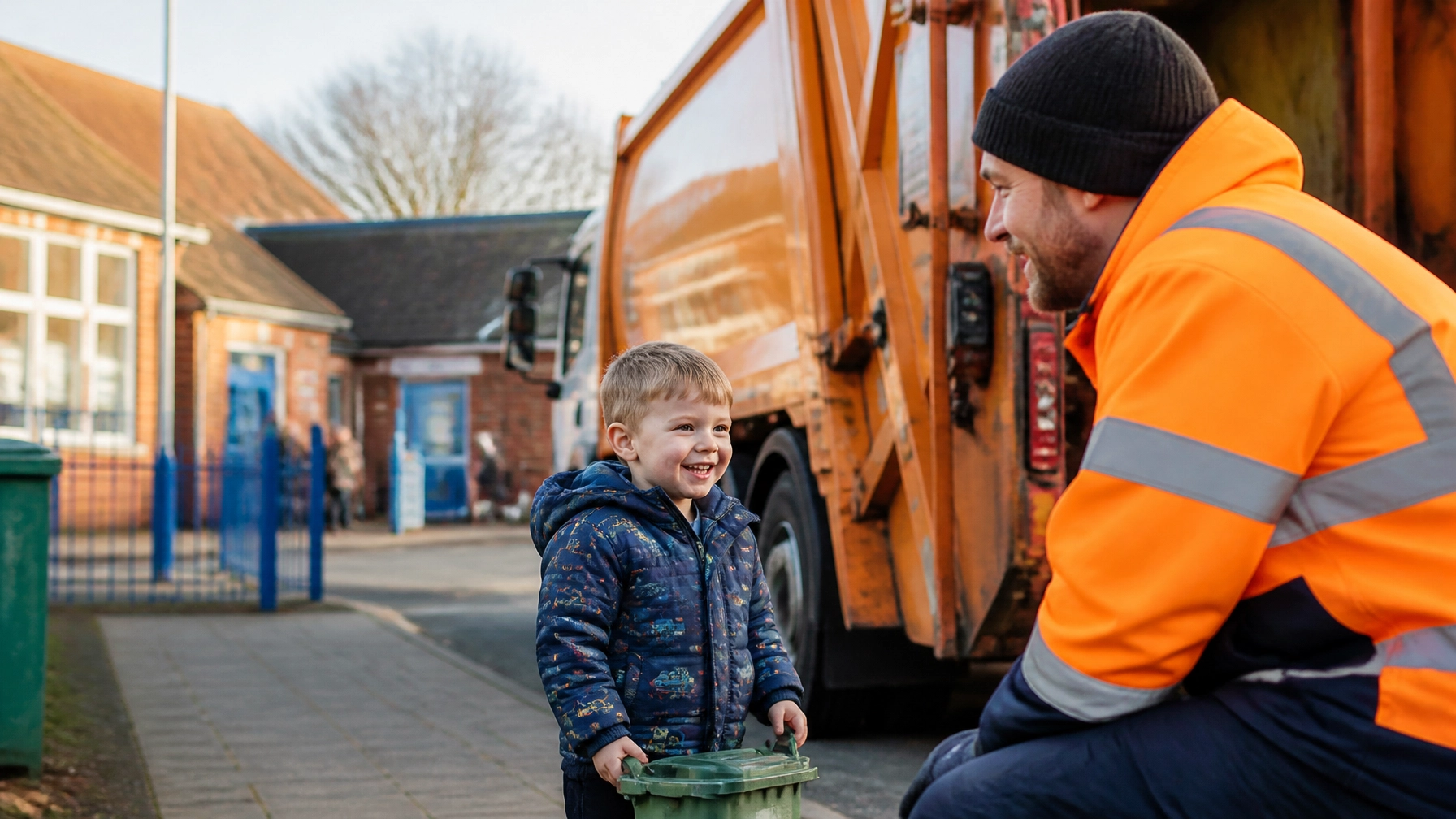
The atmosphere at the nursery was one of quiet anticipation on the morning of the surprise. Arthur arrived for his usual day of learning and play, entirely unaware that a massive piece of machinery was idling just around the corner. The arrival of a full-sized refuse waggon is a spectacle in any residential street, but when it pulled up specifically for the children at Kader Primary School, it became an event of monumental proportions. The bright orange vehicle, a symbol of the town's essential services, was driven by Brandon Osborne, a Waste and Recycling Officer who stepped into the role of a community ambassador for the day.
As the lorry came to a halt, the children were led outside, their eyes widening at the sight of the vehicle. For Arthur, the moment was transformative. The grief of the past few days evaporated as he was introduced to the very people he had spent so long admiring from a distance. Brandon Osborne didn't just show off the truck; he took the time to explain how it worked, the importance of recycling, and the hard work that goes into keeping the borough tidy. This educational component added a layer of depth to the visit, transforming a simple act of kindness into a valuable lesson about civic duty and environmental responsibility.
Arthur was given the rare opportunity to explore the cab of the lorry, sitting in the driver’s seat and seeing the world from a new perspective. The photographs from the day capture a look of pure, unadulterated joy on his face: a stark contrast to the sadness of the previous week. His mother, Rosie, noted that he was "absolutely over the moon," a sentiment that was clearly shared by the staff and other children at the nursery. The presence of Peter Gavigan, the Executive member for Environment and Sustainability, further underscored the importance the council placed on this interaction. It was a clear signal that every resident, no matter how small, is a valued part of the Middlesbrough fabric.
Rebuilding trust and the legacy of a simple gesture
While the event was a triumph for Arthur, its significance reaches further into the heart of community policing and local governance. Theft, even of a minor nature, can erode the sense of safety within a neighbourhood. By responding so decisively and creatively, the council and the community at large sent a powerful message to whoever took the toys: that Middlesbrough is a place where people look out for one another. The restoration of Arthur’s bins was not just about the physical objects, but about restoring a child’s faith in the world around him. It proved that for every act of thoughtless opportunism, there are dozens of acts of deliberate kindness.
The long-term impact of this event on Arthur cannot be overstated. Psychologists often point to the importance of "peak experiences" in childhood: moments of intense joy and wonder that help shape a child’s outlook on life. By turning a traumatic event into a peak experience, the adults involved have given Arthur a story that he will likely carry with him for years. It has reinforced his passion for the services that keep his town running and has perhaps even planted the seeds for a future career in public service. The "bin lorry surprise" has become a part of the local lore, a positive news story in a cycle that is often dominated by more sombre headlines.
In the weeks following the visit, Arthur has returned to his play with a renewed vigour. His new bins are safely stored, and his fascination with the weekly collection remains as strong as ever. For the rest of the community, the story serves as a blueprint for how to handle the small crises that affect our neighbours. It doesn't always require a large-scale operation or a council-funded surprise, but it does require a willingness to listen and a desire to help. As Middlesbrough continues to navigate the challenges of the modern era, the memory of a bright orange lorry and a smiling three-year-old stands as a testament to the enduring power of community spirit and the simple, profound impact of doing the right thing.