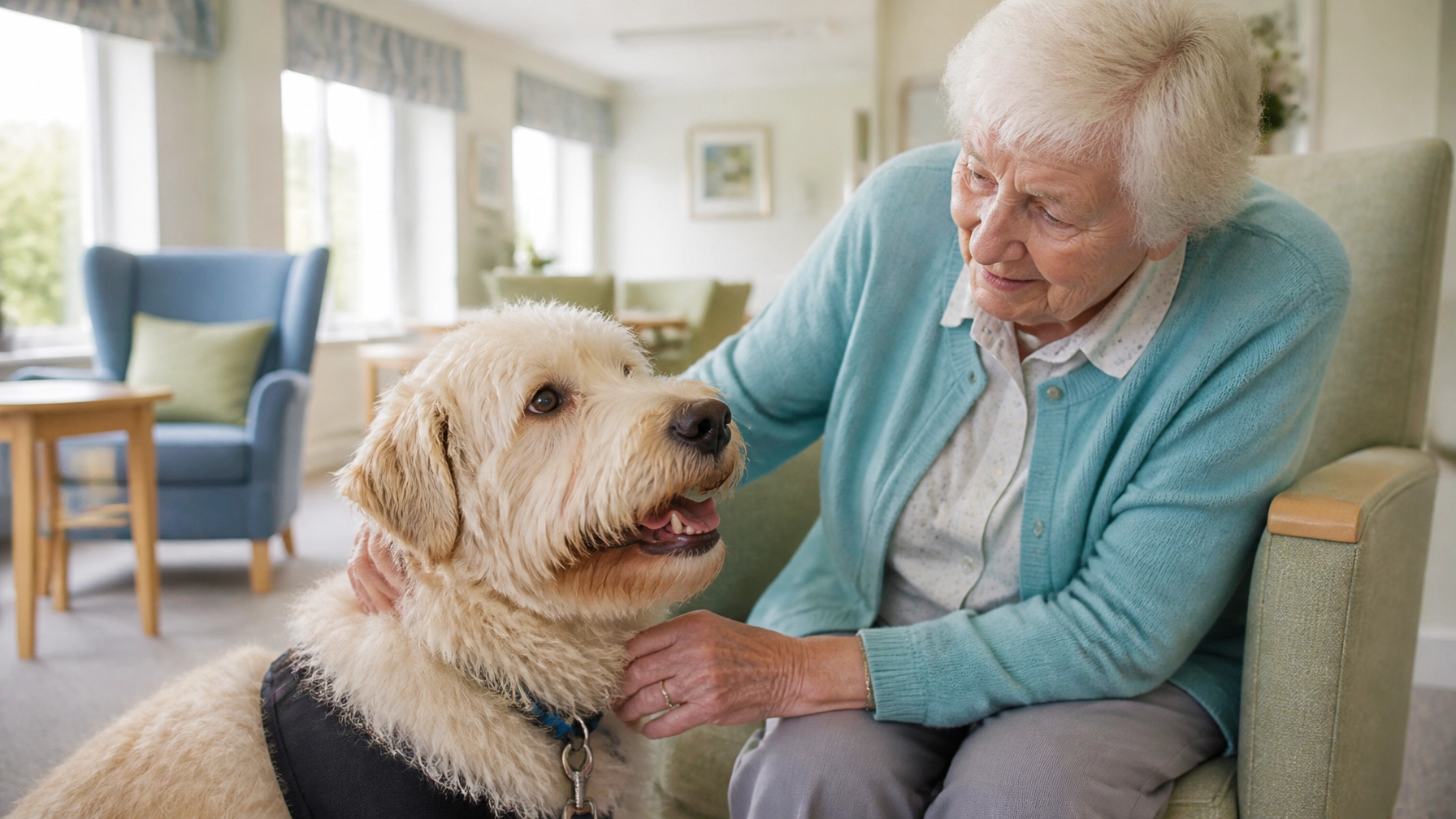
Across the quiet, sun-dappled lounges of residential care homes in Norfolk, a quiet revolution is taking place, led not by a medical professional or a revolutionary piece of technology, but by a scruffy, four-legged immigrant named Clement. Once a stray navigating the unforgiving streets of Romania, Clement has found a new purpose thousands of miles away as a certified therapy dog. His story is one of profound transformation, illustrating the untapped potential of rescue animals and the remarkable emotional bridges they can build within the complex world of dementia care. For the residents he visits, Clement is more than just a pet; he is a living link to suppressed memories and a source of comfort that transcends the limitations of verbal communication.
The journey for Clement began in a public shelter in Romania, a place far removed from the manicured lawns of East Anglia. Like many of the thousands of dogs rescued from Eastern Europe every year, his early life was defined by survival. However, his temperament caught the eye of UK-based rescuers who noted a rare combination of calm and empathy. After being rehomed in Norfolk, his owner quickly realised that Clement possessed an extraordinary sensitivity to human emotion. This intuition led to his formal training and eventual certification as a therapy dog, a process that requires a dog to remain unfazed by the sudden movements, loud noises, and medical equipment common in care home environments.
From the streets of Eastern Europe to the quiet corners of East Anglia
The transition from a street dog to a certified therapy professional is a rigorous one. It requires a specific temperament that cannot always be taught: a natural affinity for people and a remarkably thick skin. In the case of Romanian rescues, there is often an unfair stigma that these animals are too traumatised or unpredictable for service work. Clement, however, has become a living rebuttal to such preconceptions. His training involved months of socialisation, ensuring he could handle the unique sensory environment of a care facility, from the sharp scent of antiseptic to the rhythmic clicking of walking frames.
In Norfolk, where the aging population is growing at a rate that outpaces much of the country, the demand for innovative social care is high. Care home managers have increasingly looked toward animal-assisted intervention to supplement traditional therapies. Clement’s arrival at these facilities is often the highlight of the week for both staff and residents. His presence encourages a shift in the atmosphere; the heavy silence that can sometimes permeate dementia wards is replaced by the soft patter of paws and the low murmur of residents reminiscing about their own childhood pets. This "canine connection" serves as a catalyst for social interaction in a setting where isolation can often become the norm.
Navigating the complex landscape of dementia through canine empathy
Dementia is a cruel thief of memory and identity, often leaving patients trapped in a state of confusion or agitation. For those living with the condition, traditional conversation can become a source of frustration as words fail them. This is where Clement’s role becomes vital. Unlike humans, dogs do not require verbal responses; they communicate through presence, touch, and unconditional acceptance. When Clement rests his head on the knee of a resident, he is providing a form of sensory stimulation that has been shown to lower cortisol levels and reduce the symptoms of "sundowning": a phenomenon where dementia patients become increasingly distressed in the late afternoon.
The impact on individual residents is often visible and immediate. Staff at several Norfolk homes have reported instances where residents who had been non-verbal for weeks began to talk to Clement, describing the texture of his fur or telling him stories about dogs they owned decades ago. This process of reminiscence is a cornerstone of dementia therapy, helping to anchor patients in their own history. Clement acts as a non-judgmental listener, allowing residents to express themselves without the fear of being corrected or misunderstood. The tactile experience of stroking a dog also provides a grounding sensation, helping to alleviate the physical anxiety that often accompanies cognitive decline.
Challenging the narrative around the UK’s rescue dog crisis
Clement’s success also shines a spotlight on the broader debate regarding the importation of rescue dogs into the United Kingdom. While some critics argue that the UK should focus solely on its own overflowing shelters, advocates for international rescue point to dogs like Clement as evidence of the value these animals bring to British society. His story highlights a successful model of integration, where an animal deemed "surplus" in its country of origin becomes a precious asset in its new community. By serving as a therapy dog, Clement is not just a pet; he is a working member of the social care ecosystem, contributing to the well-being of some of the most vulnerable members of the public.
Furthermore, the integration of therapy dogs into care homes is prompting a wider conversation about the future of elderly care in Britain. As the social care sector faces ongoing challenges with staffing and funding, the use of volunteers and their trained animals offers a cost-effective way to improve quality of life. Clement’s work in Norfolk demonstrates that sometimes the most effective interventions are the simplest ones. The bond between a human and a dog is ancient and instinctive, and in the clinical setting of a care home, it provides a necessary touch of the domestic and the familiar. As Clement continues his rounds across Norfolk, his scruffy face serves as a reminder that recovery and purpose can be found in the most unexpected of places, and that every dog, regardless of its start in life, has the potential to heal.