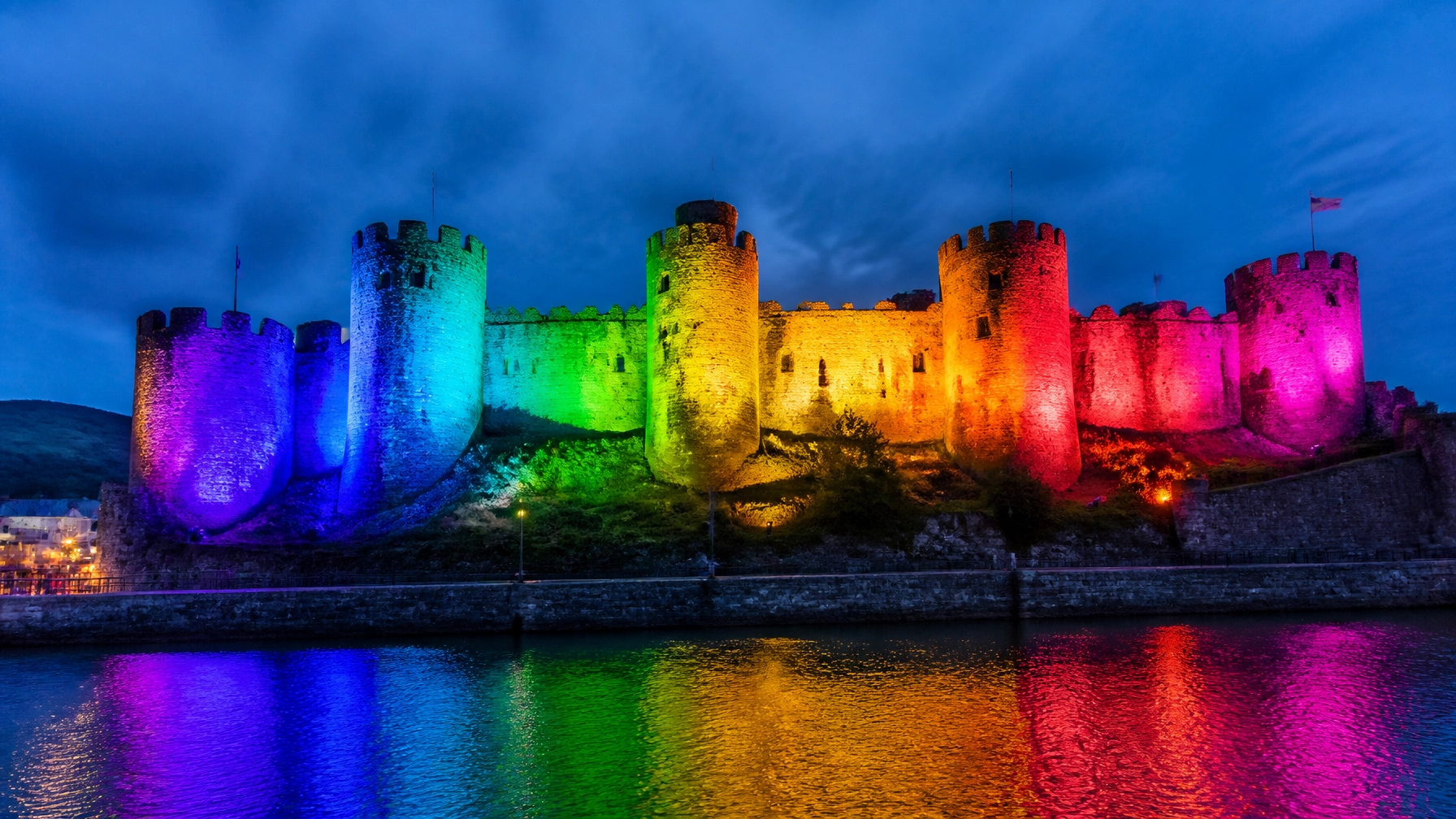
A wave of colour has swept across the globe this week as iconic landmarks from Wales to Canada were illuminated in a striking rainbow display.
The synchronised event was not merely a spectacle of light but a powerful gesture of solidarity for a young boy in Flintshire marking a milestone that his family once feared might be overshadowed by a devastating medical diagnosis. Rupert Smith, who celebrated his first birthday on May 28, has become the face of a burgeoning international campaign to bring awareness to one of the world’s rarest neurological conditions.
The sight of Cardiff Castle bathed in shifting hues of violet, indigo, green, and gold provided a focal point for the local community, while thousands of miles away, the CN Tower in Toronto mirrored the display. This global coordination highlights the reach of a story that began in a quiet corner of North Wales. For Rupert’s parents, the sight of these historic structures glowing in his honour serves as a testament to the resilience of their son and the overwhelming support of a global community moved by his journey.
The campaign, which saw local government buildings and private landmarks join the effort, was designed to coincide with Rupert’s first birthday. In the world of rare diseases, these milestones are often bittersweet, representing both a celebration of life and a reminder of the challenges that lie ahead. The choice of rainbow colours was intentional, symbolising hope and the broad spectrum of symptoms and experiences associated with the condition that has redefined the Smith family’s life over the past year.
The discovery of an ultra-rare condition
The journey to this global light show began with a subtle observation that many parents might have missed. Earlier this year, Rupert’s parents noticed a fleeting, unusual flicker in their son’s eyes. While initially dismissed as a potential quirk of infancy, the persistence of the movement prompted a series of medical consultations. What followed was a whirlwind of tests, hospital stays, and the eventually harrowing news that Rupert was living with Alternating Hemiplegia of Childhood (AHC).
AHC is frequently described by medical professionals as a "one-in-a-million" condition, a phrase that underscores the extreme rarity and the isolation that often accompanies such a diagnosis. It is a complex neurological disorder characterized by recurrent episodes of temporary paralysis, often affecting one side of the body at a time: hence the name "alternating hemiplegia." These episodes can last for minutes, hours, or even days, and are frequently accompanied by other neurological issues, including the eye tremors that first alerted Rupert’s family.
For a young child, the impact of AHC is profound. The condition is often likened to a combination of epilepsy, cerebral palsy, and Parkinson’s disease, yet it remains distinct and notoriously difficult to manage. Because the condition is so rare, there is often a lack of widespread clinical knowledge, leaving families to become experts in their own right. The diagnosis in January turned the Smiths' world upside down, transforming their daily routine into a vigilant watch for the next "attack," which can be triggered by anything from excitement and stress to changes in temperature or light.
A global community stands in solidarity
The decision to light up landmarks was born from a desire to turn a private struggle into a public conversation. As Rupert’s first birthday approached, his family reached out to organizations and local authorities, hoping to find a way to mark the occasion that reflected the scale of the challenge he faces. The response was unprecedented. What started as a request for a few local buildings in Flintshire to show their support quickly escalated into an international event.
In Cardiff, the historic walls of the castle served as a canvas for the rainbow lights, drawing crowds of well-wishers and photographers. The image of the ancient fortress illuminated in modern, vibrant colours served as a poignant metaphor for the strength required to face a modern medical mystery. Meanwhile, in Toronto, the CN Tower: one of the most recognisable structures in the world: joined the tribute, ensuring that the message reached a truly international audience. The participation of such high-profile landmarks has provided a significant boost to the visibility of AHC, a condition that rarely receives mainstream attention.
This global support network has been instrumental in helping the family navigate the complexities of the disorder. Through social media and rare disease advocacy groups, they have connected with other families across the globe who are dealing with the same "one-in-a-million" reality. These connections provide more than just emotional support; they are a vital source of shared knowledge about treatments, trigger management, and the latest research. The rainbow lights were a physical manifestation of this digital and emotional bond, proving that even in the face of an incredibly rare diagnosis, no family has to stand alone.
Looking toward the future of rare disease awareness
While the lights have now dimmed, the impact of the event continues to resonate. The primary goal of the "Light Up for Rupert" campaign was awareness, and in that regard, it has been an unqualified success. Increasing public and professional understanding of AHC is the first step toward better diagnostic tools and, eventually, more effective treatments. For many children with ultra-rare conditions, the path to a correct diagnosis is often long and fraught with misidentifications; Rupert’s story highlights the importance of early intervention and the need for parents to trust their instincts when something feels wrong.
The challenges facing those with AHC remain significant. Currently, there is no known cure, and treatment options are largely focused on managing symptoms and reducing the frequency of paralytic episodes. However, the scientific community is making strides. Research into the ATP1A3 gene, which is linked to the majority of AHC cases, is providing new insights into the underlying mechanisms of the disorder. Events like the global rainbow illumination help to keep the pressure on for continued funding and research, ensuring that rare diseases are not forgotten in the broader medical landscape.
For Rupert, life continues one day at a time. His family remains committed to providing him with the best possible quality of life, celebrating every victory and navigating every setback with the same courage that has inspired thousands. As he enters his second year, he does so with the knowledge that buildings across the world once shone brightly just for him. The rainbow lights may have been temporary, but the message they sent: of hope, inclusion, and the power of a single story to move the world: is one that will endure long after the sun comes up.