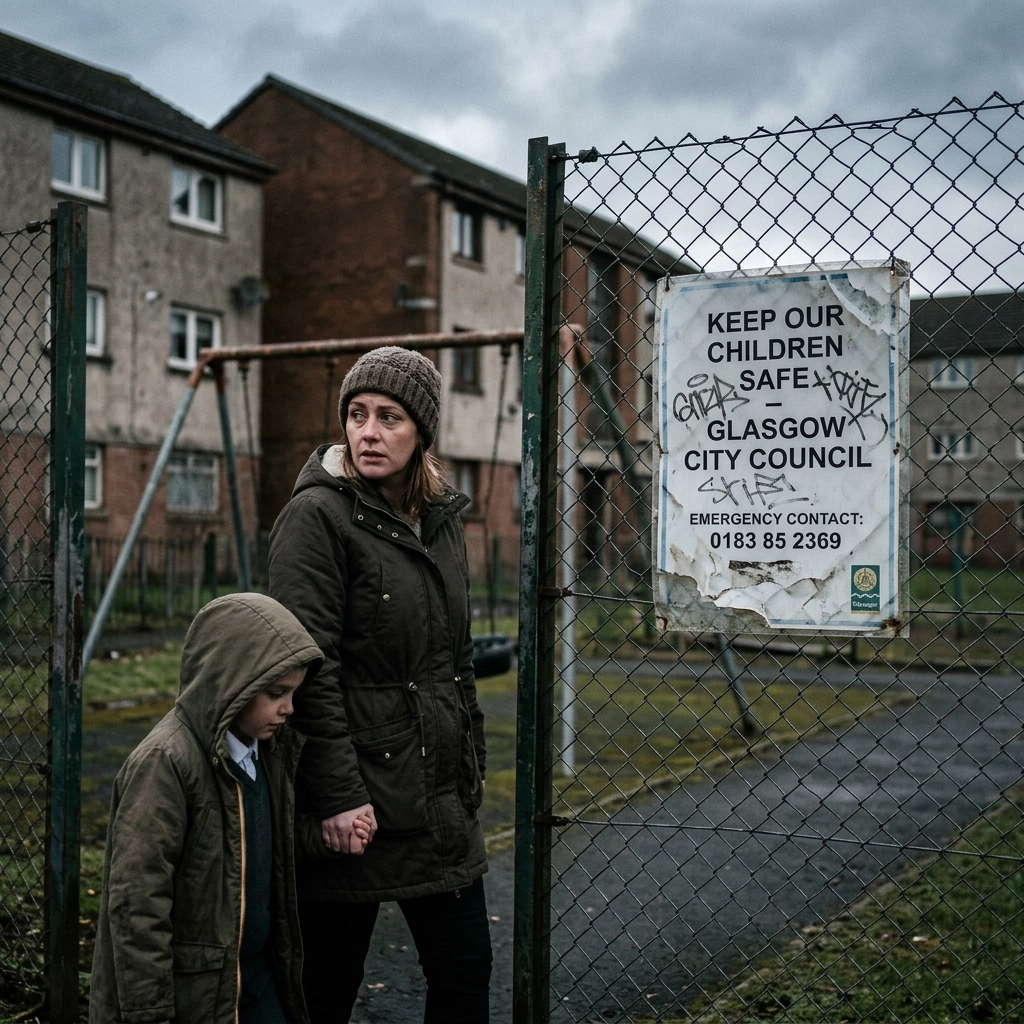
It is often said that a society is measured by how it treats its most vulnerable members. In the heart of Glasgow, between 2012 and 2019, that measurement fell tragically short. While we often look for independent news UK sources to provide us with the hard truths, some untold stories are so harrowing they stay with a community for a lifetime. The case involving a gang of seven individuals who systematically abused children under the age of 13 isn’t just a story of criminal depravity; it is a story of a system that looked, but didn’t truly see.
When the details of the trial emerged, concluding with a total of 93 years in prison for the offenders, the immediate reaction was one of horror. However, as the dust settled, the conversation shifted toward a more uncomfortable question: how did this happen? These children weren’t living off the grid. They weren’t hidden away in a remote cellar. They were known to the very agencies designed to keep them safe. In fact, they were on the child protection register.
Understanding the "why" behind these missed signals requires us to peel back the layers of institutional bureaucracy and look at the human elements that failed. It’s about more than just a lack of funding or resources; it’s about a failure of intuition, communication, and the courage to act on red flags that were, in hindsight, blindingly obvious.
The Red Flags That Went Unnoticed
When we talk about child protection, we often imagine a high-tech net that catches every falling child. In reality, it’s a manual process of observation and reporting. In this specific Glasgow case, the red flags weren’t subtle whispers; they were loud sirens. The children involved showed blatant signs of neglect. They were chronically absent from school: a classic indicator that something is wrong at home. Yet, school attendance records seemed to be treated as administrative data points rather than a cry for help.
Perhaps the most frustrating detail to emerge was that a witness had actually spotted physical injuries on one of the victims as early as 2018. This was two full years before the authorities officially intervened and the abuse was halted. For twenty-four months, the system had a specific lead, a direct observation of harm, and yet the gears turned so slowly that the abuse continued. This is where the concept of untold stories becomes so vital; we need to understand why a witness report doesn't always lead to an immediate rescue.
Social workers were even making regular visits to the home. This is perhaps the hardest part for the public to wrap their heads around. How can a trained professional walk into a house where systemic abuse is occurring and walk out without noticing anything? It suggests a "tick-box" culture where the presence of a roof over a child’s head and food in the cupboard satisfies the basic requirements of a visit, while the deeper, darker reality remains obscured by the perpetrators' ability to manipulate the situation.
Institutional Blind Spots in Social Care
The failures in Glasgow highlight a phenomenon known as institutional blindness. This happens when an organisation becomes so focused on its internal processes and "business as usual" that it loses sight of its primary mission. In this case, the mission was the safety of children. When children are already on the child protection register, there is supposed to be a higher level of scrutiny. However, being on a list can sometimes lead to a false sense of security for the agencies involved. There is an assumption that because they are "on the radar," they are being monitored.
The reality of this case shows that being on the radar doesn’t mean you are safe. If the people monitoring the radar aren't trained to recognise the specific tactics of predatory gangs, the signals get lost in the noise. The offenders in this case: five men and two women: operated with a level of coordination that social services seemed unprepared to handle. Predatory groups often create a "veneer of normalcy," or they use intimidation to keep victims quiet and investigators at bay.
The independent news UK landscape has been instrumental in questioning why these agencies failed to share information effectively. Was the school talking to the social workers? Was the witness report from 2018 properly logged and escalated to the police? Often, these tragedies occur not because one person failed, but because the "information silos" between different departments meant that no one had the full picture. Each agency had a piece of the puzzle, but nobody sat down to put it together until it was far too late.
Moving Beyond the Headlines for Change
Since the conviction of the gang, an independent case learning review has been launched by the Glasgow Child Protection Committee. This is a standard procedure, but for many, it feels like too little, too late. The review aims to identify exactly where the gaps were and how to prevent another eight-year span of undetected abuse. However, for real change to happen, we have to look at the culture of child protection across the UK, not just in Glasgow.
One of the key discussions arising from these untold stories is the necessity of mandatory reporting laws. While professionals have a duty of care, the thresholds for intervention can sometimes be set too high, or the fear of "breaking up a family" can lead to a hesitation that proves fatal. We need a system that empowers teachers, neighbours, and social workers to act on their gut instincts without the fear of administrative backlash if they turn out to be wrong. It is better to investigate a hundred false alarms than to miss one genuine signal of distress.
Furthermore, we need to address the psychological toll on the victims of these systemic failures. When a child is let down by the adults in their home, their last hope is the "system." When that system also fails them, the sense of betrayal is total. Recovery for these children isn't just about moving past the physical abuse; it’s about rebuilding a sense of trust in a world that ignored their pain for nearly a decade. As a community, we owe it to them to ensure that "learning lessons" isn't just a phrase used in a press release, but a genuine commitment to structural reform.
The Glasgow case serves as a grim reminder that child protection is an active, daily responsibility, not a passive administrative task. It requires constant vigilance, better inter-agency communication, and a willingness to listen to the children who are often the quietest voices in the room. As we continue to follow these developments, the focus must remain on the victims and the urgent need to fix the safety net that let them slip through.
Ultimately, the goal of sharing these stories is to ensure that the signals are never missed again. We must move toward a future where every red flag is treated with the urgency it deserves, and where no child is left to suffer in plain sight while the world looks the other way. The 93-year sentence handed to the perpetrators is a form of justice, but the true justice will be a system that doesn't allow such horrors to start in the first place.
The road to reform is long, and it requires us to face uncomfortable truths about our institutions. By keeping these stories in the public eye and demanding accountability, we can hope to build a safer environment for every child, regardless of their circumstances. The missed signals of the past must become the lessons that guide our future safeguarding efforts. Only then can we say we are truly protecting our most vulnerable.