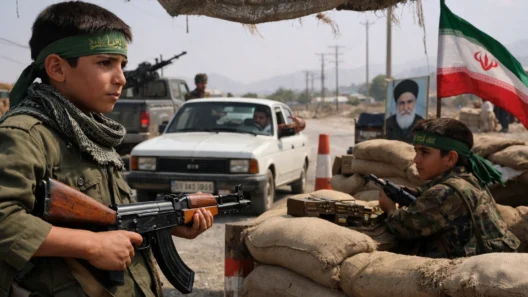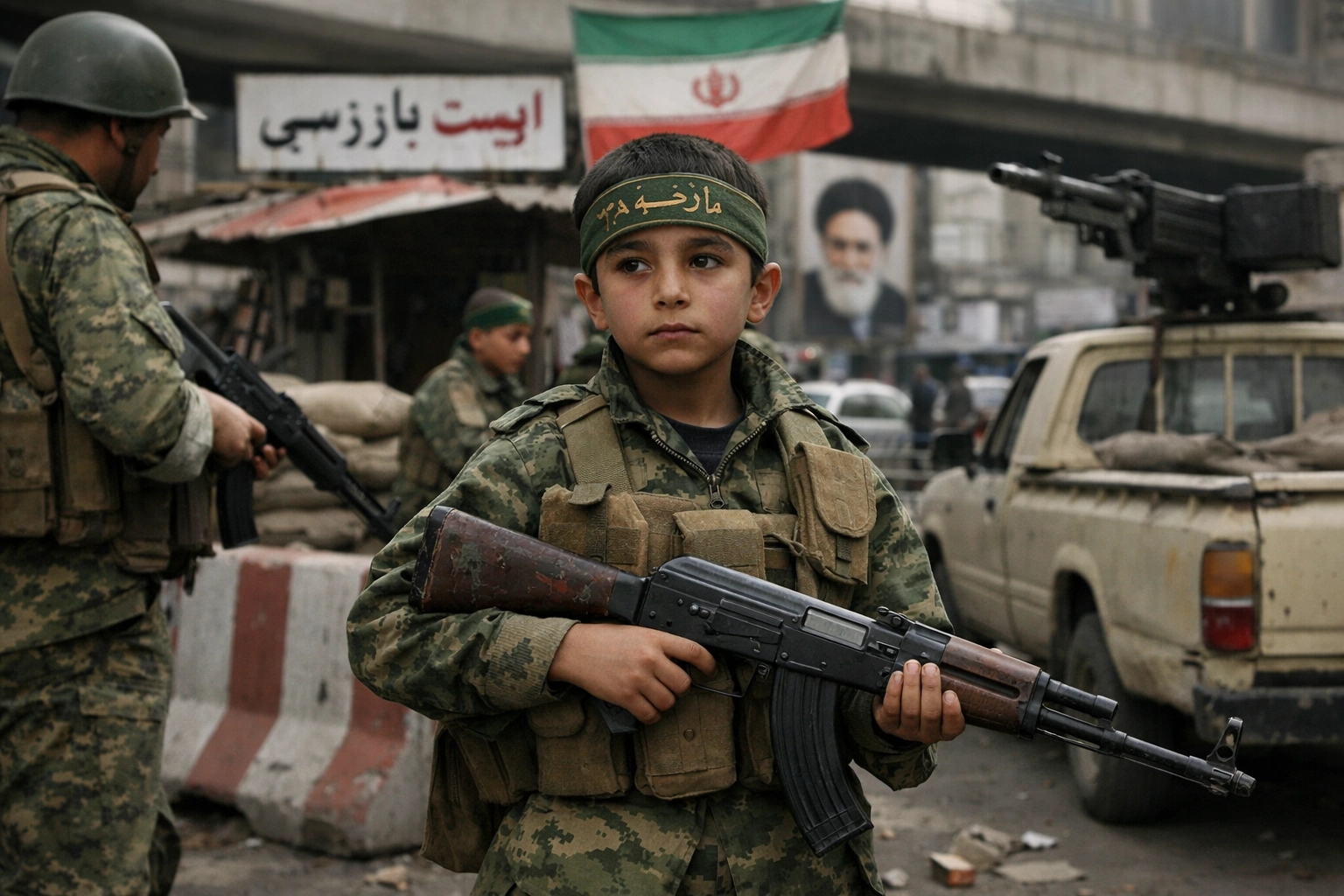
The streets of Tehran have always had a certain rhythm, a mix of ancient history and modern chaos. But lately, that rhythm has skipped a beat. If you were to walk through the capital today, in mid-April 2026, you would notice something deeply unsettling at the checkpoints scattered throughout the city. It isn't just the increased security or the tension in the air; it is the age of the people holding the rifles. We are talking about children, some as young as eleven, standing guard in oversized camouflage vests.
At NowPWR, we believe in bringing you the untold stories that often get lost in the noise of the 24-hour news cycle. When we look at independent news uk, we often see the strategic maps and the political posturing, but we rarely see the faces of the children caught in the middle. The deployment of child soldiers at Basij checkpoints isn't just a rumour; it is a documented reality that is changing the fabric of Iranian society as the IRGC (Islamic Revolutionary Guard Corps) grapples with personnel shortages and escalating regional tensions.
It is a tough pill to swallow, seeing a child who should be worrying about maths homework instead clutching an AK-pattern assault rifle. Yet, this is the current state of affairs. As drone strikes and regional conflict intensify, the lines between civilian life and military service have blurred to the point of disappearing for Tehran’s youth.
The New Faces of the Basij
The shift didn’t happen overnight, but it certainly accelerated in late March. The IRGC launched a recruitment initiative they called "Homeland-Defending Combatants for Iran." On paper, the programme was designed to bolster national security by inviting "volunteers" to assist with logistics and intelligence. However, the fine print revealed a shocking change: the minimum age for these roles was lowered to just twelve years old. In reality, as we have seen on the ground, even that threshold is being ignored.
The Basij, a paramilitary volunteer militia, has long been a fixture of Iranian life, but its ranks are now being filled by teenagers and pre-teens. IRGC officials like Rahim Nadali have publicly stated that the youth have been "begging" to serve, using this as a justification for placing children in harm's way. But when you see a fifteen-year-old struggling to breathe under the weight of a weapon while trying to manage traffic at a checkpoint, the narrative of "eager volunteers" starts to crumble.
These kids aren't just there for show. They are being integrated into the security apparatus of the city. They are tasked with intelligence gathering, patrolling neighbourhoods, and manning the very checkpoints that have become targets for international strikes. It is a desperate move by an organisation that is finding itself stretched thin. By putting children in uniform, they aren't just defending a border; they are using the youngest members of their society as a buffer against modern warfare. This is one of those untold stories that demands our attention because it represents a fundamental shift in how conflict is being managed in the region.
A Tragic Price at the Checkpoint
To understand the human cost of this policy, we have to look at the story of Alireza Jafari. Alireza was only eleven years old. On the 29th of March, 2026, he wasn't at a playground or at home with his friends. He was at a checkpoint in Tehran, standing alongside his father, who is a member of the Basij. His father later explained that there was a severe shortage of personnel at the post, so he brought Alireza and his nine-year-old brother along to help out.
The tragedy struck during an Israeli drone attack. Alireza was killed while "serving" at the checkpoint. His mother later told local newspapers that her husband believed the boy needed to be "prepared for the days ahead." It is a heartbreaking sentiment that highlights the psychological pressure families are under. When the state normalises the presence of children in combat zones, parents begin to see it as an inevitable part of growing up.
Alireza’s death is not an isolated incident, but it has become a symbol of the dangers inherent in this recruitment drive. Amnesty International has been tracking these developments, identifying numerous instances of children wielding weapons across Tehran, Mashhad, and Kermanshah. The evidence is clear: children are being placed in the direct line of fire. In the world of independent news uk, we often talk about the "theatre of war," but for Alireza and his family, there was no stage: only a very real, very deadly reality. This is the price of using children to plug the gaps in a military machine.
A Violation of Global Standards
From a legal and ethical standpoint, what is happening in Tehran is a clear violation of international law. Iran is a signatory to UN conventions that strictly prohibit the military recruitment of anyone under the age of eighteen. Yet, the IRGC continues to push the boundaries, framing the involvement of children as a patriotic duty rather than a war crime. By involving minors in checkpoint operations and intelligence roles, the state is effectively turning them into "lawful targets" in the eyes of their adversaries, which only increases the likelihood of more tragedies like the one that took Alireza’s life.
The international community has been vocal, with human rights organisations categorising these actions as grave violations of humanitarian law. The deployment of child soldiers is widely considered a war crime because children lack the developmental capacity to fully understand the risks they are taking or the consequences of the violence they are partaking in. When a child is handed a gun and told to point it at cars, they aren't just being "prepared"; they are being robbed of their childhood and their safety.
As we continue to monitor the situation through our lens of independent news uk, it is vital to keep the focus on these human rights issues. The political landscape of 2026 is complex, and the motivations behind these conflicts are multi-layered. However, the safety of children should never be a bargaining chip. By highlighting these untold stories, we hope to bring a level of accountability to a situation that feels increasingly out of control. The checkpoints of Tehran should be manned by trained professionals, not by eleven-year-olds who are still learning about the world they are being asked to defend.
The situation in Tehran serves as a sobering reminder of how quickly social norms can erode during times of conflict. The sight of children at checkpoints is a visual indicator of a society under immense pressure, where the protection of the vulnerable has been sacrificed for the needs of the state. As the international community watches on, the stories of those like Alireza Jafari remind us that the true cost of war is often measured in the lives of those who never had a choice in the matter. Turning a blind eye to the recruitment of child soldiers only ensures that more young lives will be lost in a conflict they did not start. Under international humanitarian standards, the protection of minors is paramount, and the continued use of children in military roles remains a significant barrier to any lasting peace or stability in the region.