For decades, the dream of fusion energy has been dominated by a very specific shape: the doughnut. You’ve probably seen the massive, gleaming rings of tokamaks like ITER or the now-retired JET in Oxfordshire. These machines are triumphs of engineering, but they are also notoriously temperamental. They require constant, high-speed adjustments to keep the ultra-hot plasma from touching the walls and melting the whole setup.
But there is an untold story in the world of clean energy. It involves a machine that looks less like a sleek doughnut and more like a piece of modern art that’s had a bit too much to drink. This is the stellarator, and companies like Proxima Fusion are calling it the ‘dumb machine’. While that might sound like a playground insult, in the world of nuclear physics, being "dumb" is the ultimate compliment.
Q: Why on earth would anyone call a multi-billion-pound fusion reactor a ‘dumb machine’?
In this context, "dumb" doesn't mean unintelligent. It means passive. Most fusion reactors: specifically tokamaks: are incredibly "smart" in a way that’s actually a bit of a liability. They use a massive transformer to drive a current through the plasma itself. This current helps keep the plasma contained, but it also makes the plasma prone to "disruptions." Imagine trying to balance a spinning plate on a stick while the plate is also trying to explode. You need incredibly complex AI technology and sensors to make micro-adjustments every millisecond to keep things stable.
A stellarator, or the "dumb machine," takes a different approach. Instead of forcing the plasma to behave using internal currents and high-speed "smart" corrections, the machine is physically built in a way that the plasma is naturally stable. The "dumb" part is that the machine doesn't have to think. Once you turn it on, the physics of the twisted shape handles the stability automatically. It’s the difference between a bicycle that stays upright only because a computer is twitching the handlebars (tokamak) and a tricycle that stays upright because that’s just how it’s built (stellarator).
Q: What is the ‘twist’ everyone keeps talking about?
This is where the geometry gets weird. To keep plasma: which is essentially a gas of charged particles heated to millions of degrees: away from the reactor walls, you need magnetic fields. In a simple doughnut shape, the magnetic field is stronger on the inside of the ring than the outside. This causes the particles to drift and crash into the walls.
To fix this, you have to "twist" the magnetic field lines so that a particle on the inside eventually moves to the outside and back again, cancelling out the drift. In a tokamak, you achieve this twist by running a current through the plasma. In a stellarator, you achieve it by physically twisting the entire machine. The magnets themselves are shaped like 3D pretzels. It’s a "twisted" energy approach where the complexity is moved out of the control software and into the physical hardware.
The Physics of the Perfect Twist
Q: If stellarators are so much more stable, why have we been focusing on the "smart" tokamaks for so long?
It comes down to maths. Back in the 1950s, when fusion research was just starting, designing a tokamak was relatively simple. It’s a symmetrical circle. You could do the calculations with a pencil and paper. Designing a stellarator, however, is a geometric nightmare. You’re trying to calculate the magnetic pull of a coil that curves in three dimensions simultaneously.
For about fifty years, we simply didn't have the computing power to figure out what the "perfect" twist looked like. We knew the theory was sound, but the engineering was impossible. It wasn't until the arrival of supercomputers and advanced simulation software that we could finally map out the precise, mangled shapes needed to hold the plasma steady. Proxima Fusion, a spin-off from the Max Planck Institute for Plasma Physics, is now using these digital tools to create the next generation of these machines. They are taking the "untold stories" of 20th-century physics and turning them into 21st-century reality.
Q: Does this mean the fusion race is finally over?
Not quite, but the momentum is shifting. For a long time, the global consensus was that tokamaks were the fastest route to commercial fusion. Billions have been poured into projects like ITER. However, as we get closer to actually needing to run these machines 24/7 to provide power to the grid, the stability of the stellarator becomes its biggest selling point.
A tokamak usually has to run in "pulses" because of that internal current. A stellarator, because it is passively stable, can theoretically run forever. For an independent news uk perspective, this is a massive deal. If we want a fusion plant to replace a coal or gas plant, it needs to be a "base load" provider. It can’t be taking a nap every ten minutes because the plasma got grumpy. The "dumb machine" is designed for the long haul.
Q: How does this relate to the current energy crisis?
The energy crisis has taught us that we need reliable, sovereign energy sources. Fusion is the ultimate goal because its fuel (isotopes of hydrogen) is found in seawater. But we’ve been "twenty years away" from fusion for the last fifty years. The shift toward stellarators represents a move away from "science projects" and toward "power plants."
By focusing on a machine that is inherently stable, we reduce the risk of accidents or sudden shutdowns. In the grand narrative of untold stories regarding our transition to net zero, the stellarator is the dark horse. It’s harder to build initially, but it’s much easier to operate once it’s finished.
Why Passive Stability Changes Everything
Q: What are the actual risks involved? Could a "dumb machine" have an accident?
One of the great things about fusion: unlike the fission we use in current nuclear plants: is that it cannot have a "meltdown." If something goes wrong in a fusion reactor, the plasma simply cools down and the reaction stops. It’s like a gas hob; if you turn off the gas or the flame goes out, there’s no more heat.
The "accident" risk in a tokamak is mostly financial and structural. A "disruption" in a tokamak can release so much energy that it physically cracks the multi-billion-pound vessel. This is why the accident risk in fusion is more about the death of the machine than a threat to the public. The stellarator’s "dumb" design eliminates the primary cause of these disruptions. It is, by its very nature, a safer investment for the long term because it isn't constantly trying to tear itself apart.
Q: Who is leading this "twisted" revolution?
While the UK has traditionally been a leader in tokamak research through the Culham Centre for Fusion Energy, the stellarator stronghold is currently in Germany. The Wendelstein 7-X (W7-X) is the world’s largest stellarator and has been proving that the concept works. Proxima Fusion is taking those learnings and trying to turn them into a commercial power plant design.
This is a classic example of European engineering excellence. It’s about taking the most complex mathematical problems and solving them with high-performance computing to create a machine that is, ironically, simpler to use. It’s a move toward "elegant complexity" on the outside to ensure "reliable simplicity" on the inside.
Q: Is there any downside to the stellarator?
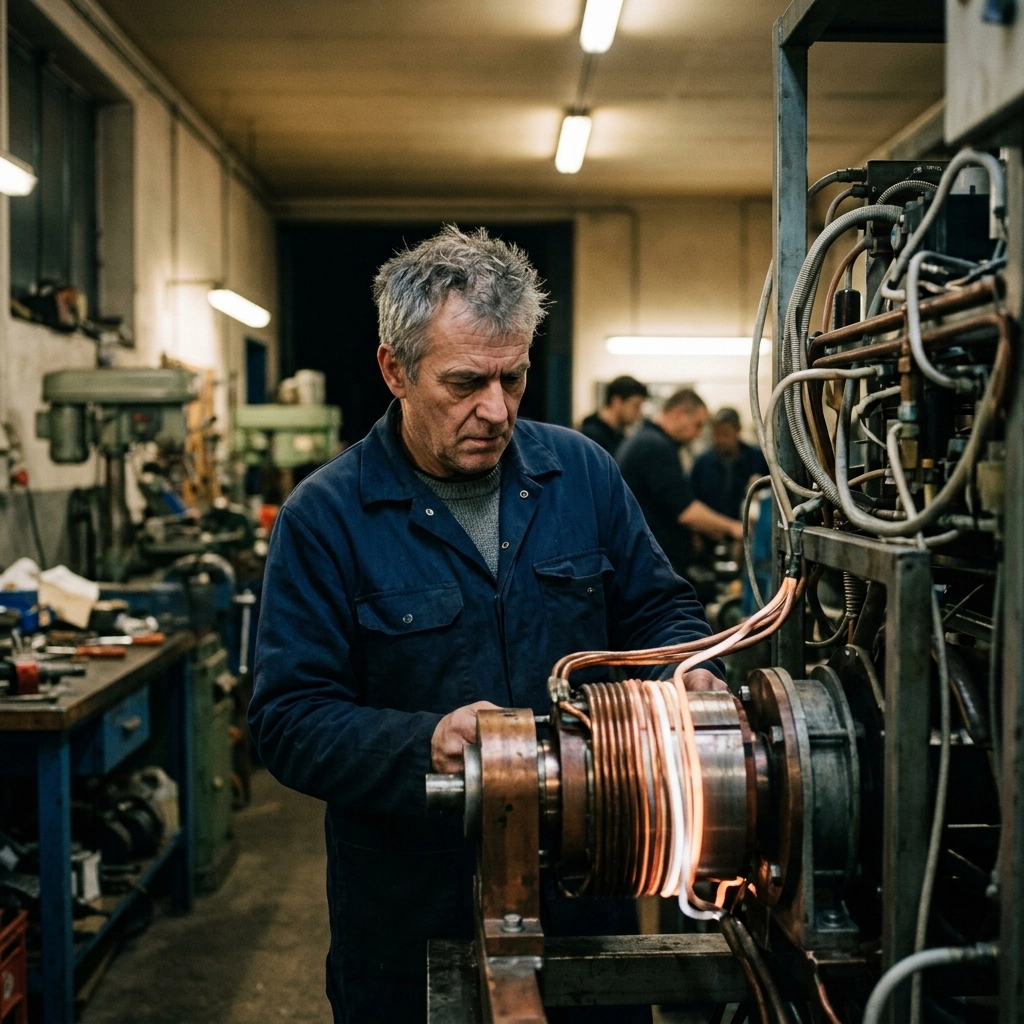
The downside is the manufacturing. Because every magnetic coil is a unique, twisted shape, you can’t just mass-produce them on a standard assembly line. Each one is a bespoke piece of high-precision engineering. They have to be positioned with sub-millimetre accuracy. If a coil is slightly out of place, the "perfect twist" is ruined, and the plasma will leak.
This is why some critics argue that stellarators will always be too expensive to build compared to tokamaks. However, proponents argue that the money you save on complex control systems and the money you make by having a machine that never has to stop for "re-stabilisation" more than makes up for the initial construction costs.
The Economic Reality of Twisted Power
Q: When will we see "twisted" energy on the grid?
The timeline for fusion is always a hot topic. Proxima Fusion and others are aiming for the 2030s for their pilot plants. This might seem optimistic, but the pace of progress has changed. We are no longer limited by how fast we can build things; we are limited by how fast we can simulate them.
The integration of advanced modelling means we can "test" thousands of designs in a virtual environment before we ever pour a drop of concrete. This digital-first approach is accelerating the development of the "dumb machine" in ways that weren't possible even ten years ago. It’s the untold story of how silicon is helping us harness the power of the stars.
Q: What does this mean for the average person in the UK?
For the person on the street, this is about the end of the "energy anxiety" era. If the "dumb machine" works, we move toward a world where electricity is abundant and carbon-free. It won't happen tomorrow, but the shift from temperamental "smart" machines to robust "dumb" machines suggests we are finally getting serious about the engineering of fusion, not just the physics.
We are moving away from the era of experimental physics and into the era of industrial energy. The "twist" isn't just in the magnets; it's in our entire approach to the problem. We are finally building machines that work with nature’s tendencies rather than trying to fight them every millisecond.
The journey of the stellarator from a 1950s pipe dream to the forefront of the fusion race is a testament to human persistence. By embracing the "dumb machine," we might finally find the smartest way to power our future. It’s a story of twisted magnets, supercomputers, and the quiet pursuit of a stable star on Earth. While it might not make the front pages as often as AI breakthroughs or political scandals, it is arguably the most important engineering project of our time.
The pursuit of fusion energy remains one of the most significant challenges in modern science. Whether the "dumb machine" or the "smart" tokamak eventually wins the race to commercial viability, the progress being made in magnetic confinement is undeniable. As we continue to refine these twisted designs, the prospect of a world powered by clean, limitless energy moves from the realm of science fiction into the certainties of future engineering.