When people talk about the legendary "Manchester Sound," they usually focus their gaze on the city centre, the Haçienda, or the leafy suburbs of South Manchester. But if you want to find the real engine room of the post-punk era, you have to look about ten miles north-east, to a town better known for its pioneers of the cooperative movement than its pioneers of the synthesizer. Rochdale, with its rugged industrial landscape and unapologetic Northern grit, was the unlikely home to Cargo Studios: a place that arguably built the foundations of British punk and alternative music.
As we move through 2026, the legacy of this basement studio on Kenion Street has finally received the formal recognition it deserves. A new blue plaque now marks the site, serving as a permanent reminder of the untold stories that unfolded within those soundproofed walls. This isn't just about nostalgia for the "good old days" of analogue tape; it is about celebrating the independent news UK outlets often overlook: the story of a small-town studio that punched way above its weight and changed the course of music history.
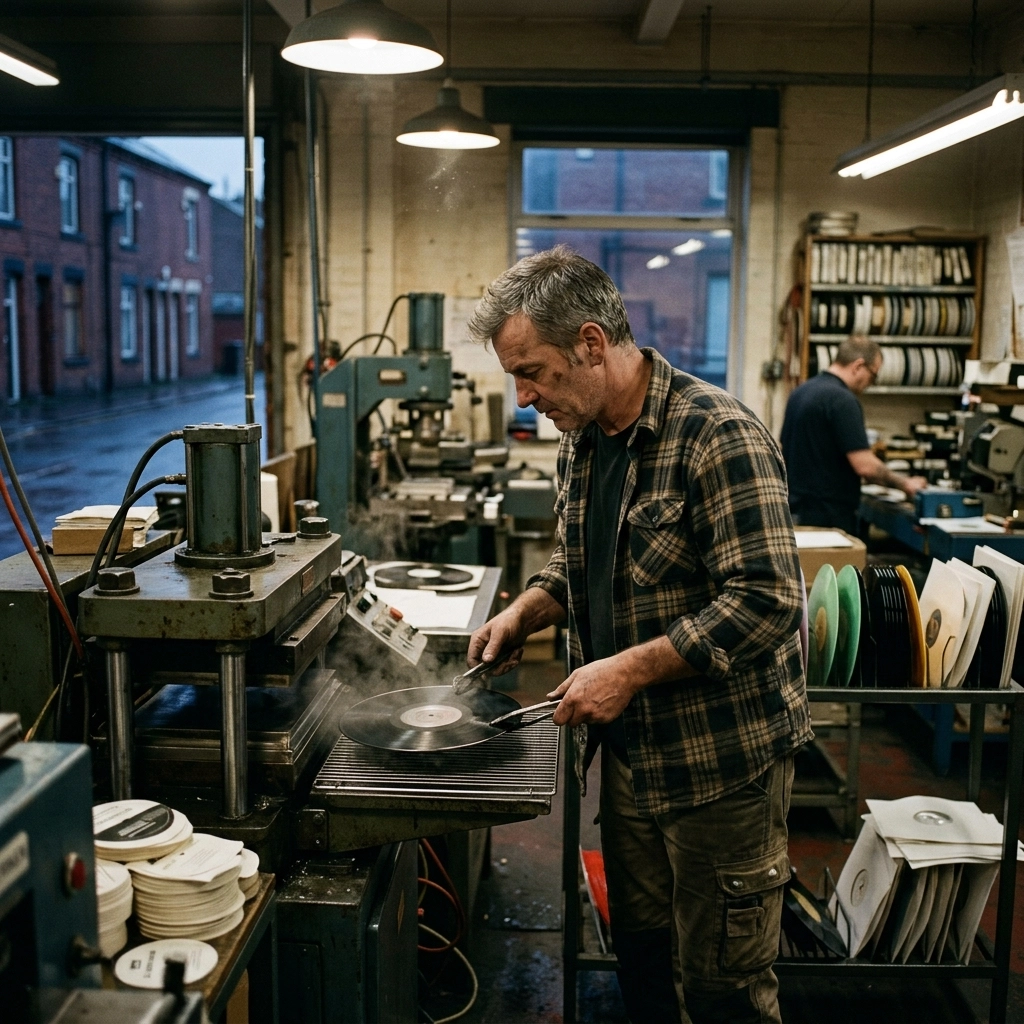
Cargo Studios wasn't a glitzy, high-budget facility. It was a workspace born of necessity and fuelled by the DIY spirit of the late 70s. Founded by Ken Naylor in 1977, it became a sanctuary for bands who didn't fit the London-centric mould of the mainstream music industry. It was cramped, it was damp, and it was perfect. This was where the raw, angular sounds of the North were captured before they were pressed onto the wax that fuelled the original vinyl revolution.
The Basement Where History Was Pressed
To understand why Cargo Studios is often called the "Studio That Built Punk," you have to understand the environment of Rochdale in the late 1970s. The town was navigating the decline of the textile industry, and there was a tangible sense of restlessness among the youth. While the London punk scene was often performative and fashion-conscious, the Northern scene was something else entirely: it was skeletal, haunting, and deeply influenced by the industrial architecture that surrounded it.
Ken Naylor’s vision for Cargo was simple: provide a professional yet affordable recording space for independent artists. This attracted the legendary producer Martin Hannett, whose work at Cargo would define the "Factory Records" sound. Hannett found in Cargo the perfect laboratory for his sonic experiments. He would use the studio’s unique acoustics: and sometimes its toilets or stairwells: to create the cold, spacious, and echoing drum sounds that became the hallmark of the era.
The studio later transitioned into Suite 16 when Peter Hook of Joy Division and New Order took over ownership, ensuring that the musical lineage of the building continued well into the 90s. Even after it closed its doors in 2001, the spirit of the building remained. It eventually reopened as Voltalab Sound Studios, proving that the grit of Rochdale is hard to wash away. The recent blue plaque unveiling isn't just a nod to the past; it’s a validation of the town’s role as a cultural powerhouse. For those seeking the untold stories of British music, Kenion Street is the ultimate pilgrimage site.
Five Legacy Tracks Born in Rochdale
The true impact of Cargo Studios is best understood through the records that were cut there. The following listicle highlights five tracks that didn't just define a genre: they shifted the cultural needle. Each of these tracks carries the "Cargo DNA": a mix of technical innovation and raw, unpolished energy.
1. Joy Division – Digital
Recorded during the sessions for "A Factory Sample" in 1978, Digital is perhaps the most significant track to come out of the Rochdale basement. It was the first time the world truly heard the chemistry between Joy Division and Martin Hannett. The track is urgent, jagged, and filled with a sense of dread that perfectly mirrored the industrial surroundings of the studio. It set the blueprint for everything that followed in the post-punk movement.
2. Gang of Four – Damaged Goods
If you want to hear the sound of political frustration and rhythmic precision, look no further than Damaged Goods. Recorded at Cargo in 1978, this track influenced generations of guitarists with its "scratchy" and "funky" punk sound. It proved that you could make people dance and think at the same time, all while maintaining a fiercely independent ethos.
3. The Fall – Rowche Rumble
Mark E. Smith and his ever-rotating cast of musicians were frequent visitors to Rochdale. Rowche Rumble, released in 1979, is a prime example of the chaotic brilliance the studio could capture. The title itself is a nod to the pharmaceutical industry (Roche), and the sound is as clinical and jarring as the subject matter suggests. It’s a quintessential piece of Northern grit captured on tape.
4. Orchestral Manoeuvres in the Dark (OMD) – Electricity
It wasn't all jagged guitars and moody vocals. Cargo was also at the forefront of the electronic revolution. OMD’s debut single, Electricity, was recorded here. The contrast between the cold, industrial basement and the bright, shimmering pop melodies of the synthesizer is what makes this track so special. It showed that Rochdale was just as capable of producing futurist pop as it was bleak post-punk.
5. The Chameleons – In Shreds
Hailing from nearby Middleton, The Chameleons found their sonic home at Cargo. In Shreds is a masterclass in atmospheric guitar work. The "big" sound they achieved in such a small space is a testament to the engineering talent that passed through the studio. It remains a cult classic that captures the feeling of being trapped in a Northern town with nothing but your dreams and a Fender Twin Reverb.
The Blue Plaque: A Monument to Post-Punk Grit
The installation of the blue plaque on Kenion Street marks a shift in how we view regional history. For too long, the narrative of the UK’s musical dominance has been concentrated on the "Big Three": London, Manchester, and Liverpool. But as part of the Greater Manchester Town of Culture 2025 and 2026 initiatives, the spotlight is finally widening to include the surrounding towns that provided the actual labour and space for these movements to grow.
This "Vinyl Revival" in Rochdale isn't just about collectors buying expensive reissues; it’s about a revival of identity. The town is reclaiming its place as a cornerstone of the UK’s independent creative scene. Local artists are now being encouraged to record new versions of these legacy tracks, bridging the gap between the legends of the 70s and the bedroom producers of today. This continuity is vital for keeping the town’s cultural heart beating.
The story of Cargo Studios is a reminder that you don't need a multi-million-pound facility to change the world. You need a basement, a few microphones, some inspired individuals, and a healthy dose of grit. The blue plaque isn't just a sign on a wall; it’s a symbol of what can be achieved when independent voices are given a space to shout. As we look at the current state of independent news UK wide, stories like Rochdale’s remind us that the most impactful cultural shifts often start far away from the mainstream cameras, in places where people aren't afraid to get their hands dirty.
The legacy of Cargo Studios and Suite 16 lives on not just in the grooves of the records listed above, but in the very atmosphere of Rochdale itself. It remains a town built on grit, now officially recognised as a town that helped build the soundtrack to a generation.
The preservation of musical heritage sites like Cargo Studios is essential for understanding the social and cultural fabric of the United Kingdom. By honouring these spaces, we acknowledge that history isn't just made in parliaments or palaces, but in the basements and backstreets of industrial towns. The blue plaque in Rochdale serves as a quiet but powerful testament to the enduring power of independent creativity.