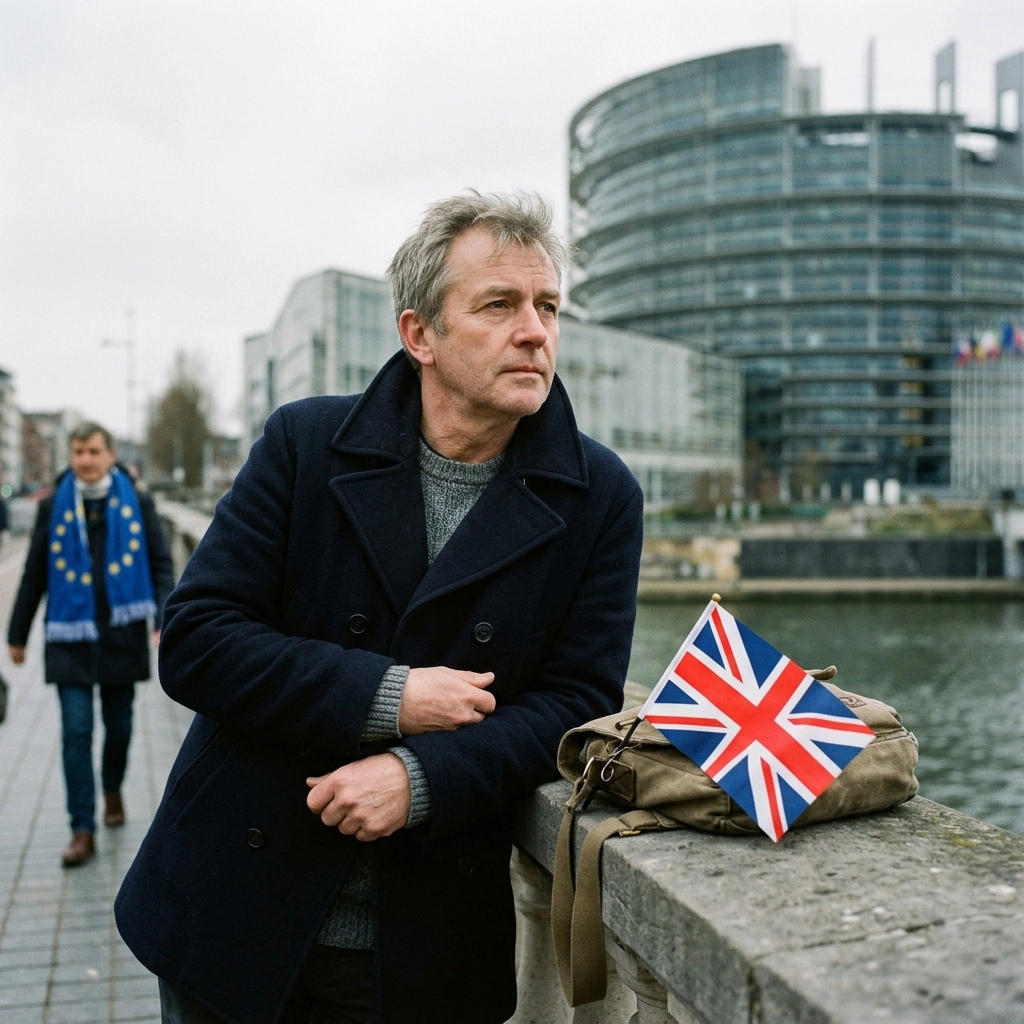
It is late April 2026, and the air in London carries a familiar scent of cautious optimism mixed with the lingering damp of a British spring. For years, the question of our relationship with the European Union felt like a recurring fever dream, exhausting, cyclical, and often loud. But as we look at the current landscape, the volume has shifted. We are no longer in the era of shouting matches in Brussels corridors; instead, we have entered what some are calling the "Great Rapprochement," or as a particularly poignant Radio 4 series put it, "Brexit: A Love Story?"
But in this supposed romance, who is leading whom? Is Britain the protagonist regaining its charm, or are we the ex-partner standing outside the window with a boombox, hoping for a nod of acknowledgement? To understand where we stand in 2026, we have to look past the official press releases and dive into the untold stories of British diplomacy.
The State of the Situationship
Q: If the UK-EU relationship were a Facebook status in 2026, what would it be?
A: It’s complicated. Very complicated. Since the Labour government took the reins in July 2024, the strategy has been one of "quiet competence." Prime Minister Keir Starmer and Chancellor Rachel Reeves have spent nearly two years trying to convince the world that Britain is once again a "serious" country. We’ve moved away from the "Global Britain" slogans that sounded a bit too much like a mid-life crisis and toward a "Secure Britain" framework.
Q: Has the "reset" actually happened, or is it just clever branding?
A: It depends on who you ask in Brussels. The May 2025 summit was a genuine turning point. For the first time in a decade, both sides sat down without the threat of a trade war hanging over the table. The resulting Security and Defence Partnership and the Common Understanding were significant. We’re talking about cooperation on fisheries, agriculture, energy, and even emissions trading. These aren't the headline-grabbing wins of the past, but they are the nuts and bolts of a functioning relationship. Independent news UK outlets have noted that while the rhetoric is softer, the EU is still playing hardball. They view the UK as an important partner in a "more dangerous world," but they aren't about to hand over the keys to the Single Market without a very high price.
Q: Are we still the "cool kid" on the global stage?
A: To be honest, the cool kids have moved on. While we were arguing about blue passports, the rest of the EU was focusing on the war in Ukraine, the rising influence of China, and how to keep the Single Market competitive against Silicon Valley. In 2026, Britain is viewed more like a talented but occasionally erratic freelancer. The EU values our intelligence services, our military might, and our financial sector, but they no longer feel the need to invite us to every Saturday night party. We are respected, but we are no longer the trendsetter we once were.
The Radio 4 Romanticism
Q: What is this "Brexit: A Love Story?" angle everyone is talking about?
A: It stems from a Radio 4 documentary that framed the entire UK-EU saga not as a geopolitical divorce, but as a tragic, long-form romance. The thesis is that Britain and the EU are fundamentally codependent. We complain about each other, we threaten to leave, we pack our bags, but we can’t quite stop checking each other’s Instagram feeds. The "Love Story" angle suggests that the current "warming" of relations isn't just about trade, it's about the realization that neither side is as strong without the other.
Q: Is there any truth to that, or is it just "untold stories" for the sake of drama?
A: There’s a grain of truth in the sentimentality. Since the May 2025 summit, there has been a noticeable shift in how British ministers talk about Europe. The aggression is gone. In its place is a sort of weary affection. We’ve realized that being "independent" in a world of giants like the US and China is lonely. The "love story" is actually a story of survival. The UK is currently aligning itself with EU standards in agriculture and chemicals because it’s simply easier. It turns out that being "cool" and "independent" is quite expensive and exhausting.
Q: Does the British public buy into this romantic narrative?
A: The public is mostly just tired. According to recent polling, the majority of voters in 2026 are less interested in the "sovereignty" of their toaster settings and more interested in whether they can afford a holiday in Spain without a six-hour queue at border control. The romance is one of convenience. If the government can frame closer ties as a "love story" rather than a "climbdown," it helps the medicine go down easier for those who were once staunchly pro-Brexit.
The Verdict from the Continent
Q: How does the rest of Europe actually see us today?
A: If you walk through the Berlaymont in Brussels today, you’ll find that the UK is no longer the main topic of conversation. The "cool kid" status has been usurped by the Baltic states, who are leading the charge on European security, and the tech hubs of Northern Europe. Britain is seen as a stable, helpful neighbour, a bit like the person on your street who has a really good set of power tools and is happy to lend them out, but whom you wouldn't necessarily invite to your wedding.
Q: Is Rachel Reeves’ push for alignment working?
A: It is, but it’s a slow burn. The Chancellor has been clear that growth in the UK economy is intrinsically linked to our trade relationship with our nearest neighbours. By pushing for closer alignment on emissions trading and financial services, she’s trying to reduce the "friction" that has plagued the economy since 2021. The EU response has been one of "guarded welcome." They like the alignment, but they are wary of "cherry-picking." The untold stories from the negotiating rooms suggest that the EU is making us work for every inch of access. They want to see that this new, friendlier Britain is here to stay and won't vanish at the next election.
Q: So, what’s the final word? Are we cool again?
A: Cool is subjective. If cool means being the loud, disruptive force in the room, then no, we’ve lost our edge. But if cool means being the reliable, sophisticated partner that people actually want to work with, then Britain is making a comeback. We’ve stopped trying to win the breakup and started trying to build a new life. The relationship isn't a "Love Story" in the cinematic sense: there are no grand gestures or running through airports. It’s more of a sensible, mid-life partnership based on mutual interests and a shared fear of the future.
Britain in 2026 is finding its feet in a world that didn't stop turning while we were preoccupied with ourselves. We may not be the "cool kid" at the centre of the playground anymore, but we are starting to realize that being the respected adult in the room has its own set of perks. As we move further into this decade, the focus will remain on these incremental gains: the small, unsexy victories that define a stable relationship. The drama of Brexit is over; the long, quiet work of being a European nation continues.
The current trajectory of UK-EU relations suggests a period of prolonged stability, provided domestic politics remains predictable. The lessons of the last decade have been hard-learned, but they have resulted in a more pragmatic approach to foreign policy. Britain is no longer seeking to dominate the European narrative, but rather to find a sustainable place within it. Whether this leads back to the Single Market or remains a high-functioning "third country" status remains to be seen, but for now, the temperature has finally normalized.