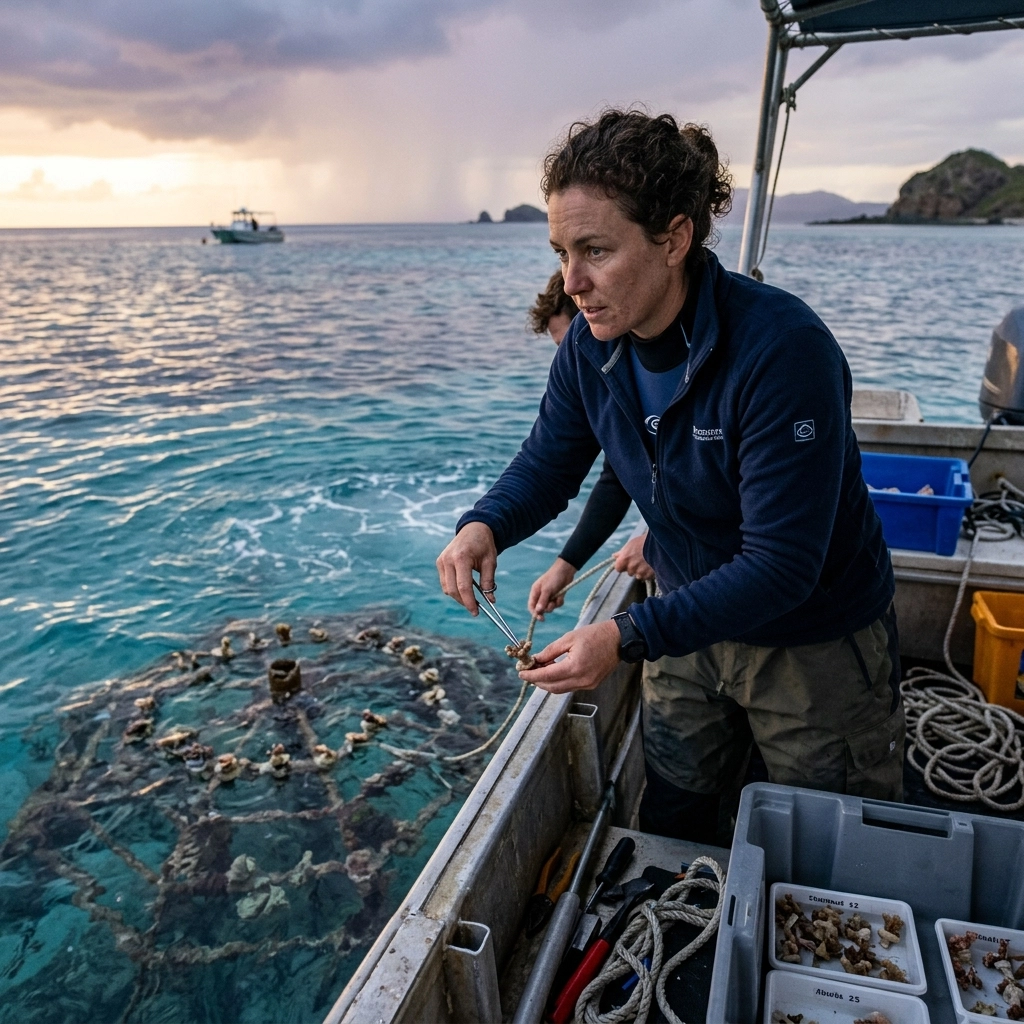
- The University of Derby is currently the epicentre of a marine biological revolution that is catching the attention of the global scientific community. Despite being situated over 70 miles from the nearest coastline, this landlocked institution has become the birthplace of a tech-driven conservation movement known as the 'Coral Midwives'.
- As part of our commitment to independent news UK and highlighting the untold stories that shape our planet's future, we are diving deep into how these researchers are using high-tech labs to solve a crisis occurring thousands of miles away under the ocean surface.
- The project, led by Dr Michael Sweet, focuses on ex-situ spawning: the process of inducing coral reproduction outside of their natural habitat: which is notoriously difficult to achieve with consistency.
- With the Great Barrier Reef and other major systems facing unprecedented bleaching events, the optimism coming out of Derby is a breath of fresh air. This isn't just about keeping corals alive in a tank; it is about engineering a resilient generation of reef-builders capable of surviving a warming world.
Engineering the Ex-Situ Environment
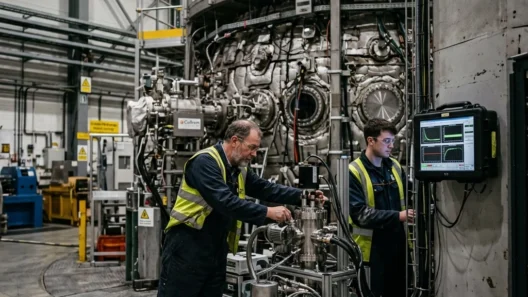
- To act as 'midwives' for these delicate organisms, the Derby team has constructed a state-of-the-art Aquatic Research Facility. This lab is a masterclass in environmental engineering, utilising advanced sensor arrays and programmable logic controllers to replicate the precise conditions of the tropics.
- One of the most critical tech components in the lab is the high-performance LED lighting system. These arrays are programmed to simulate the exact solar and lunar cycles of specific reef locations. By mimicking the phase of the moon, the scientists can trigger mass spawning events that usually only occur once a year in the wild.
- The team has successfully manipulated these light cycles to 'time-shift' the spawning. This allows researchers to perform the delicate work of fertilisation during daylight hours rather than at midnight, which is when most corals naturally release their gametes.
- Beyond lighting, the lab employs a sophisticated water chemistry management system. This ensures that parameters such as pH, salinity, and mineral content are kept in a state of 'dynamic stability', mirroring the natural fluctuations of the ocean while filtering out the stressors that often cause reef collapse in nature.
- Thermal stress testing is also a core part of the Derby methodology. By slightly elevating temperatures in controlled increments, the researchers are identifying the most heat-tolerant genotypes, effectively fast-tracking natural selection to create 'super corals'.
- The tech-savvy approach extends to the microscopic level, where the team uses high-resolution imaging and automated counting software to track the health and development of thousands of individual coral larvae simultaneously.
- This data-driven methodology is what sets the Derby project apart. It moves coral restoration from a trial-and-error craft to a precise, scalable industrial process. The goal is to create a 'plug-and-play' restoration kit that can be deployed by conservationists anywhere in the world.
The 1,400% Efficiency Leap
- The most staggering achievement of the 'Coral Midwives' is the massive improvement in larval settlement rates. In typical restoration efforts, the transition from free-swimming larvae to sessile (fixed) polyps is a major bottleneck where most individuals are lost.
- Through a combination of microbiological innovation and ecological engineering, the Derby team has achieved a 1,400% improvement in larvae settlement compared to traditional methods. This is an untold story of British scientific excellence that could fundamentally change the economics of reef restoration.
- A key part of this success is the development of bespoke 'coral probiotics'. Much like the supplements humans take for gut health, these bacterial cocktails are designed to coat the coral larvae and the substrate they settle on, providing them with the nutrients and protection they need to thrive during their most vulnerable life stage.
- The researchers have also pioneered a co-culturing technique involving sea urchins. In the wild, algae often overgrow and smother young corals. By introducing juvenile sea urchins: specifically Mespilia globulus: into the settlement tanks, the scientists have created a natural maintenance crew.
- These urchins graze on the algae without harming the tiny coral polyps. The results are undeniable: the presence of these 'biological lawnmowers' has increased coral survival rates from a meagre 5% to over 40% in initial trials.
- This 1,400% boost in settlement efficiency means that for every spawning event, the team is producing an order of magnitude more viable corals than previously thought possible. This scalability is essential if we are to move from protecting small patches of reef to restoring entire ecosystems.
- The economic implications are equally optimistic. By increasing the success rate so dramatically, the cost per settled coral drops significantly, making large-scale restoration projects more attractive to private investors and international environmental funds.
- Furthermore, the sea urchins themselves have commercial value. The team is exploring a circular economy model where the urchins used for restoration can eventually be sold into the sustainable seafood market, providing a revenue stream to fund further scientific research.
Scaling Resilience Across the Globe
-
The work being done in Derby is not intended to stay within the confines of the laboratory. The ultimate goal is the 'global export of hope', providing the tools and knowledge necessary for coastal communities to take the lead in their own conservation efforts.
-
The team is currently working on digitising their protocols, creating a cloud-based platform where researchers from the Caribbean to the Indo-Pacific can access the exact 'recipes' for successful ex-situ spawning and larval settlement.
-
This open-source approach to marine biology is a game-changer. It breaks down the barriers to entry for smaller nations that may not have the resources to develop these techniques from scratch but are on the front lines of the climate crisis.
-
There is a strong focus on 'assisted evolution'. The Derby scientists are not just breeding more corals; they are breeding smarter corals. By selecting for traits that offer resilience against ocean acidification and rising temperatures, they are giving reefs a fighting chance in the 21st century.
-
The project also highlights the importance of interdisciplinary collaboration. The team at the University of Derby includes experts in genomics, robotics, and even sociology, ensuring that the biological solutions they develop are socially and economically viable for the people who live near the reefs.
-
Optimism in the face of climate change can often feel forced, but the 1,400% settlement improvement is a hard, data-backed win. It proves that human ingenuity, when backed by the right technology, can counteract even the most daunting environmental challenges.
-
As we look toward the future, the 'Coral Midwives' represent a shift in conservation philosophy. We are moving away from simply witnessing the decline of the natural world and toward a more active, tech-savvy role as stewards and restorers of our planet's most vital habitats.
-
The story of Derby’s scientists is a reminder that innovation knows no geographic boundaries. You don't need an ocean at your doorstep to save the sea; you just need the right technology, a dedicated team, and a vision for a more resilient future.
-
The University of Derby's success in coral breeding marks a significant milestone in marine conservation. By achieving unprecedented settlement rates and developing scalable technological solutions, the 'Coral Midwives' are providing a blueprint for reef restoration that can be implemented globally. While the challenges facing our oceans remain significant, the breakthroughs made in this landlocked lab offer a tangible path toward a future where coral reefs can once again flourish. These efforts demonstrate that with precise scientific intervention and an optimistic approach to technology, the recovery of our planet's most diverse ecosystems is within reach.