Margate has long been a town defined by the sea. From the Victorian era’s obsession with its medicinal salt waters to the modern-day influx of artists escaping the claustrophobia of London, the coastline is the town’s primary protagonist. However, a recent collaboration has taken this relationship to a frequency most of us literally cannot hear without help. The Social Singing Choir, a Margate staple known for its community-driven energy, has released a track that isn’t just inspired by the ocean: it’s a duet with it.
The project, titled 'Wash Over Me', is the result of an extraordinary intersection between art, conservation, and digital technology. By blending the human voices of the choir with the haunting, complex recordings of humpback whales, the group has created something that feels both ancient and entirely new. In a world saturated with manufactured pop, this venture stands out as a genuine piece of independent news uk reporting can get behind, shedding light on the untold stories of our marine neighbours and the people dedicated to protecting them.
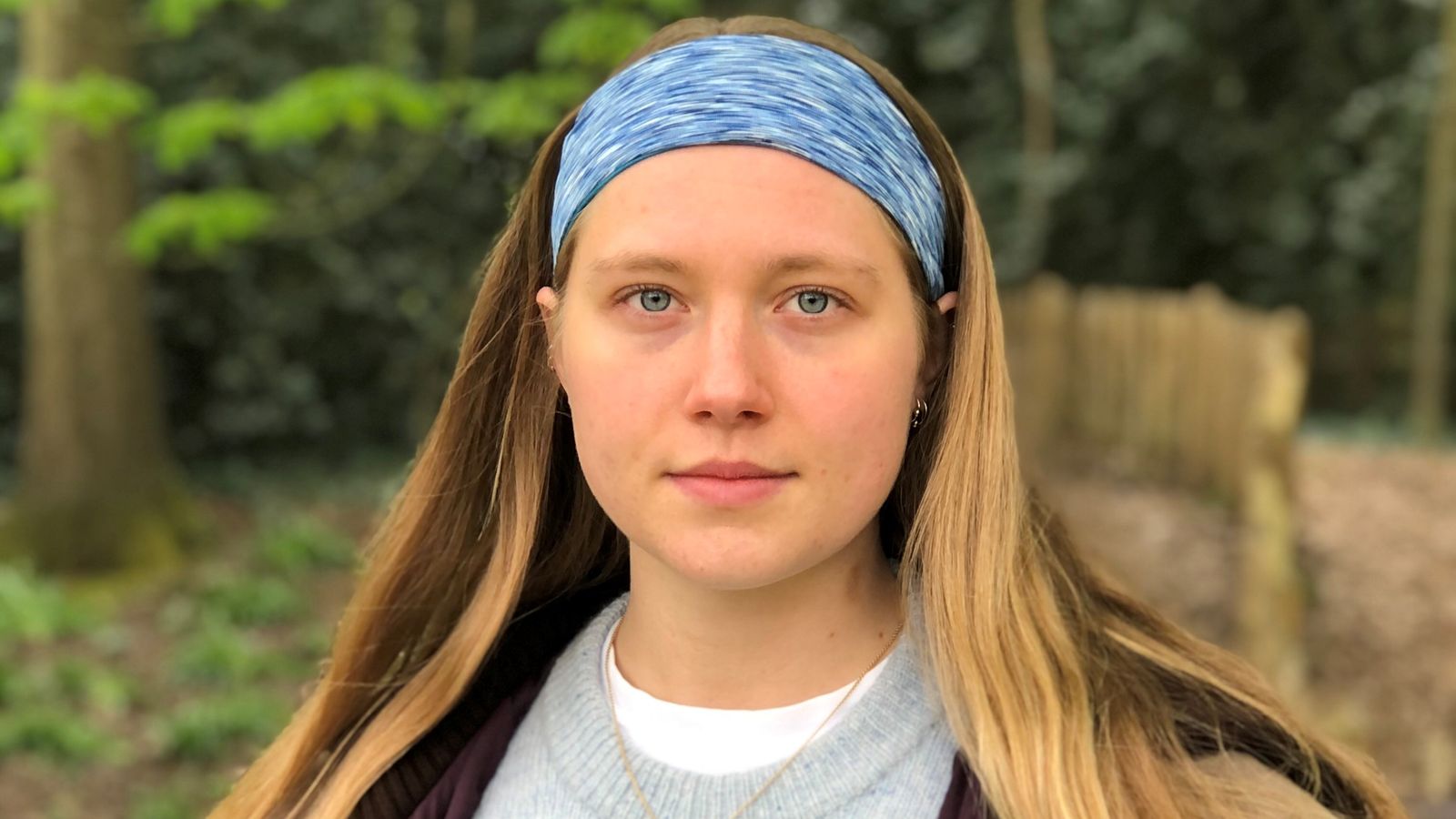
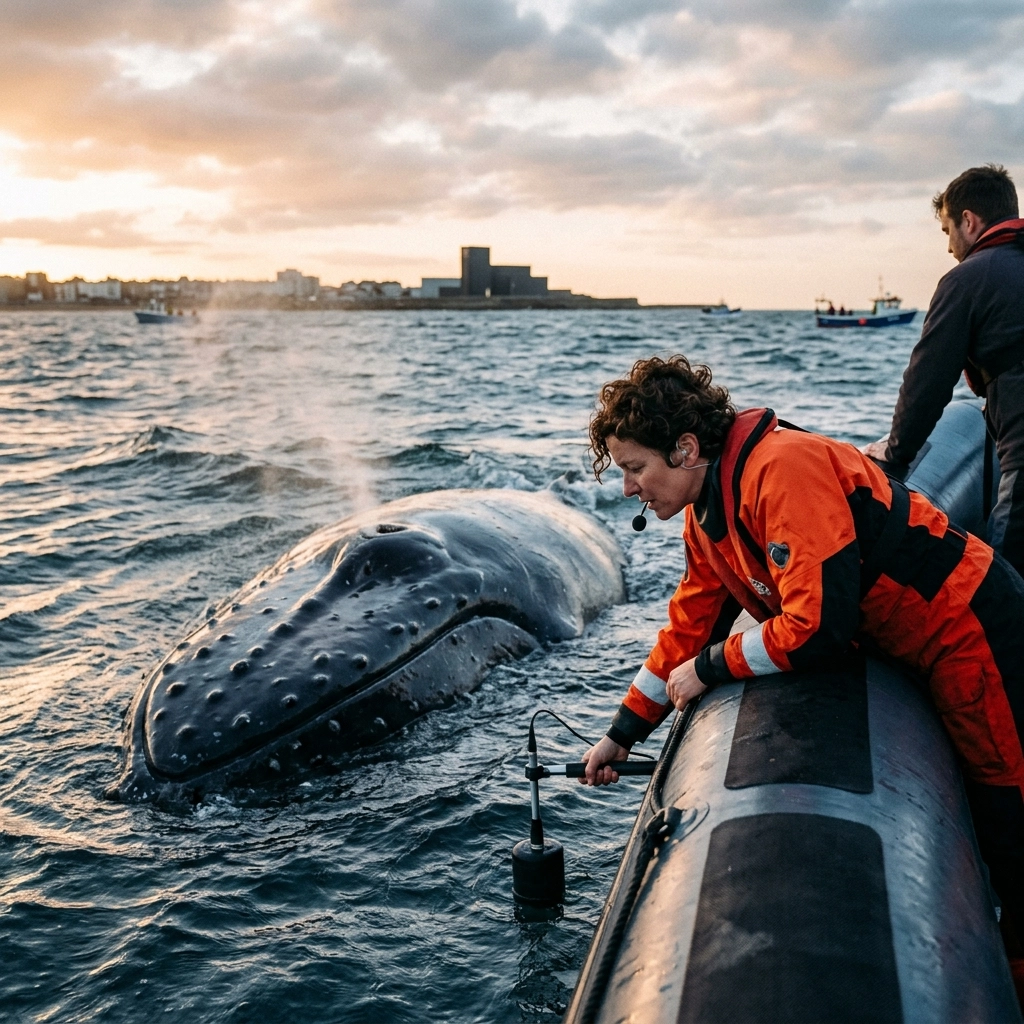
The genesis of the project lies in the work of Rebecca Douglas, a local photographer and conservationist whose passion for the natural world often takes her far beyond the chalk cliffs of Kent. During a trip to the icy waters of Iceland, Douglas captured the vocalisation of humpback whales using hydrophones: underwater microphones that pick up sounds travelling through the dense medium of the ocean. These recordings were not merely biological data; they were evocative, rhythmic, and deeply musical. When she brought these sounds back to Margate, the potential for a creative explosion was immediate.
The Social Singing Choir, led by founder Hughie Gavin, is not your average choral society. There are no stuffy auditions, and the repertoire is more likely to feature Fleetwood Mac or Radiohead than traditional liturgical music. This accessibility made them the perfect vessel for Douglas’s recordings. The challenge, however, was significant: how do you harmonise with a creature that communicates through frequencies and patterns that follow their own internal logic, separate from human time signatures or scales?
From the Deep: A Sonic Journey from Iceland
To understand the weight of 'Wash Over Me', one must first understand the source of the sound. The humpback whale is one of the ocean's most prolific singers. Unlike many other species, these whales compose complex songs that can last for up to twenty minutes and are shared across entire populations. In the cold, nutrient-rich waters off the coast of Iceland, these songs serve as a primary means of social bonding and navigation. For Douglas, capturing these sounds was a lesson in patience and respect. The recordings she secured weren't just noise; they were a glimpse into a hidden world.
When the choir first heard the raw audio, the reaction was one of profound stillness. The sounds of the humpbacks range from deep, percussive thumps to high-pitched whistles that mimic the sound of a violin. There is a melancholy to the whale’s song that resonates with the human ear on a primal level. The task for the choir was to find the gaps in these recordings: the places where a human voice could sit without overshadowing the original artist.
The process of translating these marine melodies into a choral arrangement required a shift in perspective. The choir had to learn to breathe with the whales. Humpbacks have an incredible lung capacity, and their phrases are long and sweeping. For a human choir, replicating that sense of vastness meant leaning into sustained notes and atmospheric textures. It was less about singing a traditional melody and more about creating a soundscape that mirrored the ebb and flow of the tide. This collaboration highlights the importance of untold stories within the scientific community, where the emotional impact of conservation is often lost in a sea of statistics and policy papers.
Harmonising with Giants: The Making of ‘Wash Over Me’
The production of 'Wash Over Me' took place in the heart of Margate, a town that has become a sanctuary for independent creative voices. The local recording sessions were a masterclass in adaptation. Hughie Gavin worked to arrange the choir’s parts so they would weave in and out of the whale recordings, creating a sense of dialogue. At times, the human voices mimic the soaring glissandos of the whales; at others, they provide a grounded, rhythmic pulse that represents the shore.
This wasn't just a technical exercise. It was a bold statement about our place in the natural world. By placing human voices on the same level as whale vocalizations, the choir effectively dismantled the hierarchy that often separates humanity from the environment. The track is witty in its construction, using the natural acoustics of the recording space to simulate the feeling of being underwater. There is a boldness in the decision to release a track where the "lead singer" is a thirty-tonne mammal, yet in the context of Margate’s eccentric art scene, it makes perfect sense.
The community involvement in this project cannot be understated. The Social Singing Choir is made up of local residents: teachers, baristas, retirees, and artists. When they sing together, they carry the spirit of the town with them. Bringing that local energy to a global issue like marine conservation creates a powerful narrative. It’s an example of how independent news uk outlets find value in local grassroots movements that have global resonance. 'Wash Over Me' is more than a song; it is a testament to the power of collective action and the idea that even the smallest coastal community can find a way to speak to the vastness of the ocean.
Art as Activism: Why Untreated Stories Matter
The collaboration between Rebecca Douglas and the Social Singing Choir serves a larger purpose beyond aesthetic beauty. It is a form of sonic activism. The ocean is currently facing unprecedented challenges, from climate change and plastic pollution to the noise pollution caused by industrial shipping and sonar. This "acoustic smog" interferes with the very songs that the choir sought to celebrate. By bringing the sounds of the humpback whale into a popular medium, the project forces the listener to acknowledge the existence and the intelligence of these creatures.
In the realm of independent news uk, stories that bridge the gap between hard science and human emotion are vital. We often hear about the melting of the ice caps or the decline of fish stocks, but it is much harder to ignore the plea of a singing whale when it is harmonised by a group of passionate humans. The untold stories of the deep are brought to the surface, making the abstract reality of environmental degradation feel personal and immediate.
The success of 'Wash Over Me' has sparked a wider conversation in Margate and beyond about how we interact with our environment. It has encouraged other artists to look to the natural world not just for inspiration, but for direct collaboration. Whether it is recording the sound of the wind through the pylons of the Kent marshes or the rhythm of the waves hitting the harbour wall, there is a growing movement to document and celebrate the "non-human" voices of our world.
The project also highlights the role of art in wellness and community building. Members of the choir have spoken about the meditative quality of the rehearsals, the way the whale’s song forced them to slow down and listen with a level of intent that is rare in the digital age. This sense of connection: both to each other and to the planet: is a recurring theme in the untold stories that NowPWR seeks to amplify.
As the track finds its way onto playlists and into the ears of people far from the Margate coast, its message remains clear. We are not separate from nature; we are a part of it. The hum of the choir and the moan of the whale are two sides of the same coin, both expressing a need to be heard in an increasingly noisy world. The 'Wash Over Me' project is a reminder that when we stop to listen, we might just find a harmony we never knew existed.
The collaboration between the Social Singing Choir and Rebecca Douglas stands as a significant cultural moment for Margate. It demonstrates that the most impactful stories often come from the most unexpected places, provided someone is willing to listen and record them. Through this sonic experiment, the town has proven that it is not just a place to look at the sea, but a place to sing with it.