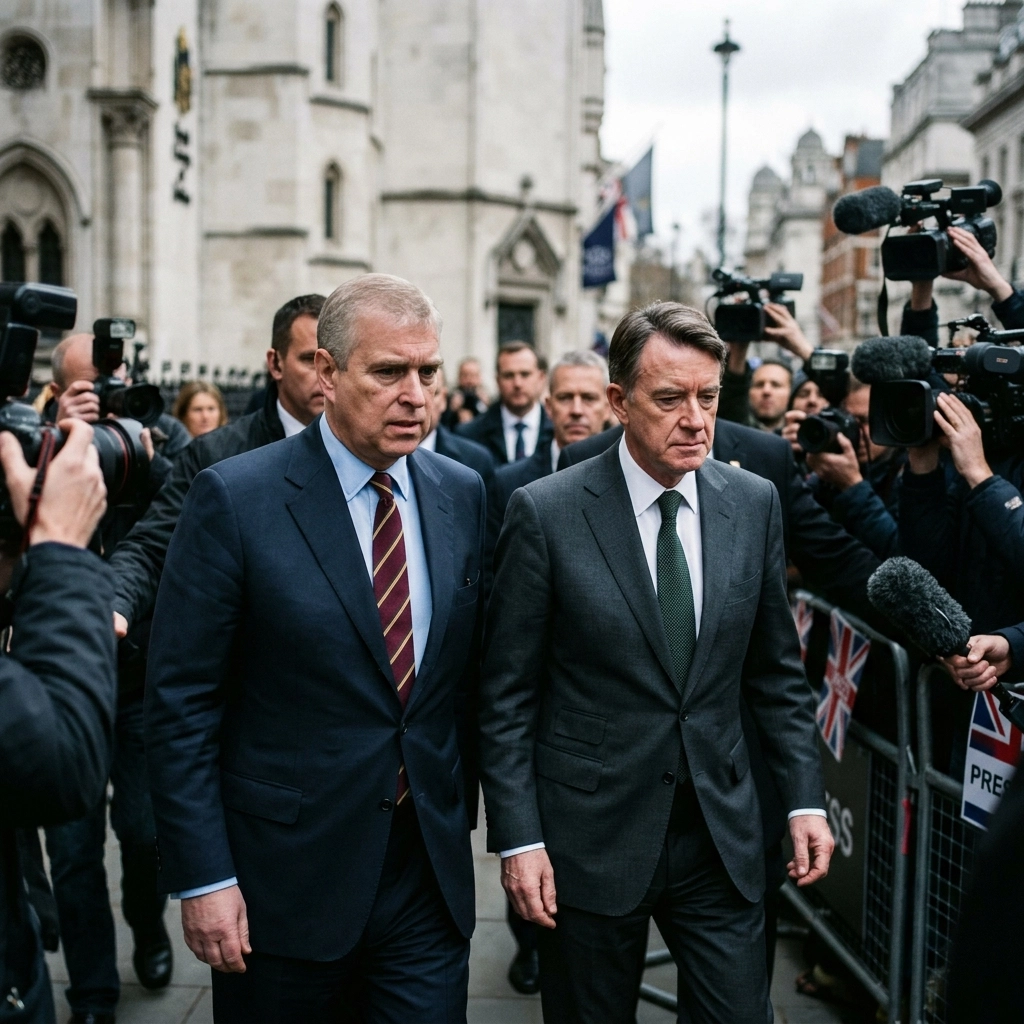
It turns out that some headaches just won’t shift with a couple of paracetamol and a lie-down in a darkened room. For the British establishment, the throbbing migraine caused by the ghost of Jeffrey Epstein has just reached a new level of intensity. We are now seeing reports that prosecutors are providing "investigative advice" to the police regarding the links between the disgraced financier and two of the UK's most prominent figures: Prince Andrew and Lord Peter Mandelson.
For those following the untold stories of the British elite, this isn't just another tabloid scrap. This is a significant pivot in a saga that many in the halls of power hoped had been buried under layers of legal settlements and carefully worded denials. When the Crown Prosecution Service starts handing out advice to the police about people this high up the food chain, the narrative shifts from "unfortunate associations" to something much more legally precarious. It’s the kind of independent news uk readers have been waiting for: a sign that the Teflon coating might finally be wearing thin.
The timing couldn’t be more awkward. We are well into 2026, and the fallout from the massive Epstein document release earlier this year is still radiating through Westminster and Windsor. This isn't just about what happened on a private island decades ago; it’s about the vetting processes: or the lack thereof: that allowed men with such questionable ties to maintain their grip on public life and national influence for so long.
The Bathrobes and the 'Best Pal' Problem
To understand why the police are now seeking specialized advice, you have to look at the sheer weight of the material that has surfaced. We aren’t just talking about a single meeting or a polite handshake at a fundraiser. The imagery that has emerged is far more intimate and, frankly, far more bizarre. The discovery of a photograph showing Prince Andrew and Lord Mandelson together in bathrobes at Epstein’s Martha’s Vineyard estate was the moment the "coincidence" defence died a public death.
For Mandelson, the "Prince of Darkness" himself, the revelations have been particularly stinging. As a man who built a career on the meticulous management of image and perception, seeing his private emails to a convicted sex offender laid bare is a catastrophic failure of the brand. The documents suggest that even after Epstein’s 2008 conviction, Mandelson wasn't just maintaining a polite distance. He was allegedly offering support, urging Epstein to "fight for early release" and telling him his friends would stay with him.
This isn't just a matter of poor taste in friends. The investigative advice currently being weighed involves whether these relationships crossed the line into misconduct in public office. When you’re the Business Secretary and you're discussing sensitive government matters: like €500 billion bailouts: with a man who has already been branded a paedophile by the courts, the questions move beyond morality and into the realm of legality. The public is rightfully asking: who was vetting these people? Or more accurately, who was looking the other way?
Prince Andrew’s situation remains equally perilous. Despite his numerous attempts to draw a line under the scandal with that infamous television interview and a subsequent multi-million-pound settlement, the "Epstein files" have painted a picture of continued contact that contradicts his public narrative. The suggestion that he was pursuing business partnerships with Epstein while acting as a UK trade envoy is the core of the headache for the Palace. It suggests that Epstein wasn't just a social acquaintance, but a shadow fixture in Andrew's professional life long after the alarm bells should have been deafening.
Vetting Failure or High-Level Blindness?
The real sting in the tail of this story is the systemic failure it represents. How does a man like Peter Mandelson get appointed to high-profile government roles when his "best pal" (a term allegedly used in Epstein’s birthday book) is a convicted trafficker? This is where the bold questions about the UK's vetting culture come in. It seems there is one set of rules for a junior civil servant: who would be grilled over a missed credit card payment: and an entirely different set for the "Elite."
The current investigation into "misconduct in public office" is a direct challenge to the idea that being well-connected provides a permanent shield. Prosecutors looking at the "investigative advice" are essentially checking to see if there is enough smoke to warrant a full-blown fire. The bold reality is that for years, the British public was told these relationships were "complex" or "misunderstood." Now, with police and prosecutors huddling over the evidence, that framing is falling apart.
What we are seeing is the breakdown of the "old boys' club" vetting system. Historically, if you were a Prince or a Peer, your associations were rarely questioned by the security services in the same way they would be for anyone else. This "high-level blindness" allowed Epstein to operate within the inner circles of the British establishment, using his proximity to Andrew and Mandelson as a form of social currency.
The untold stories here involve the junior staffers and civil servants who likely saw the names on the manifests or the emails in the inboxes but felt powerless to speak up. When the CEO of the country: or at least the CEO of the political and royal spheres: is rubbing shoulders with someone like Epstein, the message sent down the ranks is one of total immunity. The fact that the police are now involved suggests that the era of immunity might be facing its most serious threat yet.
Advice, Evidence, and the Long Shadow of the Island
The phrase "investigative advice" sounds dry and bureaucratic, but in the context of the Epstein saga, it’s a thunderclap. It means the police have enough material to warrant a professional legal opinion on how to proceed without the case collapsing under its own weight. It involves parsing through three million documents, thousands of videos, and nearly two hundred thousand images to find the specific instances where a law might have been broken.
The challenge for the authorities is the sheer scale of the Epstein shadow. It touches so many aspects of public life: politics, the monarchy, international trade, and even the judiciary. The "headache" for the establishment isn't just about the two men named; it's about who else might be caught in the dragnet if a full prosecution moves forward. If Mandelson’s husband allegedly received payments for an osteopathy course or if Andrew invited Epstein to dine at the heart of the British monarchy, the rot goes deep into the floorboards.
For the independent news uk audience, the focus is now on transparency. The public is tired of "lessons learned" and "unequivocal apologies" issued through high-priced PR firms. They want to know why it took a massive document leak and years of international pressure for the UK authorities to take these links seriously. The witty irony of the situation is that Mandelson, a master of the "spin," has finally found a story he cannot control. No amount of careful phrasing can erase a photograph of three men in bathrobes on a private estate belonging to a predator.
As the investigation continues, the focus will remain on the vetting process for future appointments. The "Epstein headache" has proven that the elite cannot be trusted to vet themselves. The casual disregard for the victims of the Epstein network, shown by those who continued to associate with him for "business" or "friendship," is the most damning evidence of all.
The investigation into Prince Andrew and Lord Mandelson’s links to Jeffrey Epstein represents a pivotal moment for British justice. With prosecutors now actively advising the police, the focus has shifted from social scandal to potential legal accountability. The outcome of these inquiries will determine whether the UK's vetting systems and legal standards truly apply to everyone, or if the elite remain protected by the very institutions they represent. Regardless of the legal result, the public's perception of these figures has been permanently altered by the weight of the evidence uncovered.