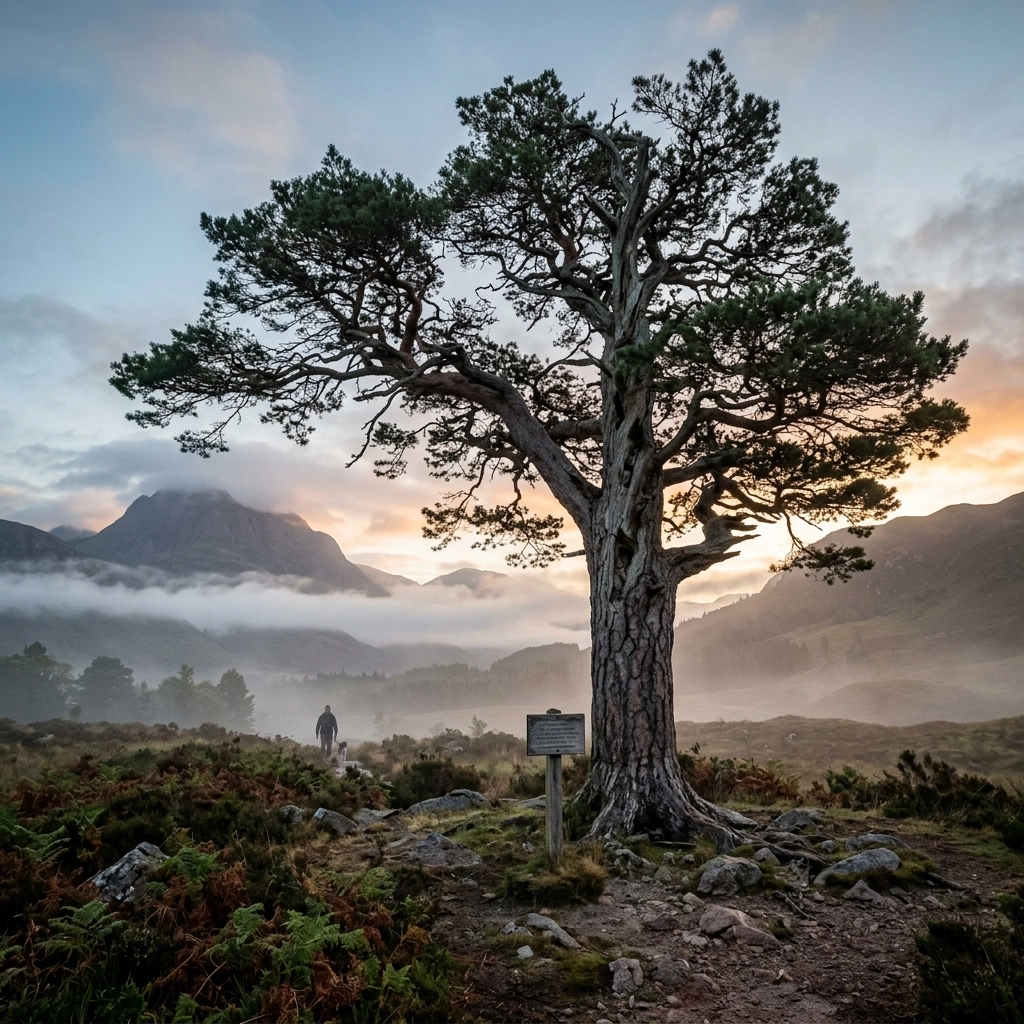
It is not every day that a tree becomes a national celebrity, but the Skipinnish Oak has done exactly that. Tucked away in a corner of the Scottish Highlands, this magnificent specimen has officially been crowned the winner of the Woodland Trust’s Tree of the Year competition. For anyone who thinks that a tree is just a bit of wood with some leaves attached, the story of this oak is here to prove you very wrong. It is a tale of survival, hidden history, and a bit of a musical twist that makes it one of the most compelling untold stories in our natural landscape today.
In a world dominated by fast-paced digital updates, there is something profoundly grounding about a tree that has stood for centuries. The Skipinnish Oak isn’t just a winner because it looks impressive: though it certainly does: it won because it represents the resilience of the British wild. When we look for independent news uk, we often find ourselves bogged down in the chaos of the city or the corridors of power. But sometimes, the biggest news is happening in a quiet commercial plantation near Achnacarry, where an ancient giant has been hiding in plain sight.
The competition was fierce this year, with contenders from across the country vying for the top spot. We had ancient oaks from English estates, rowans from the valleys, and city dwellers that have survived urban expansion. Yet, the Skipinnish Oak captured the public’s imagination in a way that few others could. It is a rugged, weathered survivor that looks like it belongs in a fantasy novel, and its journey from obscurity to national fame is nothing short of legendary.
The Legend of the Skipinnish Oak
The Skipinnish Oak is located in Lochaber, a region known for its dramatic scenery and untamed beauty. However, this tree wasn’t exactly standing in the middle of a manicured park with a plaque in front of it. For years, it was hidden away within a commercial spruce plantation. Imagine being one of the oldest living things in the country and being surrounded by rows of youngsters intended for the timber mill. It is a bit like a retired rockstar living in a suburban cul-de-sac: completely out of place but undeniably the most interesting thing there.
The tree’s name comes from a unique connection to the Scottish Ceilidh band, Skipinnish. The band members were actually the ones who helped bring the tree to wider attention. While playing at a gig nearby, they were told about a massive, ancient oak hidden in the woods. When they saw it, they were blown away by its scale. This isn’t just a tree; it’s an ecosystem. Its massive, twisted limbs are covered in mosses, lichens, and ferns, supporting a wealth of biodiversity that you simply don’t find in younger forests.
What makes the Skipinnish Oak so special is its "hidden" status. For decades, it was forgotten by the wider world. It was only when modern ecological surveys began looking closer at these plantations that the true value of the oak was realised. It serves as a reminder that there are still untold stories waiting to be discovered in our own backyard. You don't need to travel to the Amazon to find wonders; sometimes, you just need to look behind a row of Sitka spruce in the Highlands.
The oak is estimated to be hundreds of years old, having survived the shifting tides of Scottish history. It has stood through Jacobite risings, the Highland Clearances, and the industrial revolution. To see it finally get the recognition it deserves is a victory for everyone who appreciates the deep roots of our island’s history. It is a bold, gnarled masterpiece of nature that refuses to be ignored any longer.
A Victory for Hidden Britain
Winning Britain's Tree of the Year is about more than just bragging rights. It’s a chance to highlight the importance of ancient and veteran trees across the UK. These trees are effectively the "pensioners" of our forests, and they require special care and protection. The Skipinnish Oak’s win brings much-needed attention to the fact that many of our most significant trees are actually on private land or hidden within commercial forests where they might not be getting the protection they need.
The Woodland Trust uses this competition to engage the public with nature in a way that feels personal. It’s easy to talk about "deforestation" as an abstract concept, but it’s much harder to ignore the plight of a specific, ancient oak that looks like it has a personality. The public vote was a landslide, proving that people across the UK have a deep-seated affection for these natural landmarks. In an era where independent news uk often focuses on the division between the rural and the urban, the Skipinnish Oak provided a rare moment of national unity.
The oak will now go on to represent the UK in the European Tree of the Year competition. This is where things get really interesting. We’ll be going head-to-head with some of the most famous trees on the continent: oaks from Poland, chestnuts from Italy, and pines from Scandinavia. It’s essentially the Eurovision of the botanical world, but without the questionable fashion choices and with significantly more carbon sequestration.
The significance of this victory also lies in the ecological "halo effect." By protecting a single ancient tree like the Skipinnish Oak, we are often protecting the entire area around it. These trees are "keystone individuals." They provide food and shelter for hundreds of species, from rare beetles to birds of prey. When the public votes for a tree like this, they aren’t just voting for a plant; they are voting for the preservation of a whole slice of British wildlife that would otherwise be lost to history.
Preserving Our Natural Heritage
As we look toward the future, the story of the Skipinnish Oak serves as a call to action. While it’s wonderful to celebrate its win, we also have to acknowledge the challenges facing our ancient woodlands. Currently, the UK has more ancient trees than many other European countries, yet our legal protections for them are surprisingly thin. An ancient building has a much higher level of protection than an ancient tree, even though the tree is a living part of our heritage that cannot be rebuilt once it's gone.
The Skipinnish Oak is lucky. It has been recognised, it has a name, and it has a fan base. But what about the thousands of other veteran trees scattered across the UK that remain anonymous? These are the untold stories that keep our landscape functioning. They are the silent witnesses to our history, and they deserve a seat at the table when it comes to environmental policy and land management.
In the realm of independent news uk, we often talk about sustainability and climate change in terms of numbers and targets. But nature is about more than just data. It’s about the emotional connection we have with the land. The fact that thousands of people took the time to vote for a Scottish oak tree shows that the connection is still strong. We want our landscapes to be wild, we want them to be ancient, and we want them to be respected.
The Skipinnish Oak has now secured its place in the history books. It has transitioned from a hidden giant in a spruce plantation to a national icon. Its victory is a reminder that we should never stop looking for the extraordinary in the ordinary. Whether you are in the heart of the Highlands or a small city park, there is likely a tree nearby with its own story to tell. We just need to make sure we are listening.
The Skipinnish Oak stands as a symbol of endurance. It has survived centuries of change and managed to stay standing despite the odds. As it prepares for its European debut, it carries the hopes of nature lovers across Britain. It’s a bit of a local hero, a bit of a mystery, and now, officially, Britain’s best tree.
The recognition of the Skipinnish Oak highlights the vital role that ancient trees play in our ecosystem and our national identity. Protecting these specimens ensures that future generations can continue to find inspiration in the natural world. The efforts of organisations like the Woodland Trust, supported by public enthusiasm, remain essential in the ongoing work to preserve the UK’s unique environmental heritage.