Margate is a town that has always been defined by its relationship with the water. It is a place of peeling paint, world-class art, and a coastline that looks like it was painted by Turner on a particularly moody Tuesday. But recently, the local air has been filled with a sound that doesn’t quite belong to the English Channel. It’s deeper, more ancient, and significantly more Icelandic. A local choir has decided that human voices weren't quite enough to capture the spirit of the age, so they’ve gone and recruited some of the planet’s largest mammals as their newest lead vocalists.
The project, aptly titled "Singing with Giants," saw a Margate-based community choir embark on a sonic experiment that sounds like the plot of a surrealist indie film. By taking high-fidelity underwater recordings of humpback and blue whales captured in the frigid fjords of Iceland, the group has composed a piece of music that attempts to bridge the gap between species. This isn't just about whale song for the sake of relaxation tapes or spa background noise; this is a bold, artistic confrontation with the natural world. In the landscape of independent news UK, these are the untold stories that remind us that creativity isn't just a human pastime: it’s a universal frequency.
From the North Sea to the Arctic Circle
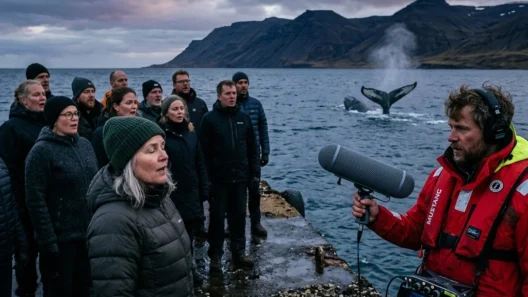
The journey didn't start in a recording studio, but rather in the choppy waters off Húsavík, Iceland’s whale-watching capital. Researchers and sound engineers spent months dropping hydrophones: underwater microphones: into the depths to capture the complex vocalisations of visiting cetaceans. These aren't just random noises; they are intricate sequences of clicks, whistles, and low-frequency moans that can travel hundreds of miles through the water. When the files arrived in Margate, the choir members were faced with a daunting task: how do you sing along with a creature that can produce sounds lower than a pipe organ and louder than a jet engine?
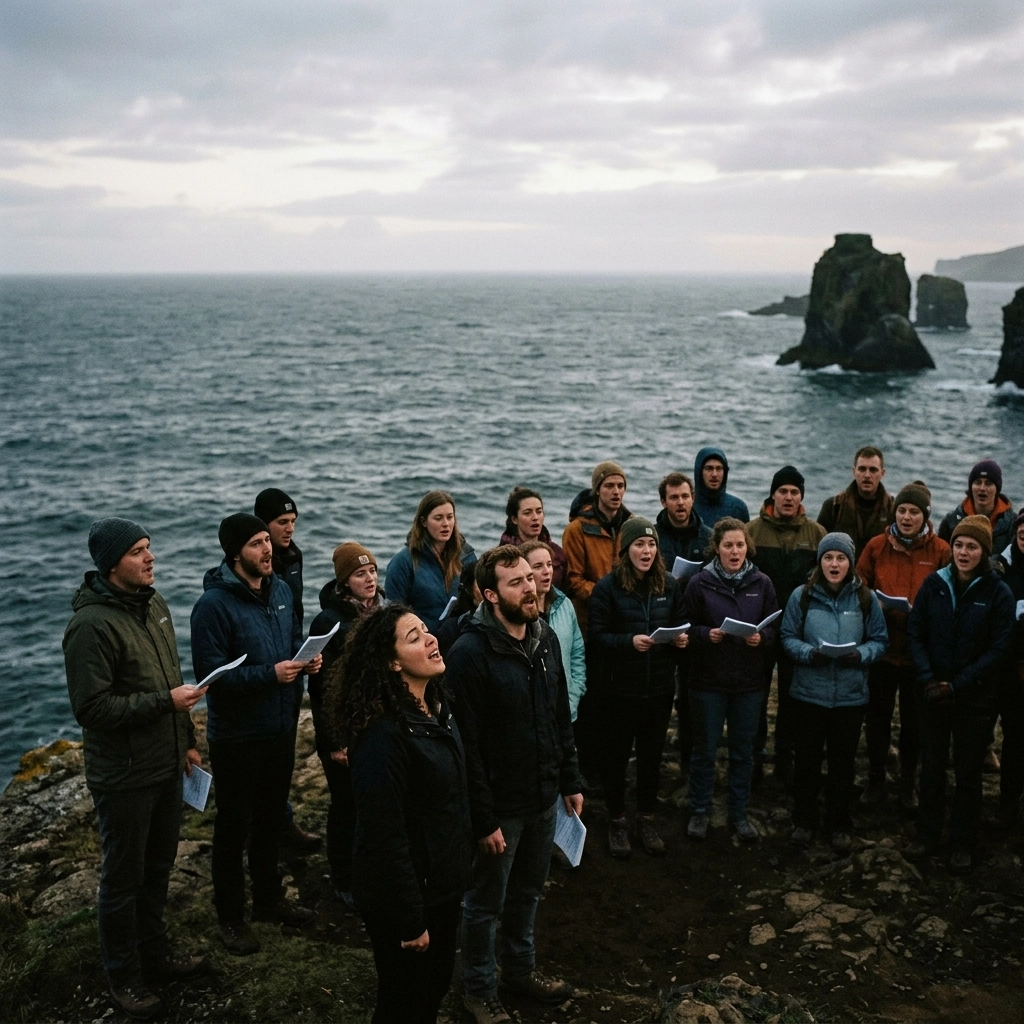
The choir, known for its eclectic repertoire and community spirit, didn't want to simply sing over the top of the recordings. They wanted a dialogue. The process involved dissecting the whale songs, identifying recurring motifs, and then attempting to harmonise with them. It was a lesson in humility. Human vocal cords are tiny, delicate things compared to the massive resonating chambers of a humpback. The choir had to learn to breathe differently, to hold notes with a steady, oceanic patience, and to respect the silence between the calls. It’s the kind of project that reminds us why independent news UK outlets are so vital; while mainstream headlines focus on the noise of Westminster, these untold stories are happening in community halls with a much grander perspective.
The logistics of the project were as murky as the North Sea. Converting the recordings into a format that a four-part choir could interpret required a blend of traditional musical notation and graphic scoring. Some of the whale frequencies had to be shifted up an octave just so the human ear could register the nuance of the "melody." The resulting sound is haunting. It’s a mix of Margate’s gritty, soulful vocal textures and the hollow, echoing booms of the Icelandic deep. It feels less like a performance and more like a seance for the natural world.
Translating the Songs of the Deep
The technicality of the performance is only half the story. The real "untold stories" lie in the emotional resonance of the music. For the choir members, many of whom have lived by the sea their entire lives, the project changed their perception of the horizon. You can’t listen to a blue whale's heartbeat: a sound so deep you feel it in your bones rather than hear it with your ears: and not feel a bit small. That sense of scale is exactly what the "Singing with Giants" project aimed to evoke. It’s a reminder that while we are busy with our daily commutes and digital distractions, there is a parallel world beneath the waves that is older and perhaps wiser than our own.
The composition itself is structured to reflect the migratory patterns of the whales. It begins with the sparse, lonely calls of a single whale in the Arctic, slowly building as the choir joins in, mimicking the communal nature of a pod. There are moments of intense dissonance where the human voices clash with the natural recordings, representing the impact of human-made noise pollution: shipping lanes, sonar, and oil exploration: on marine life. This is where the project shifts from art to activism. By humanising the whales through song, the choir is making a bold statement about our responsibility to the ocean.
This is the beauty of independent news UK; it allows for the exploration of these niche, yet profoundly impactful, cultural moments. The choir didn't have a massive corporate sponsor or a polished PR machine. They had a collection of voices, a laptop full of Icelandic data, and a shared belief that the ocean has something to say. During rehearsals, the singers spoke of the "ghostly" quality of the whales’ voices, noting how the creatures seemed to leave "space" in their songs, almost as if they were waiting for a response. In Margate, they finally got one.
A New Anthem for the Anthropocene
As the project nears its final public performance, the impact on the local community has been palpable. The "Singing with Giants" initiative has sparked conversations about conservation, climate change, and the role of art in an era of environmental crisis. It’s easy to feel disconnected from the melting ice caps or the acidification of the oceans when you're standing on a pier in Kent, but hearing the literal voice of the ocean echoing through a local church brings the reality home. It turns a global catastrophe into a personal, melodic experience.
The performance is set to take place in a venue overlooking the Margate sands, timed to coincide with the high tide. The audience won't just be listening to a choir; they’ll be part of a cross-species symphony. The recordings from Iceland will be pumped through a high-end sound system that mimics the acoustics of the deep sea, while the choir stands amongst the crowd, blurring the lines between performer and observer. It is a bold move for a small-town group, but then again, Margate has never been a place for the timid.
In the end, "Singing with Giants" is a testament to the power of listening. We live in a world that is incredibly loud, yet we rarely hear what the planet is trying to tell us. This choir decided to stop talking and start listening to the giants. The result is one of those untold stories that deserves to be shouted from the rooftops: or at least sung from the shoreline. As independent news UK continues to look for the heart of the country’s cultural landscape, it finds it here, in the strange, beautiful, and slightly damp intersection of human voices and whale songs.
The project concludes not with a grand finale, but with a fading out, leaving only the sound of the waves. It’s a sobering conclusion that reminds us that even when our songs are finished, the ocean continues its rhythm. The Margate choir has found its ocean voice, and in doing so, they’ve given a voice to the giants who usually sing in the dark, cold depths where no one is listening. It is a profound piece of storytelling that proves that sometimes, to find your own voice, you have to listen to one that is significantly larger than your own.
The success of the initiative has already prompted interest from other coastal communities looking to connect with their local environments in similarly creative ways. From the kelp forests of Scotland to the seagrass meadows of Cornwall, there are countless other voices waiting to be heard. The "Singing with Giants" project is just the beginning of a new chapter in how we perceive our relationship with the wild. It’s a reminder that we are not separate from nature; we are merely one part of the choir, and it’s about time we learned the lyrics.