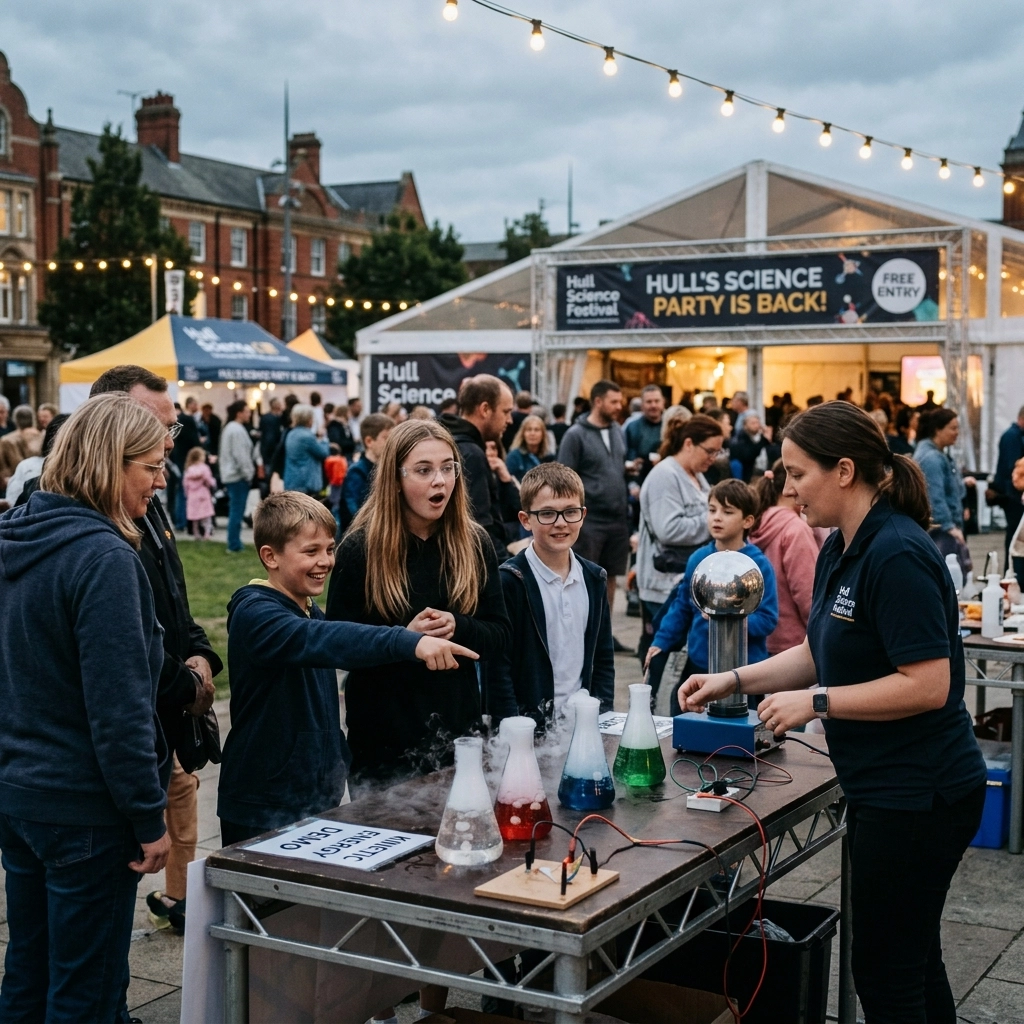
Hull has spent years being talked about in shorthand. A port city. A rugby city. A place people mention with a raised eyebrow and a joke they think is original. But over one weekend in March, Queen Victoria Square told a different story. Colliderfest 2026 returned, and with it came a reminder that some of the most interesting shifts in Britain are not happening where the usual spotlight sits. They are happening in places that learned long ago how to get on with things while the rest of the country was looking elsewhere.
That is where the untold stories begin. Not in glossy slogans, but in the gap between Hull’s reputation and Hull’s reality.
Hull’s Scientific Glow-Up is No Accident
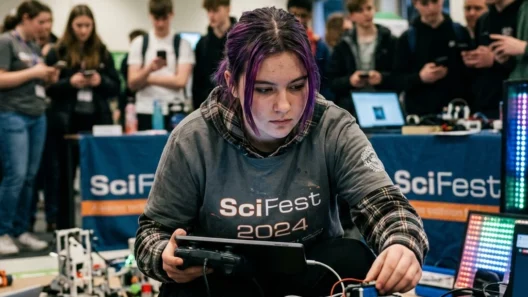
Walk through the city during Colliderfest and the first thing you notice is that nobody is treating science like homework. It is out in the open, mixed in with the noise of families, performers, school groups and curious passers-by wondering why there is, say, a robot dancing in the square before lunch. The festival, held across 13 and 14 March 2026, turned the centre of Hull into something between a lab, a street party and a very clever act of local defiance.
The deeper you look, the clearer it becomes that this did not appear overnight. Hull has been building towards this for years through partnerships between schools, cultural groups and businesses tied to the Humber’s growing green energy economy. One of the real untold stories here is how naturally that relationship has formed. In plenty of places, technology is presented as something imported from outside, polished up and dropped in. In Hull, it feels local. It feels earned. The region’s industrial backbone, its environmental ambitions and its creative scene have all ended up in the same conversation, and somehow nobody has ruined it by making it sound like a corporate away day.
That is part of what gives Colliderfest its edge. It is not science for science’s sake. It is science tied to place, identity and the very practical question of what comes next for a city that has no interest in being written as a footnote. Dame Dr Maggie Aderin-Pocock’s return brought star power, certainly, but the bigger point was what her presence represented. Hull is not asking for permission to be taken seriously anymore. It is simply acting like a city with something worth showing.
Robots, Gold Medals, and Giant Telescopes
If the festival had a trick, it was this: it made complicated ideas feel disarmingly normal. One minute Olympic names such as Christopher Dean and Grant Hardie were helping translate movement, balance and performance into something scientific. The next, children were building model wind turbines and treating renewable energy like the most obvious thing in the world. Which, given where they live, perhaps it is.
There was plenty of spectacle, but the spectacle had substance. Portable planetariums pulled people into space without requiring a fortune or a physics degree. Workshops in coding and digital storytelling drew in children who might never describe themselves as “science types”, mainly because that phrase still sounds like something invented by adults trying too hard. The 3D printing stations were busy, the processions were eccentric in the best way, and the atmosphere had that slightly chaotic quality all good public events need. If everything is too tidy, people assume it is not for them.
That accessibility matters. In the world of independent news uk, the easy version of this story would be to call Colliderfest fun and leave it there. But the more interesting angle is what fun is doing here. It is acting as an entry point. The child laughing at a robot today is also being told, quietly but clearly, that science belongs to them as much as anyone else. No gatekeeping, no polished glass tower, no myth that innovation only happens in a handful of approved postcodes.
Hull understands that instinctively. There is a resilience to the city that makes experimentation feel familiar rather than intimidating. Failure, retrying, improvising, making something useful out of whatever is in front of you; that is not just the language of science, it is the language of places that have had to adapt.
The Future of the North is Coded in Hull
By the time Colliderfest wrapped up, what lingered was not just the memory of a lively weekend. It was the sense that Hull is writing a larger story about where innovation in Britain actually lives. The festival linked local industry with public imagination in a way many places talk about but rarely manage. Young people were not only being entertained; they were being shown a path from curiosity to career, from fiddling with gadgets to shaping the industries that already define the Humber’s future.
That is why this matters beyond one city and one weekend. For readers looking for independent news uk coverage that goes past the obvious headlines, Hull offers a useful corrective. The future is not always unveiled with fanfare in the places people expect. Sometimes it arrives in a square full of families, performers, engineers and children asking better questions than the adults. Sometimes the untold stories are hiding in plain sight, dressed up as community events and dismissed by anyone too lazy to look twice.
Colliderfest has become more than a festival. It is evidence of a city reshaping its image without waiting for outside approval. Hull’s mix of climate ambition, digital creativity and grounded local pride gives the whole thing a confidence that feels refreshingly unforced. The old caricatures look flimsy against that. What remains is a clearer picture of a city investing in curiosity, backing local talent and treating science as part of everyday life rather than a subject kept behind closed doors.
The return of Colliderfest in 2026 underlines Hull’s growing role in the UK’s cultural and scientific landscape. Its success lies not only in turnout or headline guests, but in the way it connects community life with long-term regional change. As the Humber continues to develop as a centre for green energy and digital innovation, events like this help make that transformation visible, accessible and real. NowPWR will continue documenting these shifts and the communities driving them across the United Kingdom.