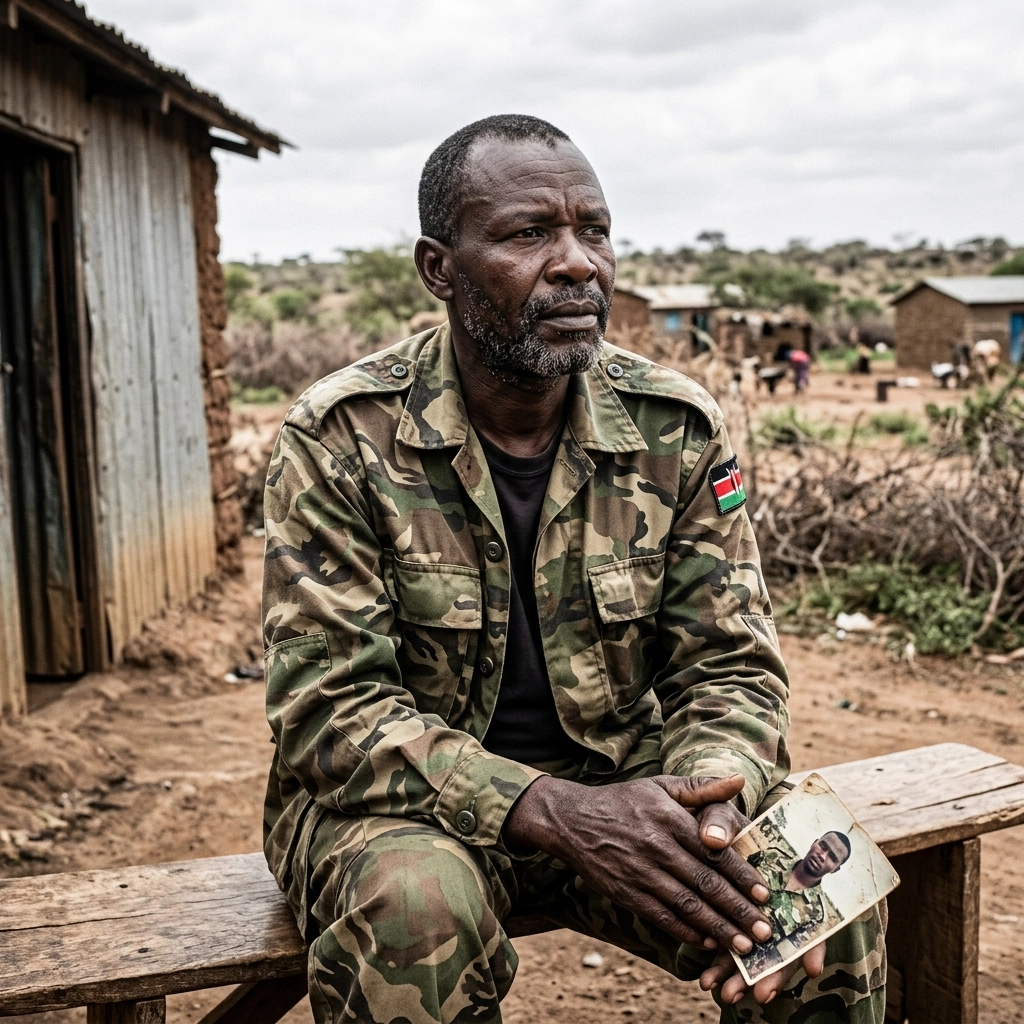
The town of Nanyuki, sitting in the shadow of Mount Kenya, has long been defined by the presence of the British Army. For decades, the British Army Training Unit Kenya (BATUK) has been a cornerstone of the local economy, bringing thousands of soldiers to the region for rigorous jungle and desert warfare training. But beneath the surface of this strategic partnership lies a legacy of abandonment and a burgeoning human rights crisis. It is a story of "Soldier Dads": British servicemen who fathered children with local Kenyan women and then disappeared, leaving behind a generation of children searching for their identity and the fathers who turned their backs on them.
This narrative is not new, but the scale of the issue has only recently come to light. For years, these stories were whispered in the markets and backstreets of Nanyuki, dismissed as the inevitable byproduct of military presence. However, a landmark investigation has peeled back the layers of silence, revealing nearly 100 documented cases of children abandoned by British soldiers. These are the untold stories of families fractured by distance, duty, and a systemic lack of accountability. For the mothers, the struggle has been one of extreme poverty and social stigma. For the children, now young adults, it is a quest for DNA justice that has finally reached the corridors of the UK’s highest courts.
The Ghost Fathers of Nanyuki
The social landscape of Nanyuki is unique. The influx of young, well-paid British soldiers into a region where economic opportunities are scarce created a complex dynamic. Friendships and romantic relationships formed quickly, but the transient nature of military deployments meant that these connections were often fleeting. When soldiers were redeployed or returned to the United Kingdom, many cut all ties. The women they left behind were often pregnant or already caring for infants, with no means of contacting the fathers and no legal recourse to demand support.
In the Kenyan context, the stigma of fatherless children can be devastating. Many of these children stand out physically; their mixed heritage marks them in a community where their biological origins are a constant source of speculation. They grew up being called "mzungu" (white person), a label that carried a heavy irony given their lived experience of poverty. Without the financial support of their fathers, many of these children were forced to drop out of school, trapped in a cycle of deprivation that their British progenitors were largely insulated from.
The emotional toll is perhaps the most profound aspect of this abandonment. Narrative accounts from the mothers describe a pattern of initial promises followed by total silence. Soldiers would share photos of their families back in the UK, promise to send money for medical bills, or vow to return, only to change their phone numbers or delete social media profiles once they crossed the border. This "ghosting" left a vacuum of information that the children have spent their lives trying to fill. The lack of a father figure is not just a personal loss; it is a structural barrier to their rights as children of British citizens, including the right to citizenship and the financial stability that comes with paternity recognition.
DNA and the Breaking of Silence
For decades, the British Ministry of Defence and individual soldiers could rely on the logistical impossibility of being tracked down. A mother in rural Kenya had little hope of navigating the legal systems of a country thousands of miles away. However, the dawn of the 21st century and the democratisation of DNA science changed everything. The rise of ancestry databases and consumer genetic testing provided a bridge across the ocean that traditional legal channels had failed to build.
The recent investigation into these "Soldier Dads" utilised DNA ancestry databases to link Kenyan children with their biological families in the United Kingdom. This scientific approach bypassed the need for military records, which are often shielded by privacy laws or institutional inertia. By matching the DNA of these children with distant relatives in the UK who had uploaded their profiles to public databases, investigators were able to trace the lineage back to the specific soldiers stationed in Nanyuki during the relevant time periods.
The results were transformative. So far, 20 men have been identified as the fathers of these abandoned children. In 12 of these cases, paternity has been legally confirmed through the UK’s Family Court, a milestone that seemed impossible just a few years ago. This process of DNA justice is about more than just a name on a birth certificate; it is about forcing a reckoning with the past. It provides these young Kenyans with the scientific proof of their heritage, a tool they are now using to demand accountability. The use of DNA science has turned the tide, moving the conversation from anecdotal evidence to irrefutable biological fact. It has empowered the "lost sons" and daughters to stand before the British legal system not as charity cases, but as individuals with a legitimate claim to their identity.
The Long Road to Paternity Justice
The legal battle currently unfolding is a testament to the resilience of the Kenyan mothers and the dedication of human rights lawyers on both sides of the ocean. Pursuing a paternity claim against a foreign national, especially one protected by military service, is a Herculean task. Kenyan lawyers have had to coordinate closely with UK-based legal experts to navigate the complexities of international law and the specific protections afforded to British servicemen.
The core of the legal argument rests on the fundamental rights of the child. Under international conventions, every child has the right to know their parents and to receive support from them. The fact that these fathers were representatives of the British Crown at the time of conception adds a layer of moral and political weight to the cases. There is a growing demand for the British government to take a more proactive role in facilitating these claims, rather than allowing the Ministry of Defence to hide behind a veil of "private matters."
Justice, in this context, is multi-faceted. It involves financial restitution for years of unpaid child support, which could transform the lives of these families. It also involves the potential for British citizenship, a prospect that offers a gateway to better education and employment opportunities. But perhaps most importantly, it involves an apology and a recognition of the harm caused. The fight for DNA justice is a challenge to the "untold stories" of military deployments: the human costs that are rarely factored into the strategic value of overseas training units. As more cases come before the courts, the pressure on the UK government to address this systemic issue continues to mount.
The situation in Kenya is a stark reminder that the impact of military presence extends far beyond the battlefield or the training ground. It leaves a lasting imprint on the social fabric of the host nation. The children of Nanyuki are no longer willing to be the "lost sons" of the British Army. With the help of modern science and a relentless pursuit of legal rights, they are finally finding their voices and demanding that their fathers: and the institution that sent them: take responsibility for the lives they created and then left behind.
The ongoing inquiry by Kenya's National Assembly and the increasing number of successful cases in the UK courts suggest that the era of impunity is ending. For the families in Nanyuki, the road ahead is still long, but the silence has finally been broken. The story of the "Soldier Dad" is shifting from a narrative of abandonment to one of hard-won justice, ensuring that the next generation is not defined by the absence of their fathers, but by the strength of their own fight for recognition.