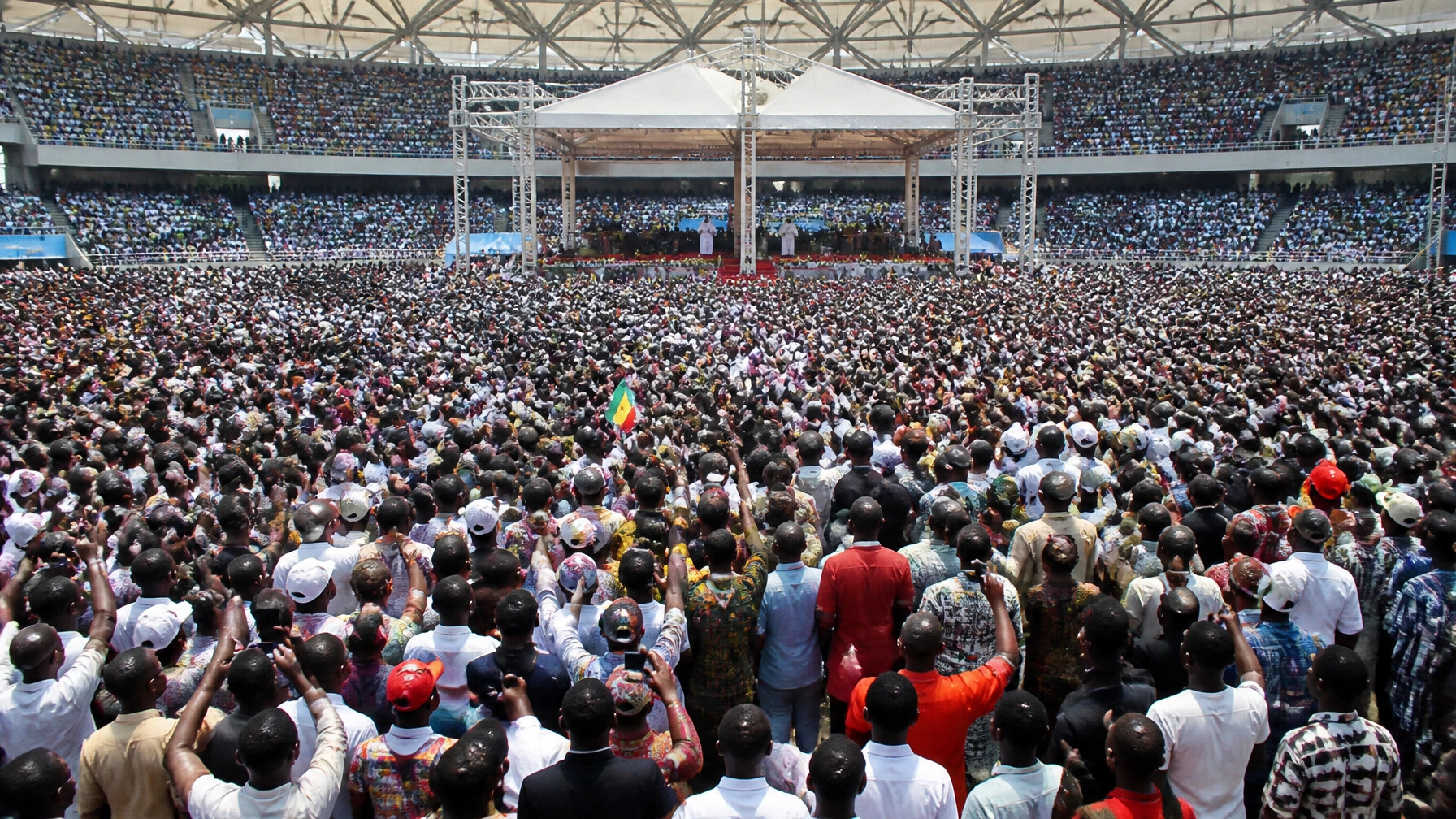
The atmosphere in Douala reached a fever pitch this week as Pope Leo XIV concluded his historic visit to Cameroon. At the heart of the journey was a massive gathering at the Japoma Stadium, where an estimated 120,000 people squeezed into every available inch of the arena. Under the swelering West African sun, the air was thick with a mixture of humidity and hope. Pilgrims had travelled from across the continent, some journeying for days by bus or on foot, just to catch a glimpse of the pontiff and hear his message of reconciliation.
This visit comes at a pivotal moment for Cameroon, a nation that has grappled with internal divisions and socio-economic hurdles for years. The sheer scale of the turnout surprised even local organisers, who had initially prepared for a smaller contingency. By early morning, the stadium was a sea of vibrant colours, with traditional Cameroonian fabrics and Vatican flags waving in unison. It was a rare moment of collective focus for a country often divided by regional tensions and linguistic barriers.
The energy within the stadium was palpable as the Pope’s motorcade entered the grounds. Cheers erupted that could be heard throughout the surrounding neighbourhoods, marking a moment of genuine celebration. For many in attendance, the visit was more than a religious event; it was a recognition of their struggles and an endorsement of their aspirations for a more stable and prosperous future.
A call for peace and integrity
During his address, Pope Leo XIV did not shy away from the difficult realities facing the nation. He spoke directly to the issues of governance and public trust, delivering a firm call for anti-corruption measures that resonated deeply with the crowd. In a country where the divide between the wealthy elite and the struggling majority remains a point of significant friction, his words carried the weight of moral authority. He urged leaders to view their roles as a form of service rather than a means for personal enrichment, highlighting that true progress is impossible without transparency.
The message of peace was equally central to his homily. Addressing the long-standing conflicts in certain regions, the Pope called for an immediate cessation of hostilities and a renewed commitment to dialogue. He spoke of the "invisible scars" left by years of instability and encouraged the youth of Cameroon to be the primary architects of a new, peaceful era. By focusing on the shared humanity of all citizens, regardless of their background or political affiliation, he sought to lay the groundwork for a more inclusive national identity.
Integrity, the Pope argued, is the foundation upon which a healthy society is built. He challenged the congregation to practice this integrity in their daily lives, suggesting that systemic change begins with individual choices. This focus on "real problems" and "real conversations" is something that the people of Cameroon have been vocal about for years. The reception of these words was marked by a solemn silence, followed by thunderous applause, indicating a widespread desire for the reforms he described.
Navigating the digital frontier
In a surprising but timely turn, the Pope also turned his attention to the global technological landscape. He issued a clear warning about the potential for artificial intelligence to fragment society. While acknowledging the benefits of innovation, he expressed concern that an over-reliance on algorithms could erode the quality of human connection. He noted that as the world becomes more digitally connected, individuals often find themselves more isolated, retreating into echo chambers that reinforce existing biases.
The warning about AI was particularly poignant given the rapid digital expansion across Africa. The Pope suggested that if technology is not guided by ethical principles, it risks exacerbating existing inequalities and creating new forms of social exclusion. He spoke about the "fragmentation of truth," where digital platforms can be used to spread misinformation and fuel division. For a population that is increasingly reliant on mobile technology for news and social interaction, this was a cautionary reminder to maintain a critical and human-centred approach to the digital world.
This focus on the human element is a recurring theme in the Pope's recent teachings. He argued that no machine could ever replicate the nuance and empathy required for genuine human understanding. By highlighting the dangers of a society driven by data rather than compassion, he encouraged his listeners to prioritise face-to-face interaction and community building. In a world that is moving faster than ever before, his plea for a slower, more intentional way of living resonated with those worried about the loss of traditional values in the face of modern pressure.
A legacy of hope for the region
As the ceremony drew to a close, the sense of optimism was undeniable. The visit has been described by local commentators as a "spiritual reset" for the region, providing a sense of momentum that many hope will translate into tangible social change. The Pope’s presence served as a reminder that the world is watching Cameroon, and that the international community recognises the potential of its people. The event ended with a blessing for the nation’s future, leaving many in the crowd visibly moved.
The impact of this visit is expected to be felt long after the Pope’s plane leaves the tarmac. Discussions are already underway regarding how to implement the principles of peace and integrity highlighted during the stadium address. For the 120,000 people who were present, the day will likely remain a defining moment in their lives. It was a day when the usual barriers of daily life were set aside in favour of a shared vision for a better world.
The themes of unity and resilience that defined the visit are central to the ongoing narrative of the continent. By addressing both local grievances and global challenges like AI, the Pope managed to bridge the gap between the specific needs of Cameroon and the broader concerns of the modern age. As the sun set over Douala, the crowds dispersed peacefully, carrying with them a renewed sense of purpose and a message that, despite the many hurdles ahead, a path toward unity is always possible.