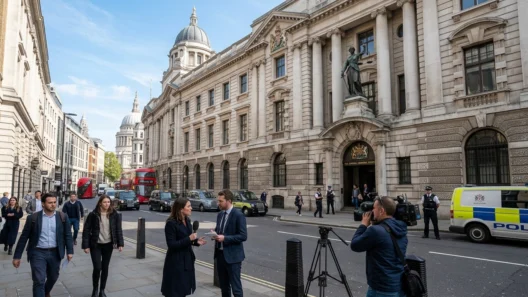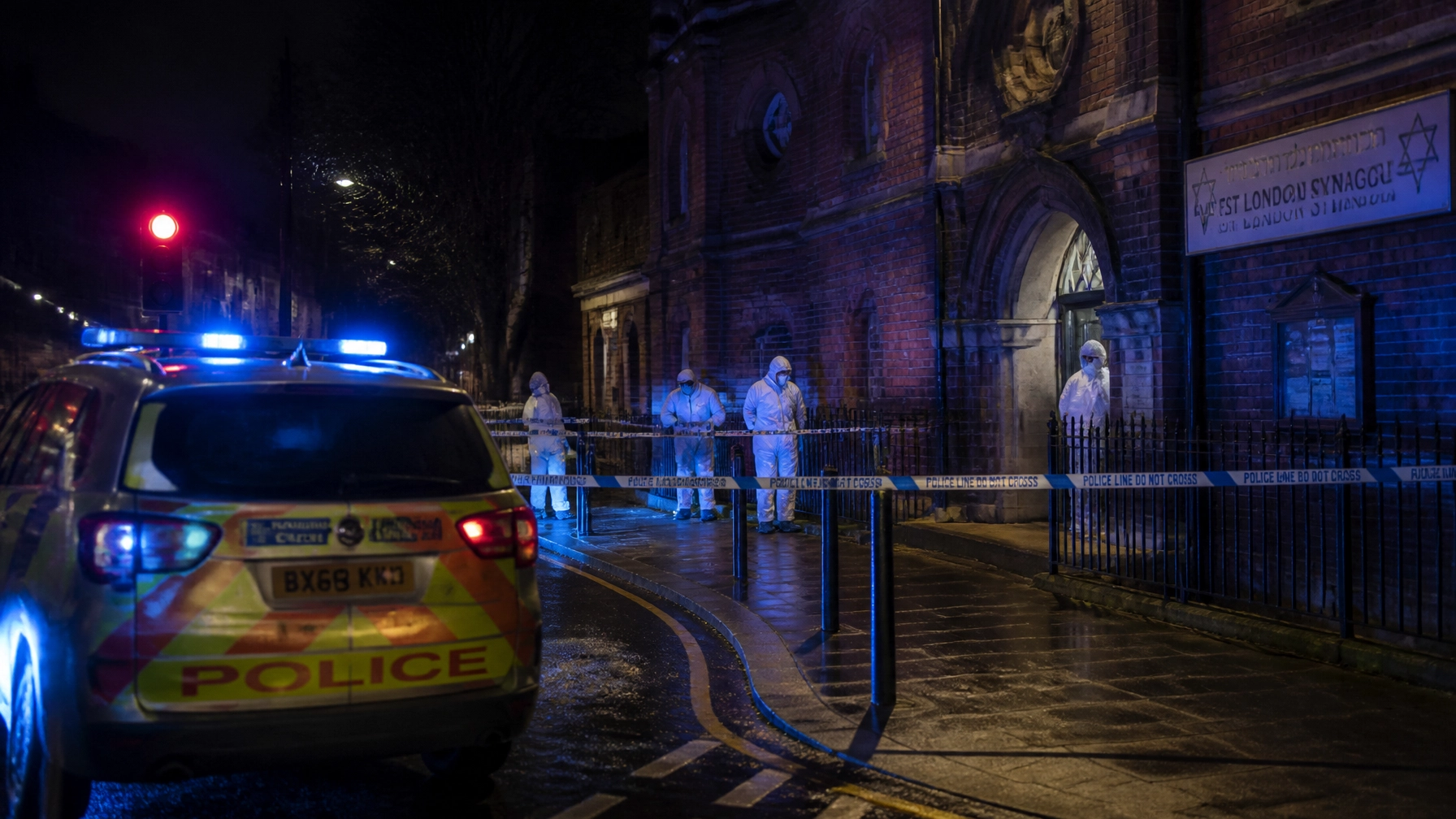
Metropolitan Police officers and counter-terrorism units have intensified their presence across London following a series of coordinated arson attacks targeting the Jewish community. The most recent incident occurred on May 5, 2026, when the former East London Central Synagogue on Nelson Street in Tower Hamlets was targeted. Reports indicate that the gates of the historic building were set alight in the early hours of the morning, prompting an immediate response from the London Fire Brigade and specialized police units. This event is the latest in a troubling pattern of violence that has seen multiple sites across the capital struck by fire-raising and attempted destruction over the last month.
The scale of the investigation has expanded significantly as detectives from Counter-Terrorism Policing London take the lead on these cases. The shift from local policing to a counter-terror footing suggests that the authorities view these incidents not as isolated acts of local vandalism, but as part of a wider, more organized campaign. This move follows similar attacks in Golders Green, Barnet, and the Brent-Harrow area throughout April. In those instances, Jewish-owned businesses and emergency service vehicles were specifically targeted, creating a climate of heightened anxiety among residents in some of London's most prominent Jewish neighborhoods.
In Golders Green, the Jewish volunteer emergency service, Hatzola, saw its ambulances torched in what was described as a calculated and brazen assault on a vital community resource. These ambulances, which provide rapid medical response to all residents in the area, were rendered inoperable, directly impacting the local healthcare infrastructure. Furthermore, two Jewish men were seriously injured in a stabbing incident in the same district, an event that police are now examining for potential links to the broader arson campaign. The frequency and nature of these crimes have led to calls for increased protection and a more robust stance against foreign-influenced domestic terrorism.
Heightened Security Across London Districts
The Metropolitan Police have deployed additional resources to the boroughs of Barnet, Tower Hamlets, and Hackney, where the concentration of Jewish community sites is highest. High-visibility patrols are now a standard fixture around synagogues, schools, and community centers during both the day and night. Detective Chief Superintendent Brittany Clarke confirmed that specialized teams are working around the clock to monitor potential threats and provide reassurance to a community that feels increasingly under siege. The deployment of these units is intended to deter further attacks while intelligence gathering continues behind the scenes.
In Barnet, a Jewish business was targeted on a Friday evening, an incident that served as a catalyst for the current high-security environment. The arsonists reportedly used accelerants to ignite the storefront, though the fire was contained before it could spread to neighboring residential units. Local community leaders have met with senior police officials to discuss the adequacy of current security measures, with many calling for permanent static guards at vulnerable locations. The police have responded by utilizing mobile CCTV units and increasing the frequency of plain-clothes operations in known hotspots to catch perpetrators in the act.
The impact on daily life for London’s Jewish residents has been profound. Community events have seen increased security screenings, and many organizations have been forced to divert funds from charitable activities toward private security firms. The psychological toll of these attacks is also a primary concern for local authorities, who are providing support services to those affected by the violence. Despite the fear, community resilience remains high, with many leaders stressing that the attacks will not succeed in intimidating them into hiding their identity or closing their institutions.
The Iranian Proxy Connection Under Scrutiny
Intelligence services and counter-terrorism investigators are currently focusing on the potential involvement of a group known as Harakat Ashab al-Yamin al-Islamia (HAYI). Translated as "The Islamic Movement of the Companions of the Right," the group has claimed responsibility for several of the London attacks through various digital channels. Investigators believe HAYI is acting as a proxy for the Iranian state, utilizing what security experts describe as "violence as a service." This strategy involves recruiting criminal elements within the UK to carry out low-tech but high-impact attacks on behalf of a foreign power, thereby providing the state with a layer of deniability.
Deputy Assistant Commissioner Vicki Evans of the Metropolitan Police stated that the force is actively considering whether this tactic is being employed in the current London campaign. The use of criminal proxies allows foreign intelligence agencies to bypass traditional surveillance of known operatives, instead relying on local individuals who may already be known to police for non-political crimes. This evolution in the threat landscape has required a shift in how counter-terrorism units identify and track potential suspects, focusing more on the links between organized crime and extremist ideologies.
The government has also weighed in on the international dimensions of the investigation. Prime Minister Keir Starmer recently acknowledged that a key line of inquiry is whether a foreign state has been orchestrating these incidents from afar. The geopolitical context of the attacks is being closely monitored, as tensions in the Middle East often manifest in increased domestic threats within the UK. By targeting the Jewish community in London, analysts suggest that the perpetrators aim to create domestic instability and influence UK foreign policy through a campaign of fear and intimidation.
National Security Act and the Path to Prosecution
The legal framework for the investigation has been bolstered by the National Security Act, which provides law enforcement with enhanced powers to tackle state-threat activity. This legislation allows for harsher sentencing and the implementation of lifetime restrictions for those found guilty of working on behalf of a foreign intelligence service to commit acts of violence on British soil. Two individuals, a 17-year-old and a 19-year-old, have already been arrested in connection with the attack on a synagogue in North London and are currently being questioned under these specific provisions.
Prosecutions under the National Security Act are expected to be complex, requiring the demonstration of a clear link between the domestic perpetrators and a foreign entity. However, the authorities have made it clear that they intend to use every tool at their disposal to ensure that those responsible face the full weight of the law. Commander Helen Flanagan, Head of London Counter Terrorism Police, emphasized that the message to those being recruited by foreign proxies is clear: the rewards offered for these crimes are insignificant compared to the life-changing legal consequences that follow.
The investigation into the arson attacks remains one of the highest priorities for the UK’s security services. As forensics teams continue to process evidence from the Nelson Street site and other locations, more arrests are anticipated. The integration of international intelligence and local policing is seen as essential to dismantling the networks that facilitate these attacks. For the time being, the capital remains on high alert, with the Metropolitan Police urging the public to remain vigilant and report any suspicious activity immediately. The focus remains on preventing further escalations while bringing the campaign’s coordinators to justice.
Evidence collected at the scene of the Tower Hamlets fire is currently being analyzed at specialized laboratories to identify the chemical signatures of the accelerants used. This technical data is being cross-referenced with previous incidents across Europe where HAYI has also claimed responsibility. The coordinated nature of these events suggests a sophisticated logistics chain that extends beyond the UK’s borders, involving the transfer of funds and instructions through encrypted communication platforms. Counter-terrorism units are working with international partners, including Europol, to map these connections and identify the masterminds behind the proxy recruitment network.