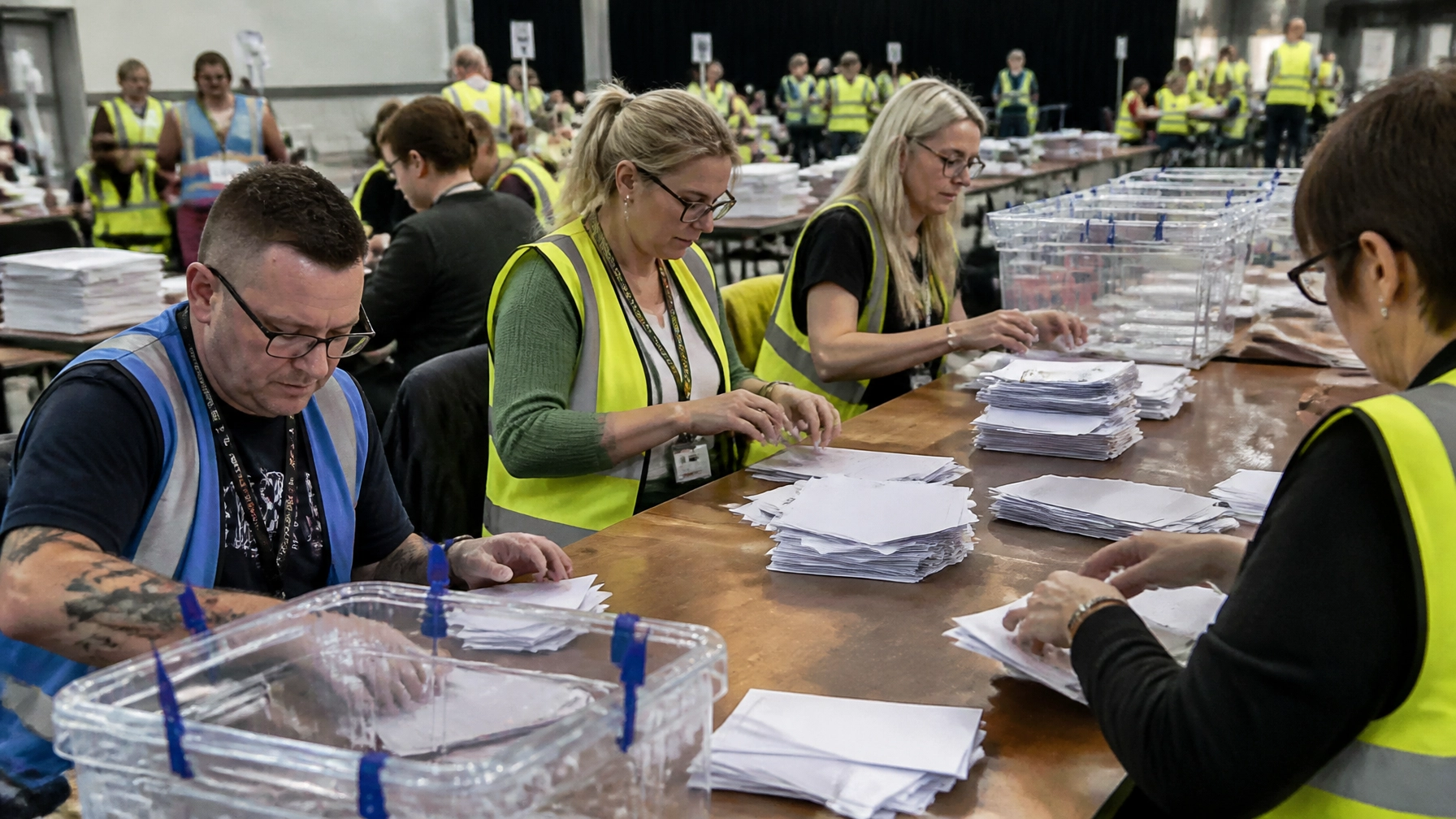
The landscape of British local government has undergone a seismic shift following the results of the 2026 local elections. Across the country, and particularly within the capital, the traditional dominance of the Labour Party has been challenged by a surge in support for the Green Party and a significant breakthrough for Reform UK. These results suggest a fracturing of the two-party system at a municipal level, as voters increasingly turn toward alternative platforms to address local grievances and national frustrations.
In London, the most striking development was the Green Party’s unprecedented success. For the first time in history, the Greens have secured control of major London councils, most notably in Hackney and Waltham Forest. These victories represent a transition for the party from a peripheral pressure group to a mainstream governing force within urban centres. The collapse of the Labour vote in these erstwhile strongholds has sent ripples through the party’s leadership, indicating a disconnect between the central party platform and the priorities of urban voters.
The shift in Hackney was particularly pronounced. Long considered a safe seat for Labour, the council saw a consistent swing toward Green candidates throughout the night. Voters cited a range of issues, from the management of Low Traffic Neighbourhoods (LTNs) to broader concerns regarding housing affordability and environmental sustainability. The Green Party managed to unify a diverse coalition of younger, environmentally conscious residents and older voters disillusioned by the perceived stagnation of the local Labour administration. This result was mirrored in Waltham Forest, where a similar trend saw Green councillors taking seats in wards that had not changed hands in decades.
Beyond the inner-city surge of the Greens, the 2026 elections also saw a significant realignment in the outer boroughs. Havering became the flashpoint for a different kind of political rebellion. Reform UK achieved a historic breakthrough in the borough, securing a substantial number of seats and establishing a foothold in a region that has traditionally fluctuated between Conservative and Labour influence. This movement indicates that the populist sentiment that has simmered in the UK since the late 2010s remains a potent force, particularly in areas where residents feel neglected by the Westminster consensus.
The Green Party’s Historic Gains Across London Councils
The transition of Hackney and Waltham Forest to Green Party influence is not merely a symbolic victory; it marks a fundamental change in how local policy will be shaped in these boroughs. The Greens ran a campaign focused heavily on “hyper-localism,” promising to give residents a greater say in urban planning and climate resilience projects. This message resonated in areas where large-scale development projects have often been met with local resistance. By framing environmentalism as a tangible, local issue rather than an abstract global goal, the party was able to capture the imagination of a frustrated electorate.
In Hackney, the victory was the culmination of years of incremental growth. The party had spent the last electoral cycle building a robust grassroots network, focusing on ward-level issues such as air quality and the preservation of community spaces. When the 2026 results were finalised, it was clear that this strategy had paid dividends. The loss of Hackney is a particularly bitter pill for the Labour Party, which has historically viewed the borough as a laboratory for its urban policies. The rejection of their mandate suggests that the “safe seat” era may be coming to an end in the face of targeted, issue-based campaigning.
Waltham Forest followed a similar trajectory, with the Green Party capitalising on a perceived lack of transparency in local governance. The campaign there was fought on the grounds of accountability, with Green candidates promising a “clean break” from the established political order. As the results came in, it became evident that the Labour incumbent’s message of stability was failing to compete with the Greens’ promise of radical reform. The implications for London’s governance are significant, as these new Green-led councils are expected to diverge sharply from the London Mayor’s office on several key infrastructure and transport initiatives.
Reform UK and the Breakthrough in Havering
While the Greens captured the headlines in inner London, Reform UK’s performance in Havering represented a different but equally significant shift in the political weather. The party’s breakthrough in the borough was built on a platform of fiscal conservatism, opposition to expanded ULEZ boundaries, and a focus on local sovereignty. In Havering, many voters expressed a sense of being “left behind” by a London-centric administration that they feel does not represent the interests of those living on the fringes of the capital.
The Reform UK campaign in Havering successfully tapped into a vein of discontent regarding the cost of living and the perceived over-regulation of daily life. By positioning themselves as the only party willing to challenge the status quo on both a local and national level, they were able to draw support from former Conservative voters and “stay-at-home” electors who felt unrepresented by the major parties. This success in Havering is being viewed as a potential template for the party’s future growth in other post-industrial and suburban areas across the UK.
The impact of this breakthrough extends beyond the council chamber. It signifies a diversification of the right-wing vote, much like the Greens have done on the left. With Reform UK now holding a significant block of seats, the political mathematics of Havering has changed, forcing the larger parties to reconsider their approach to the outer boroughs. The result suggests that the “Red Wall” dynamics that defined the 2019 general election are being reinterpreted in a suburban context, with populist movements finding fertile ground in areas where economic anxiety and cultural identity intersect.
Labour’s Losses and the Shifting UK Political Landscape
For the Labour Party, the 2026 local elections have been a sobering experience. The loss of key councils and the erosion of their vote share in traditional heartlands point to a widening gap between the party’s national narrative and local realities. While the party remains a dominant force in many parts of the country, the dual threat from the Greens on the left and Reform UK on the right has left them fighting a war on two fronts. This fragmentation of the vote makes it increasingly difficult for Labour to maintain the broad-base coalition required for undisputed local control.
Analysts suggest that Labour’s losses are partly due to a “mid-term slump,” but the specific nature of the defeats in Hackney and Waltham Forest suggests something more structural. There is a growing sense among certain demographics that Labour has become the “party of the establishment” in local government, leading to a desire for fresh perspectives. In the outer boroughs, the party’s struggle to articulate a clear vision for suburban growth has allowed Reform UK to seize the initiative.
The national implications of these results are profound. As the UK moves toward the next general election, the lessons from 2026 will be closely studied by all major parties. The success of the Green Party demonstrates that environmental issues are no longer secondary concerns but are central to the identity of a significant portion of the electorate. Simultaneously, the rise of Reform UK in places like Havering confirms that the demand for a populist alternative to the mainstream remains a persistent feature of British politics. The era of the “big two” dominating the local political map is increasingly under pressure, replaced by a more complex, multi-polar landscape where local identity and specific grievances dictate the outcome at the ballot box.