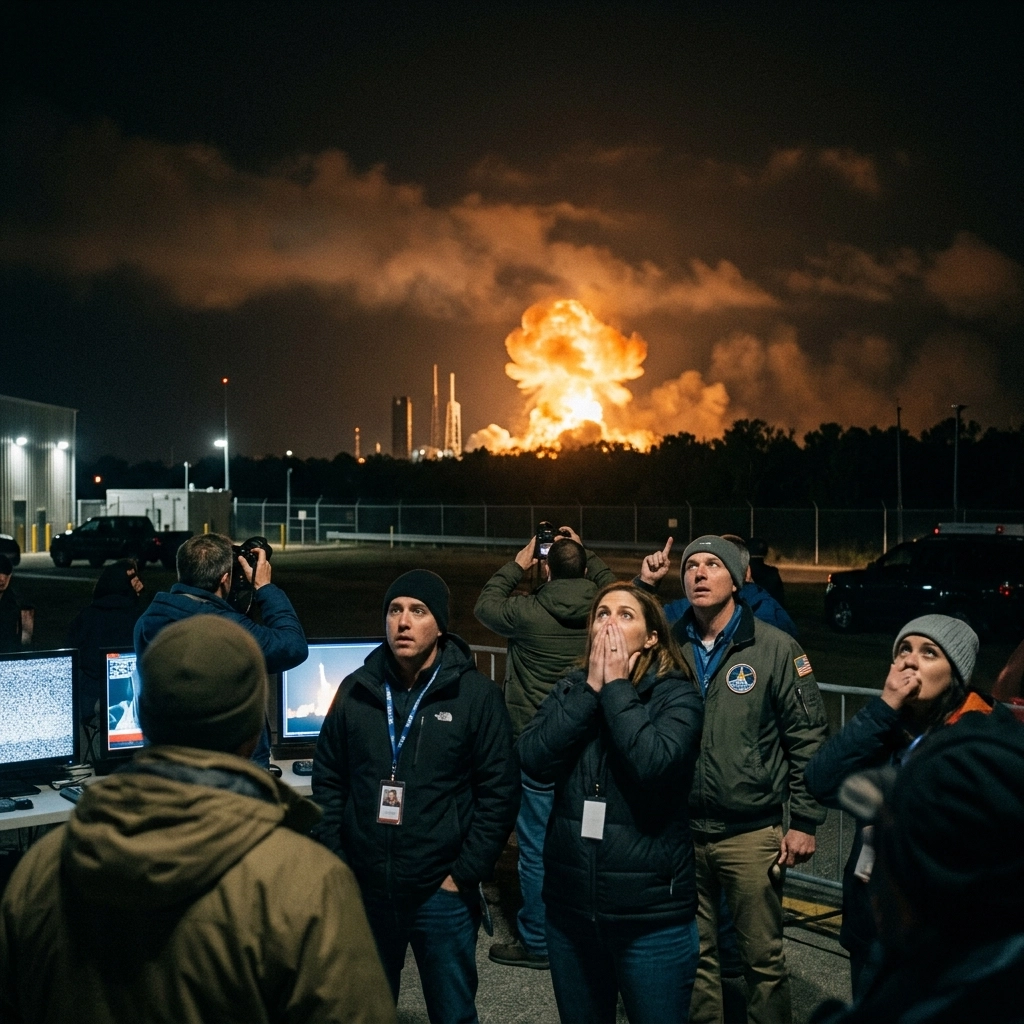
The return of the Artemis II mission represents one of the most significant engineering feats of the 21st century. As the Orion capsule hurtles back toward Earth at speeds exceeding 24,000 miles per hour, it isn't just the speed that captures the imagination; it is the terrifying, total silence that defines the final leg of the journey. For 13 minutes, the crew is essentially on their own, encased in a ball of plasma that severs all ties to the world they are trying to reach.
This isn't just a technical hurdle. It is a period of intense psychological and physical pressure where the margin for error is non-existent. At NowPWR, we believe in telling the untold stories behind the headlines, looking past the splashy landing photos to the raw science and human grit required to survive the "fireball" phase of lunar return.
What exactly happens during these 13 minutes of silence?
The 13-minute window begins the moment the Orion capsule hits the "entry interface": the point where the Earth’s atmosphere becomes thick enough to exert a measurable physical force on the spacecraft. Traveling at roughly 11 kilometres per second, the friction between the capsule and the air molecules is so intense that it creates a sheath of superheated, ionised gas known as plasma.
This plasma isn't just hot; it’s an electromagnetic shield that blocks all radio frequencies. This is the "blackout." For about six of those 13 minutes, NASA mission control loses all voice and data contact with the four astronauts inside. They can’t see the telemetry, they can’t hear the crew’s heartbeat, and they certainly can’t offer advice if something goes wrong. It is a 13-minute exercise in controlled falling, where the physics of the universe take the steering wheel.
Why is the Artemis II re-entry more dangerous than a return from the International Space Station?
When astronauts return from the ISS, they are traveling at about 17,500 mph. That is fast, but a lunar return is a different beast entirely. Coming back from the Moon, the Orion capsule hits the atmosphere at nearly 25,000 mph. The kinetic energy that needs to be dissipated is significantly higher, leading to temperatures on the heat shield reaching 2,760°C.
To manage this, NASA uses a "skip re-entry" manoeuvre. Think of it like skipping a stone across a pond. The capsule enters the atmosphere, dips down to bleed off some speed, then uses its lift to "hop" back up into a higher altitude before making the final descent. This extends the 13-minute timeline but keeps the G-forces manageable for the crew and ensures the heat shield doesn't melt through. It’s a bold, analytical approach to a problem that killed early space theorists' sleep.
The Science Behind the Plasma Wall
The plasma wall is often described as a "fireball," but that’s a bit of a misnomer. It’s actually a chemical transformation of the air itself. At the speeds Artemis II travels, the air molecules in front of the capsule don't have time to move out of the way. They are compressed so violently that they break apart into ions and electrons. This soup of charged particles is what creates the communication blackout.
The heat shield, made of a material called Avcoat, is designed to burn away slowly: a process called ablation. As it chars, it carries the heat away from the capsule. If the angle of entry is off by even a fraction of a degree, the capsule could either skip off the atmosphere back into deep space or burn up entirely. This is why the "untold stories" of mission planning involve thousands of hours of trajectory modelling. You can learn more about the scientific efforts behind these missions at https://www.nowpwr.com/c/education.
Inside the cabin, the crew isn't just sitting there. They are strapped into seats designed to absorb the massive deceleration forces, which can feel like several times their own body weight pressing into their chests. The "silence" outside is matched by a cacophony inside: the roar of the wind, the groaning of the metal, and the occasional "thud" of steering thrusters trying to keep the capsule on its narrow path.
How do the astronauts prepare for the psychological toll of the blackout?
Imagine being in a metal tin, glowing orange-hot, traveling at Mach 32, and knowing that for the next several minutes, no one on Earth can hear you scream. The psychological preparation for Artemis II involves intense simulation of "loss of signal" (LOS) events. The crew is trained to be entirely autonomous during this window. They have hard-coded checklists and manual overrides, but they also have to trust the math.
The blackout is a period of radical isolation. In an era where we are constantly connected via satellite and high-speed data, these 13 minutes represent a throwback to a more rugged era of exploration. It is a moment where the crew is truly alone with the elements. For those interested in how isolation affects the human mind, our section on wellness explores the deeper aspects of mental fortitude at https://www.nowpwr.com/c/wellness.
The Human Element of the Blackout
While the engineers at mission control are staring at frozen data screens, the families of the astronauts are often in a separate viewing room, waiting for the crackle of the radio that signals "drogue chute deployment." The drogue chutes are the first sign that the capsule has survived the fireball. They deploy at about 25,000 feet, and their primary job is to stabilise the craft before the three massive main parachutes unfurl.
When the main parachutes open, the capsule slows from hundreds of miles per hour to a relatively gentle 20 mph splashdown. But the 13 minutes of silence only ends when the plasma dissipates and the radio link is re-established. That first "Houston, Orion" is the most beautiful sound in the world to everyone involved. It marks the transition from a piece of falling debris to a successful scientific mission.
The crew: consisting of Reid Wiseman, Victor Glover, Christina Koch, and Jeremy Hansen: brings a wealth of experience, but none of them has experienced a lunar re-entry before. No human has since 1972. The data gathered during these 13 minutes will be analysed for years to come, informing how we eventually land humans on Mars.
What happens if the parachutes fail after the silence ends?
The parachute system is redundant. Orion has three main parachutes, but it can land safely with only two. Even the sequence of deployment is carefully orchestrated by onboard computers that don't need a ground signal to function. However, the period right after the blackout is still high-stakes. The capsule must be oriented correctly so that the heat shield takes the brunt of the impact with the ocean, rather than the side of the craft.
If the "13 minutes of silence" ends and there is still no signal, the recovery teams: stationed on a Navy ship in the Pacific: switch to visual tracking. They look for the streak of the fireball across the sky. This is independent news UK coverage at its most visceral; the moment where technology fails and we rely on the naked eye to find our explorers.
A New Era for Deep Space Return
The Artemis II mission is a stepping stone. It’s the proof of concept for the Orion spacecraft's ability to protect human life during the most violent transition in travel: moving from the vacuum of space to the atmosphere of Earth. The "fireball" is a barrier, but it’s also a gateway. Once we master these 13 minutes of silence consistently, the path to a permanent lunar base becomes a matter of logistics rather than a gamble on survival.
At NowPWR, we find these "offbeat" moments of space travel: the silence, the heat, the invisible plasma: to be the most compelling parts of the story. You can explore more about the unusual side of science and technology at https://www.nowpwr.com/c/offbeat. The Artemis programme isn't just about planting flags; it's about the analytical rigour required to navigate 13 minutes of silence without blinking.
As the capsule finally hits the water, five orange airbags inflate to ensure it stays upright in the swells of the Pacific. The "fireball" is extinguished, the silence is broken by the cheers of the recovery team, and the astronauts are home. But those 13 minutes will remain the most intense, untold part of the journey: a testament to human bravery in the face of the literal heat of the sun.
The 13 minutes of silence during the Artemis II re-entry serve as a stark reminder of the physical limits of our current communication technology and the immense power of the Earth's atmosphere. While the world watches the splashdown and the subsequent celebrations, the true story of the mission’s success is written in the plasma-scorched Avcoat of the heat shield and the calm, steady nerves of four individuals who survived the fireball. This phase of the mission bridges the gap between the adventurous spirit of the 1960s and the sophisticated, analytical engineering of the 2020s. By understanding the science of the blackout and the mechanics of the skip re-entry, we gain a deeper appreciation for the risks taken to expand the footprint of humanity beyond our own planet.