In a quiet corner of the UK, far from the gleaming glass towers of London’s financial district and the sprawling industrial hubs of the Midlands, something remarkable is happening. It involves a substance so common we usually just shake it out of our shoes after a trip to the beach: sand. For the residents of a small, windswept town in Norfolk, this humble material has become the heartbeat of their community, literally. They are currently living through a quiet revolution in renewable energy storage, proving that the solution to our heating crisis might just be sitting in a giant, insulated bucket.
The problem with renewable energy has always been its timing. The wind blows hardest when we are tucked up in bed, and the sun shines brightest when we are at work. By the time we get home and turn on the kettle, the wind has often died down, and the sun has set. We have become incredibly good at generating green electricity, but we have been historically rubbish at storing it. Chemical batteries, like the lithium-ion ones in our phones, are expensive, degrade over time, and aren't particularly great at holding onto energy for long periods. This is where the "sand battery" enters the frame, turning a basic geological material into a high-tech thermal vault.
This tiny UK town, which has become a beacon for independent news enthusiasts and tech-curious observers alike, is the first in the country to successfully pilot a large-scale sand storage system. It is one of those untold stories that rarely makes the front pages of the national broadsheets, yet it represents a fundamental shift in how we might survive the winters of the future. The concept is deceptively simple, but the engineering behind it is a masterclass in efficiency.
The Magic of Molten Grains
To understand why a town would choose to heat its homes with a giant silo of sand, you have to look at the physics. Sand is an excellent medium for thermal energy storage. It has a high boiling point, well, it doesn't really boil, it melts, but not until it hits temperatures that would liquefy most metals. This means you can pump a lot of heat into it without the medium breaking down or becoming volatile.
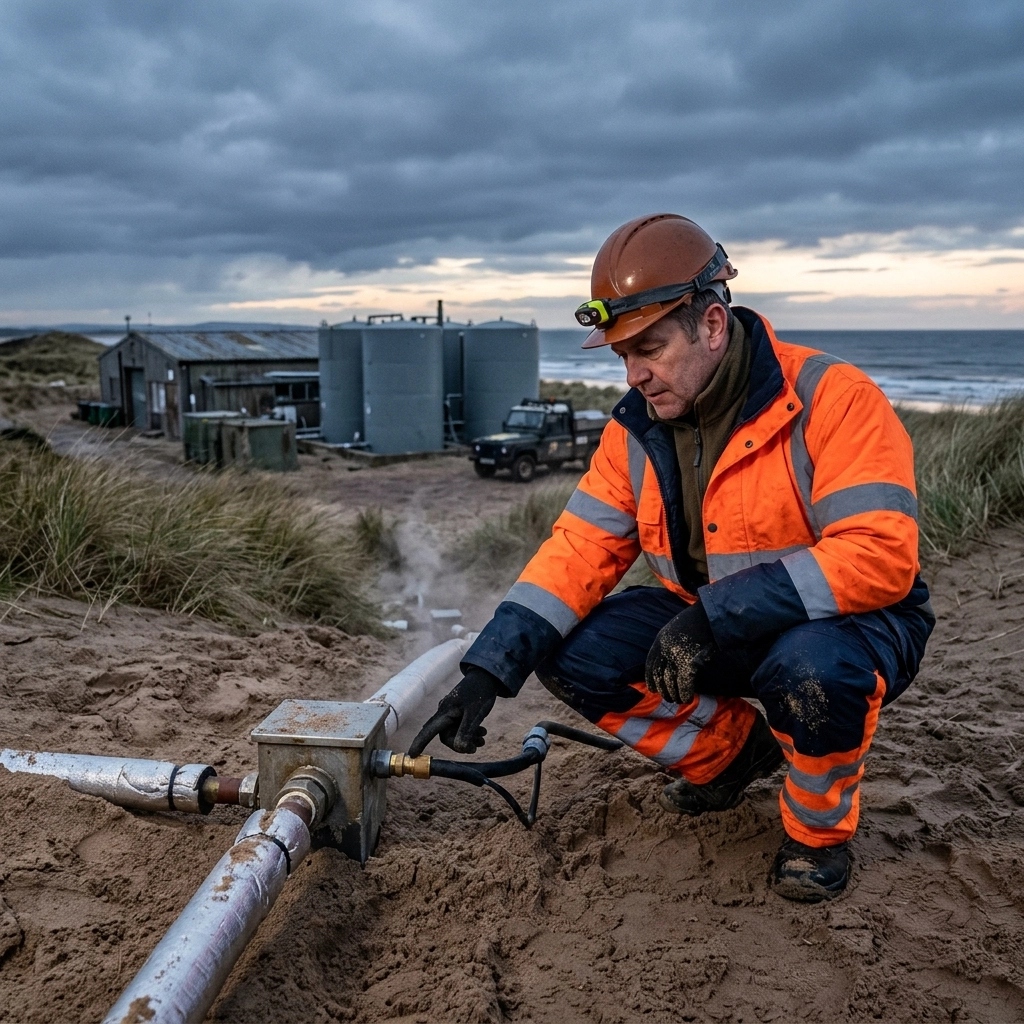
The system works by taking excess electricity from the local wind farms during the night or on particularly blustery afternoons. This "green" electricity is used to power a set of resistive heaters: think of them as giant versions of the elements in your toaster. These heaters warm up air, which is then blown through a network of pipes buried inside a massive, heavily insulated steel silo filled with hundreds of tonnes of low-grade sand.
The sand doesn't just get warm; it gets glowing hot. We are talking about temperatures upwards of 600 degrees Celsius. Because the silo is so well-insulated, that heat doesn't go anywhere. It sits there, trapped in the grains, for weeks or even months. When the town needs heat: say, during a sudden April cold snap or a damp November evening: the process is reversed. Cool air is pumped through the hot sand, absorbs the thermal energy, and is then used to heat water for a local district heating network. It is a closed-loop system that is nearly 90 percent efficient, which is a figure that makes traditional energy engineers weep with joy.
From Finnish Forests to British Shores
While the technology was famously pioneered in Finland, where the world’s largest operational sand battery began heating the town of Pornainen in early 2025, the UK adaptation has had to overcome different challenges. Unlike Finland, the UK doesn't have a long history of district heating. Most of our homes are heated by individual gas boilers, a legacy of the North Sea gas boom that has left our infrastructure somewhat rigid.
The success of this Norfolk pilot project lies in its community-led approach. By focusing on a small cluster of public buildings, a new housing estate, and a local school, the project managed to bypass the need for a massive, city-wide overhaul. It proved that you don't need to dig up every road in the country to make a difference; you just need a central "heat hub" and a willing community.
The impact on the local economy has been tangible. In an era where energy prices have been a constant source of anxiety, the residents connected to the sand battery have seen their bills stabilise. Because the "fuel" for the battery is excess wind power that would otherwise be wasted (a process known as curtailment, where wind farms are paid to turn off because the grid can't handle the load), the cost of charging the battery is remarkably low. It turns a systemic waste into a local asset.
This project is the kind of narrative that defines the "untold stories" of the British energy transition. It isn’t about a massive multinational corporation swooping in with a multi-billion pound subsidy; it’s about a local council, a group of forward-thinking engineers, and a lot of very hot dirt. It shows that the UK can be a leader in niche, clever engineering that solves specific local problems rather than waiting for a "one size fits all" miracle.
Why This Matters for the National Grid
Looking at the bigger picture, sand batteries offer something that lithium-ion batteries cannot: seasonal storage. Most grid-scale batteries are designed to balance the system over a few hours: soaking up a midday solar spike and releasing it during the 6 pm peak. But they aren't designed to store energy in August and give it back in December. Sand can do that.
If this technology scales, we could see "heat silos" appearing in industrial estates and on the edges of towns across the country. They are unobtrusive, silent, and pose almost no environmental risk. Unlike chemical batteries, there is no risk of "thermal runaway" or toxic leaks. If a sand battery breaks, you just have a pile of warm sand. It is perhaps the most inherently safe way to store massive amounts of energy ever devised.
Furthermore, the materials required are abundant. We aren't mining rare earth metals in conflict zones to build these; we are using builder's sand or crushed rock waste from quarries. This makes the supply chain incredibly resilient and the carbon footprint of construction significantly lower than its high-tech counterparts.
For the UK National Grid, this is a potential game-changer. By decentralising heat storage, we take the pressure off the electrical grid. If we can heat our homes using stored thermal energy rather than switching on millions of electric heat pumps simultaneously during a cold snap, we avoid the need for massive, expensive grid reinforcements. It’s a low-tech solution to a high-tech problem, and it’s working.
As we move further into 2026, the data coming out of this Norfolk pilot will be crucial. Other councils are already visiting the site, peering into the control room, and marvelling at the simplicity of it all. There is a sense that we are witnessing the birth of a new kind of civic infrastructure: one that is sustainable, affordable, and deeply local.
The story of the sand battery is more than just a tech update; it is a reminder that innovation doesn't always have to look like a Silicon Valley keynote. Sometimes, the future looks like a large steel tank in a field, filled with the same stuff you find at the bottom of a sandpit. It is a testament to the power of thinking small to solve big problems, and it might just be the secret to keeping the UK warm in the decades to come.
While the rest of the world looks for complex chemical solutions and expensive hydrogen infrastructure, this tiny town has looked to the ground beneath its feet. They have found a way to bottle the wind and store the sun in a grain of sand. It is a quiet, hot, and incredibly promising breakthrough that deserves its moment in the spotlight.
The integration of such thermal storage systems marks a turning point in the UK's journey toward a decarbonised heat network. By leveraging the physical properties of common materials, the project demonstrates that the transition to green energy can be both practical and economically viable for smaller communities. As the pilot concludes its first full year of operation, the lessons learned here will likely inform the next generation of renewable energy policy across the country.